South of Everything: Architecture and Territorial Presence in Antarctica

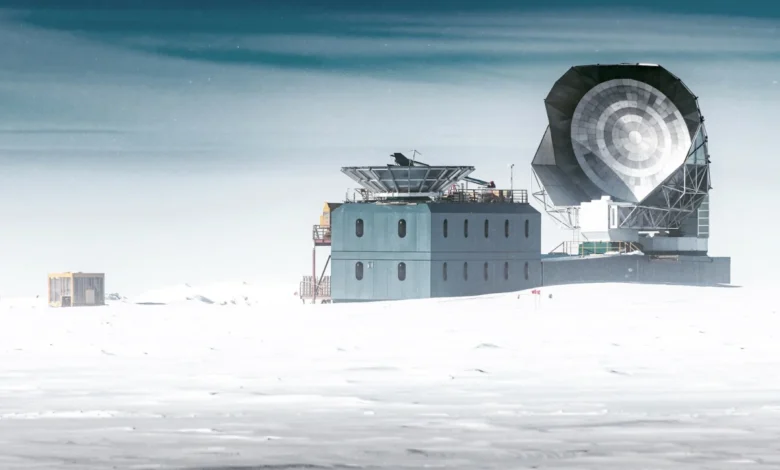
Antarctica remains the only continent on Earth without a sovereign government, a permanent indigenous population, or a self-sustaining economy. Since the signing of the Antarctic Treaty in 1959, the frozen continent has existed in a state of legal suspension, with all territorial claims "frozen" to prevent international conflict. On paper, this vast wilderness is a global commons dedicated to peace and science. However, the physical reality on the ground—or more accurately, on the ice—tells a more complex story of geopolitical maneuvering and architectural posturing. Currently, nearly thirty nations operate more than seventy research stations across the continent. While these structures are ostensibly built for scientific inquiry, their design, scale, and permanence suggest a deeper purpose: the establishment of a "territorial presence" in a region where traditional ownership is legally prohibited.
The architecture of Antarctica is never accidental. To build and maintain a research station in the most logistically hostile environment on the planet requires an investment of hundreds of millions of dollars. A nation does not commit such resources merely to monitor atmospheric conditions that could be observed via satellite or from more accessible locations. Instead, these stations serve as physical anchors for future claims. By building schools, chapels, cemeteries, and even civil registries—one station has recorded eleven births since 1978—nations are engaging in a form of "soft" colonization, ensuring that if the Antarctic Treaty is ever renegotiated or dissolved, their physical footprint will serve as a powerful argument for sovereignty.

The Evolution of Polar Architecture: From Survival to Sovereignty
The history of architecture in Antarctica can be divided into three distinct eras, each reflecting the changing relationship between humanity and the southern continent. The "Heroic Age" of exploration, spanning from the late 19th century to the early 1920s, was characterized by survival-oriented structures. Explorers like Ernest Shackleton and Robert Falcon Scott relied on prefabricated wooden huts, such as the Discovery Hut or the Nimrod Hut. These were dark, cramped, and poorly insulated shelters designed for temporary occupancy. Their primary function was to keep men alive against the katabatic winds and sub-zero temperatures.
The second era began with the International Geophysical Year (IGY) of 1957–1958, which catalyzed a massive expansion of permanent presence. This period saw the construction of industrial-style bases, often resembling military outposts or mining camps. Functionality was the sole priority, leading to the creation of sprawling complexes of steel containers and corrugated sheds. It was during this era that the Antarctic Treaty was drafted, establishing the framework for international cooperation while simultaneously intensifying the "scramble" for prime real estate on the Antarctic Peninsula and the South Pole.
The third and current era is defined by "Iconic Architecture." In the last two decades, nations have begun commissioning world-renowned architects to design stations that are not only technologically advanced but also aesthetically striking. The British Antarctic Survey’s Halley VI Research Station, designed by Hugh Broughton Architects, features colorful, hydraulic-legged modules that can "walk" to avoid being buried by snow. Brazil’s Comandante Ferraz Antarctic Station, rebuilt after a fire and designed by Estúdio 41, resembles a high-end boutique hotel or a futuristic laboratory. This shift toward high-design architecture serves a dual purpose: it improves the psychological well-being of the crew and acts as a sophisticated form of national branding.

The Antarctic Treaty and the Legal Architecture of the Commons
The legal backbone of the continent is the Antarctic Treaty System (ATS). Signed on December 1, 1959, by twelve nations and entering into force in 1961, the treaty was a landmark achievement in Cold War diplomacy. It designated Antarctica as a scientific preserve, established freedom of scientific investigation, and banned military activity on the continent. Crucially, Article IV of the treaty states that no acts or activities taking place while the treaty is in force shall constitute a basis for asserting, supporting, or denying a claim to territorial sovereignty.
Despite this "freeze" on claims, seven nations—Argentina, Australia, Chile, France, New Zealand, Norway, and the United Kingdom—maintain historical claims to pie-shaped wedges of the continent. Some of these claims overlap significantly, particularly in the Antarctic Peninsula. The United States and Russia do not recognize any claims but reserve the right to make their own.
This legal ambiguity has led to a phenomenon known as "effective occupation." In international law, the continuous and peaceful display of authority over a territory is often a key factor in determining sovereignty. In Antarctica, since traditional "authority" (like police or tax collection) is restricted, architecture becomes the primary medium of display. A permanent station with a post office, a zip code, and a rotating population of citizens creates a "fact on the ice" that is difficult to ignore in future diplomatic negotiations.
Case Studies in Territorial Presence
The physical manifestations of this territorial desire are most visible in stations that mimic civilian settlements. Villa Las Estrellas, located on King George Island and operated by Chile, is one of only two locations in Antarctica where humans live in a village-like setting rather than a purely military or scientific outpost. It features a school, a hospital, a post office, and a bank. Families live there for two-year stints, and the presence of children is a deliberate attempt to demonstrate "normalcy" and permanent habitation.
Similarly, Argentina’s Esperanza Base serves as a hub for civil life. In 1978, Emilio Marcos Palma became the first person known to be born in Antarctica at Esperanza Base, an event facilitated by the Argentine government to strengthen its claim to the "Argentine Antarctic Sector." These structures—the schoolhouse, the maternity ward, the chapel—are not essential for studying the thinning of the ice sheets, but they are essential for the architecture of nationalism.
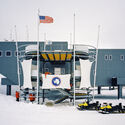
On the other end of the spectrum is the Amundsen–Scott South Pole Station. Operated by the United States, this massive facility sits at the convergence of all territorial claims. By occupying the geographic South Pole, the U.S. maintains a presence that transcends any single nation’s wedge, effectively acting as a central arbiter of the continent’s activity. The current station, elevated on stilts to prevent snow accumulation, is a marvel of engineering that houses up to 150 people in the summer, reinforcing the U.S. position as the dominant logistical power in the region.

Logistical Challenges and Financial Realities
Building in Antarctica is an exercise in extreme logistics. The "construction window" is limited to the short austral summer (November to February), when temperatures are slightly milder and sea ice has retreated enough to allow supply ships to reach the coast. Every nail, beam, and liter of fuel must be imported.
The costs are staggering. The reconstruction of the Brazilian Comandante Ferraz station cost approximately $100 million. The United Kingdom’s Halley VI cost roughly £26 million ($33 million), but the operational costs of maintaining such a facility in a moving ice shelf add millions more annually. For many nations, the high price tag is seen as a necessary "entry fee" to the Antarctic Treaty Consultative Party (ATCP) status, which grants a country voting rights on the future of the continent. To achieve this status, a nation must demonstrate "substantial research activity," which almost always necessitates the construction of a permanent station.
Geopolitical Implications and the "2048" Turning Point
While the Antarctic Treaty does not have an expiration date, it can be opened for review and potential modification 50 years after the 1991 Protocol on Environmental Protection (the Madrid Protocol) came into force. This puts the year 2048 on the radar of every major geopolitical player. The Madrid Protocol currently bans all mining and resource extraction in Antarctica. However, as global resources dwindle and technology makes extraction in extreme environments more feasible, the pressure to tap into Antarctica’s suspected reserves of oil, gas, and precious minerals may grow.
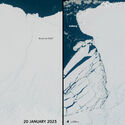
China has been particularly active in recent years, rapidly expanding its footprint. The opening of the Qinling Station in early 2024 marked China’s fifth research base on the continent. Positioned near the Ross Sea, the station provides China with a strategic vantage point in a region traditionally dominated by the U.S. and New Zealand. Analysts suggest that this expansion is less about current science and more about securing a seat at the table for the eventual discussion of resource management.
India and Turkey have also increased their investments in Antarctic infrastructure, signaling that the continent is no longer the exclusive playground of the "Old Guard" of polar explorers. This "architecture race" mirrors the space race of the 20th century, where the physical presence of a flag or a module serves as a proxy for power and prestige.
Conclusion: The Architecture of an Uncertain Future
The architecture of Antarctica is a testament to human ingenuity and the relentless drive for territorial expansion. What began as a series of humble wooden huts has evolved into a network of high-tech laboratories and quasi-civilian towns. These structures are more than just shelters; they are the physical manifestations of national identity and future intent.
As climate change continues to melt the Antarctic ice at an accelerating rate, the continent is becoming more accessible and its potential resources more attractive. The research stations that dot the white landscape are the front lines of a quiet but intense geopolitical struggle. In the "South of Everything," architecture is the primary language of diplomacy, and the buildings themselves are the most permanent claims a nation can make. Whether the Antarctic Treaty System can continue to hold these competing interests in check remains to be seen, but for now, the construction of the commons continues, one steel module at a time.