The Essential Guide to Curating a Professional Jewelry Chain Collection for Longevity and Style

The evolution of the fine jewelry market has seen a marked shift toward the curation of high-quality, durable foundations, with the jewelry chain emerging as a cornerstone of modern accessory design. While vintage jewelry remains a sought-after category for collectors, industry experts have identified significant structural risks associated with aging precious metal components. Consequently, retailers and consumers are increasingly pivoting toward new-manufacture pieces that offer verified integrity, structural resilience, and aesthetic versatility. This transition reflects a broader trend in the luxury sector: the prioritization of heirloom-quality durability over the perceived prestige of age-worn antiques.
The Structural Reality of Vintage Jewelry Chains
For decades, the secondary market for fine jewelry—specifically gold and platinum chains—relied heavily on the acquisition of estate pieces. However, forensic inspection of these items often reveals significant degradation. Microscopic analysis of vintage chain links frequently uncovers thinning at points of friction, stress fractures, and structural fatigue caused by decades of oxidation and mechanical wear.
Data from professional bench jewelers suggests that the lifespan of a chain link is finite. Factors such as daily perspiration, the weight of heavy pendants, and contact with chemicals (including lotions and perfumes) accelerate the wear-and-tear process. In many instances, the cost of restoring a vintage chain to a "secure" state—which involves reinforcing weak links or replacing worn clasps—often exceeds the intrinsic value of the gold itself. This economic inefficiency has driven a decline in the trade of vintage chains, as professionals recognize that modern manufacturing techniques, combined with high-purity precious metals, offer a more reliable long-term investment for the collector.
A Chronology of Chain Evolution in Fashion
The popularity of decorative chains has fluctuated throughout history, mirroring technological advancements in metallurgy and changing social standards of ornamentation.
- Pre-20th Century: Chains were primarily utilitarian, designed to hold pocket watches or mourning lockets. Strength was the priority, leading to the development of robust, solid-link styles like the mariner and cable.
- 1920s–1950s: The rise of costume jewelry and the democratization of gold saw chains become more delicate and decorative. This era introduced mass-produced, lighter-weight links that prioritized aesthetics over structural longevity.
- 1990s–2010s: The resurgence of charm-based jewelry created a new demand for heavy-duty chains capable of supporting multiple pendants, often referred to as "charm jumbles."
- 2020–Present: The modern era has seen a convergence of form and function. Consumers now demand "everyday luxury"—pieces that can be worn during exercise, sleep, and travel without the risk of failure. This has necessitated a return to solid-link construction, moving away from hollow or machine-stamped alternatives.
Analyzing the Top Five Essential Chain Categories
Professional jewelers and curators categorize essential chains based on their weight distribution, link geometry, and compatibility with various pendants. A balanced collection typically relies on the following five archetypes:

1. The Mariner Link
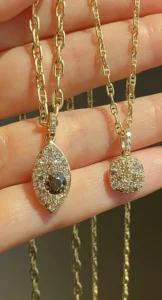
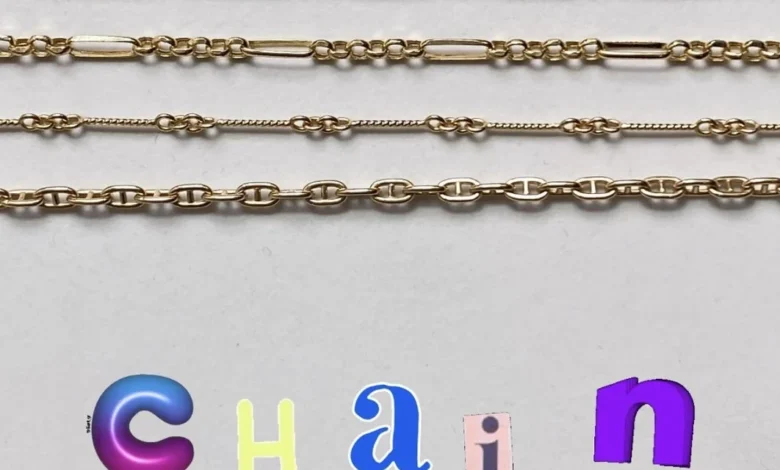
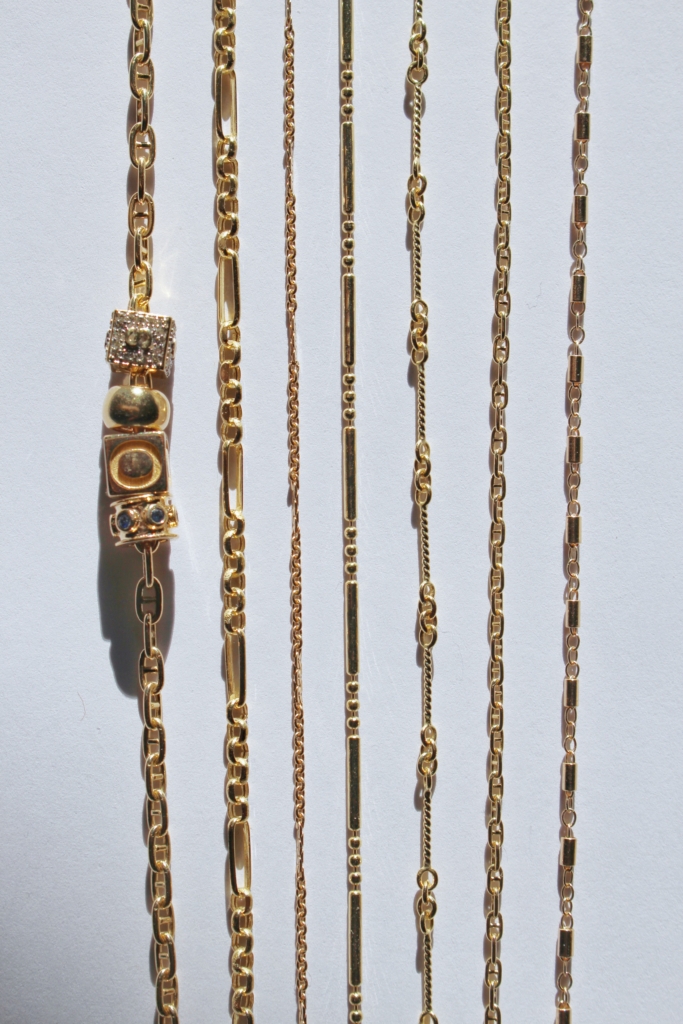
Distinguished by its oval shape with a central horizontal bar, the Mariner link is prized for its structural stability. Because the central bar prevents the links from deforming under tension, it is widely considered the industry standard for supporting heavy, statement-grade pendants. Available in varying gauges—from delicate "mini" versions to robust 3mm diameters—it offers a timeless, nautical-inspired aesthetic.
2. The Box Chain
The box chain is composed of square-shaped links that form a smooth, continuous, and highly flexible band. Historically favored for its strength-to-weight ratio, it is a preferred choice for those who wear their jewelry continuously. Its modular nature allows it to sit comfortably against the skin, minimizing the risk of twisting or kinking, which is common in more complex chain weaves.
3. Large-Link Statement Chains
The "Trombone," "Oval Jangle," and "Bar Link" styles represent the decorative wing of the modern collection. These chains are designed to add dimension and visual weight to a neck stack. Unlike smaller, more subtle chains, these larger links serve as a centerpiece. Their structural integrity is crucial, as the larger gaps between links can be points of weakness if not engineered with high-density, solid precious metal.

4. The Mini Figaro
As an upgrade to the standard cable chain, the Mini Figaro features an alternating pattern of flattened links, which provides a more refined, polished look. It is often cited by designers as the ideal entry-level chain for those looking to replace the generic, mass-produced chains that often accompany pendants at the point of sale.
5. Unique and Specialized Links
Innovation in jewelry manufacturing has introduced experimental designs such as the "Starburst," "Twisted Stick," and "Pinched Long Link." These pieces represent the intersection of contemporary design and traditional craftsmanship. These unique links are often manufactured using laser-welding technology, which ensures that the closure of each link is seamless and resistant to the mechanical stress that causes traditional, hand-soldered links to snap.
Implications for the Modern Jewelry Market
The shift toward purchasing new, manufacturer-direct chains has significant implications for both retailers and consumers. By bypassing the inherent risks of the secondary market, retailers can provide warranties and quality guarantees that are impossible to offer on vintage items.

Furthermore, the rise of the "curated stack"—the practice of layering multiple chains of different textures and lengths—requires a level of structural uniformity that only modern manufacturing can consistently provide. From a financial perspective, investing in new, solid-gold chains ensures that the asset retains its value as a precious metal commodity while providing the functional reliability expected of modern luxury goods.
As the industry moves forward, the emphasis on material science and manufacturing precision is likely to increase. For the discerning collector, the criteria for acquisition have become clear: prioritize structural integrity, demand documented durability, and select designs that serve a clear functional purpose within a broader, long-term jewelry collection. This approach ensures that the pieces acquired today will remain part of a collection for decades, eventually serving as the high-quality "vintage" jewelry of the next generation.