The Carmen Lúcia Ruby: A Testament of Love and the Pinnacle of Burmese Gemological History

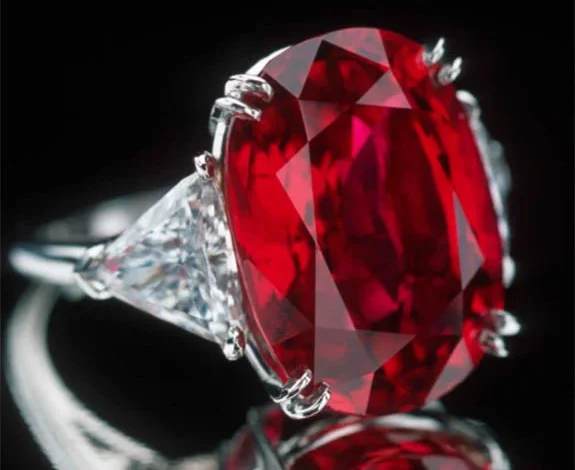
In the hallowed halls of the Janet Annenberg Hooker Hall of Geology, Gems and Minerals at the Smithsonian’s National Museum of Natural History, a single gemstone serves as a focal point for millions of visitors annually. This stone, known as the Carmen Lúcia Ruby, is not merely a mineral specimen of extraordinary proportions; it is a 23.10-carat Burmese ruby that represents the intersection of geological rarity, historical significance, and a deeply personal narrative of devotion. Since its induction into the National Gem and Mineral Collection in 2004, the ruby has been recognized as one of the most important colored gemstones in the world, rivaling the famous Hope Diamond in its ability to captivate the public imagination.
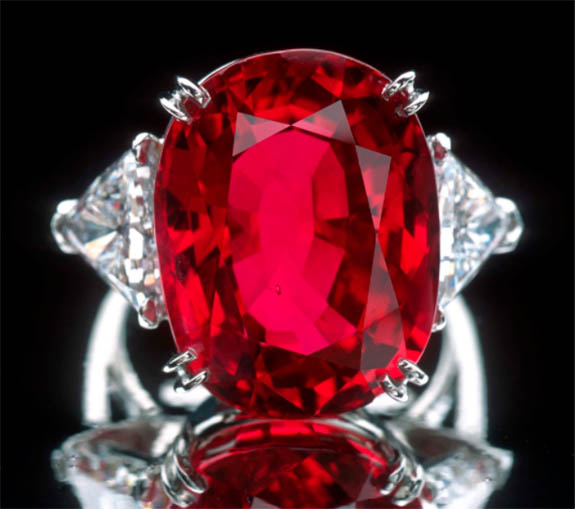
The Carmen Lúcia Ruby is an oval-cut stone that exhibits the most sought-after color in the world of corundum: a richly saturated, vibrant red known in the trade as "pigeon’s blood." This specific hue, characterized by a slight bluish undertone and a high degree of fluorescence, is traditionally associated with the finest rubies ever unearthed. At over 23 carats, the stone occupies a tier of rarity that is difficult for even seasoned gemologists to quantify. While diamonds, sapphires, and emeralds can occasionally be found in weights exceeding 100 carats, a high-quality Burmese ruby surpassing 20 carats is an event that occurs perhaps once in a generation.
The Geological Origins of the Mogok Marvel
The story of the Carmen Lúcia Ruby begins in the fabled Mogok region of Burma, now Myanmar. For over 800 years, this mountainous area, often referred to as the "Valley of Rubies," has been the source of the world’s most prestigious red gemstones. The geological conditions in Mogok are unique; the rubies are formed in marble through a metamorphic process that involves low silica and high chromium content. This specific chemical makeup allows the stones to glow with a natural fluorescence when exposed to ultraviolet light, giving them an "inner fire" that appears to radiate from within the crystal.
Sourced in the 1930s, the Carmen Lúcia Ruby was faceted during an era when the craftsmanship of gemstone cutting was transitioning from traditional methods to more precise, modern techniques. The stone’s exceptional clarity—a rarity for rubies, which are typically heavily included—allowed the lapidary to achieve a brilliance and light return that is seldom seen in colored stones of this magnitude. For decades, the gem remained in private collections, hidden from the public eye and known only to a handful of elite collectors and dealers.
A Legacy of Philanthropy and Remembrance
The gemstone’s journey from a private vault to the Smithsonian is a narrative defined by the life of Carmen Lúcia Buck and her husband, Dr. Peter Buck. Carmen Lúcia, a woman known for her grace and appreciation for natural beauty, had long admired the legendary ruby. In 2002, while undergoing treatment for cancer, she learned that the stone might soon become available for purchase. For Carmen, the ruby represented more than just a piece of jewelry; it was a symbol of hope and a milestone she intended to use to celebrate her eventual recovery.
Tragically, Carmen Lúcia Buck passed away in 2003 before she could acquire or wear the ring. In the wake of her death, her husband, Dr. Peter Buck, sought a way to honor her memory that would transcend a private memorial. Dr. Buck, a nuclear physicist and co-founder of the Subway sandwich chain, recognized that the ruby was a treasure of such magnitude that it belonged to the public. He provided the Smithsonian Institution with the necessary funds to purchase the ring, ensuring it would be displayed in perpetuity as the Carmen Lúcia Ruby.
During the official unveiling in 2004, Dr. Buck remarked that his wife would have been delighted to know the gem was not "locked away in a vault," but was instead being shared with the American people. This act of philanthropy transformed a personal tragedy into a national gift, providing the Smithsonian with what curator Jeffrey Post described as the most significant addition to the collection in two decades.
The Donor’s Extraordinary Path: From Physics to Subway
The financial ability to gift such a monumental treasure was rooted in one of the most successful business ventures in American history. Dr. Peter Buck’s career began in the realm of science, but his legacy is inextricably linked to his role as a venture capitalist and entrepreneur. In 1965, at the age of 35, Buck provided a $1,000 loan to a family friend, 18-year-old Fred DeLuca. The goal was for DeLuca to open a sandwich shop to fund his college education at the University of Bridgeport.
That initial investment led to the creation of "Pete’s Super Submarines," which eventually evolved into the global powerhouse known as Subway. Today, with tens of thousands of locations worldwide, the brand’s success elevated Dr. Buck to the ranks of the world’s wealthiest individuals, with a net worth estimated at $2.6 billion at the time of his later years. His background as a physicist gave him a unique perspective on the precision and structural integrity of the Carmen Lúcia Ruby, while his success in business allowed him to secure the stone’s place in history.
Comparative Market Analysis and Gemological Significance
To understand the immense value of the Carmen Lúcia Ruby, one must look at the historical performance of similar stones at auction. While the exact purchase price paid by the Smithsonian via Dr. Buck’s donation remains confidential, market trends provide a clear indication of its worth. In May 2015, the "Sunrise Ruby," a 25.59-carat Burmese stone, sold at Sotheby’s Geneva for over $30.3 million. This set a record for the highest price ever paid for a ruby at auction, equating to more than $1 million per carat.
The Carmen Lúcia Ruby, at 23.10 carats, occupies the same rarefied atmosphere. Unlike many large rubies that undergo heat treatment to enhance their color or clarity, the Carmen Lúcia is prized for its natural state. In the world of high-end gem collecting, "no-heat" Burmese rubies of this size are virtually non-existent. The stone is currently set in a platinum ring, flanked by two triangular-cut colorless diamonds weighing a combined 2.38 carats, which serve to accentuate the deep, saturated red of the center stone.
Chronology of the Carmen Lúcia Ruby
- 1930s: The ruby is mined in the Mogok region of Burma. It is faceted into its current oval shape and enters the private market.
- 1930s – 2002: The stone remains in various private collections, largely out of the public and scientific spotlight.
- 2002: Carmen Lúcia Buck learns of the stone’s availability while battling cancer.
- 2003: Carmen Lúcia Buck passes away. Dr. Peter Buck begins negotiations to acquire the stone in her honor.
- 2004: The ruby is officially donated to the Smithsonian Institution.
- 2004 – Present: The stone remains a centerpiece of the National Gem and Mineral Collection, viewed by millions of visitors annually.
Institutional Impact and Public Access
The inclusion of the Carmen Lúcia Ruby in the Smithsonian’s collection serves a dual purpose: it is both a public attraction and a subject of scientific study. The National Gem and Mineral Collection is one of the largest and most visited of its kind, housing over 375,000 individual specimens. By placing the ruby alongside the Logan Sapphire (422.99 carats) and the Hope Diamond (45.52 carats), the museum provides a comprehensive look at the earth’s ability to produce near-perfect crystalline structures.
For the Smithsonian, such donations are vital. The museum rarely has the budget to compete with private billionaires on the open market for stones of this quality. Philanthropic gestures like those from Dr. Peter Buck allow the institution to preserve global heritage that might otherwise disappear into private safes. Jeffrey Post, the long-time curator of the collection, has noted that the Carmen Lúcia Ruby is a "benchmark" stone—the standard against which all other rubies are measured.
Implications for the Gemstone Industry
The presence of the Carmen Lúcia Ruby in a public institution also has broader implications for the gemstone industry. It serves as a permanent reference point for the "pigeon’s blood" standard. As mining in Myanmar becomes increasingly complex due to political and ethical considerations, the historical stones sourced in the early 20th century gain even greater significance. They represent a "golden age" of Burmese mining, providing a geological record of the Mogok tract’s peak output.
Furthermore, the story of the ruby highlights the changing nature of gem ownership. In the past, the world’s finest stones were the exclusive province of royalty and the ultra-wealthy. The transition of the Carmen Lúcia Ruby into a public collection reflects a modern trend toward the democratization of beauty, where the most significant natural wonders are held in trust for the public good.
As July’s official birthstone, the ruby has always held a special place in folklore, symbolizing passion, protection, and prosperity. The Carmen Lúcia Ruby embodies these traits, but adds a layer of modern history that resonates with the human experience. It stands as a silent witness to the power of nature to create beauty and the power of the human spirit to honor love through lasting, meaningful gestures. Visitors to the Smithsonian will continue to marvel at its fire, ensuring that the name Carmen Lúcia Buck remains synonymous with one of the most spectacular treasures ever yielded by the earth.