Thai Fashion Brand KH Editions Brings Circular Design to the Global Stage at New York Fashion Week

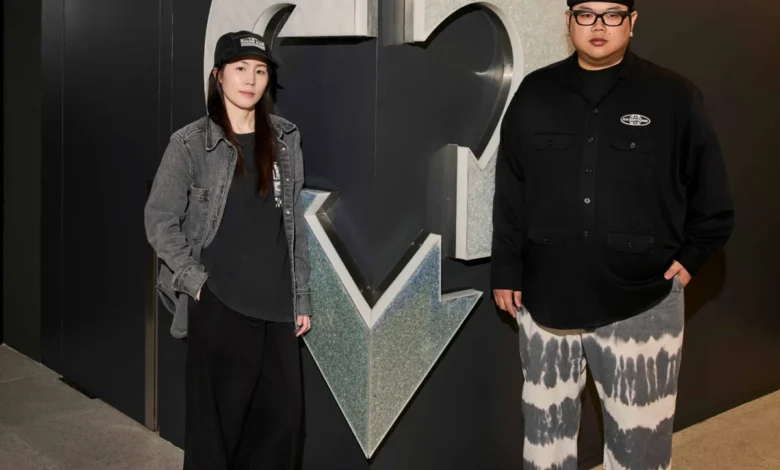
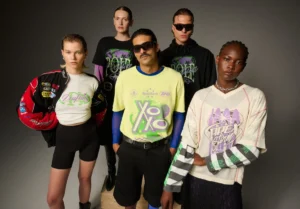
The intersection of high-concept streetwear and circular economy principles took center stage at this year’s New York Fashion Week (NYFW), as Thai label KH Editions debuted a Spring/Summer 2027 collection that challenges the traditional boundaries of sustainable textiles. Supported by the global chemical producer Indorama Ventures, the brand showcased two key looks and a series of accessories woven entirely from Deja recycled polyester yarn. This appearance, facilitated by Thailand’s Ministry of Commerce, marks a significant milestone in the country’s efforts to elevate its creative talent and sustainable manufacturing capabilities within the hyper-competitive landscape of international high fashion.
For KH Editions, the venture into New York is not merely a marketing exercise but a deliberate assertion that luxury streetwear can be synthesized from post-consumer waste without sacrificing aesthetic integrity. By integrating Deja—a high-performance recycled polyester derived from PET bottles—into their designs, the brand has provided a tangible proof-of-concept for the fashion industry’s ongoing transition toward circularity.
A Legacy of Sustainable Innovation: The Chronology of RECO
The collaboration between KH Editions and Indorama Ventures is rooted in a long-term partnership that predates the brand’s international success. The journey began in 2011, when Indorama Ventures launched the RECO Young Designer Competition. The initiative was designed to address a critical gap in the textile industry: the lack of practical application for recycled polyethylene terephthalate (rPET) in high-end design.
By 2018, the founders of KH Editions, Panisara Maneerat and Napat Tansuwan, were already engaging with these materials as students, participating in the RECO competition. Their early work served as an incubator for the techniques they now apply to their professional collections. Following their initial participation, the duo continued to refine their material science skills through the RECO Collective program in 2023 and 2025. This progression from student-led experimentation to a refined, commercially viable collection represents a successful model for corporate-sponsored mentorship in the creative arts.
The evolution of the RECO program from a competitive event into the "RECO Collective" signifies a strategic shift. While the original competition focused on ideation, the current iteration emphasizes market readiness, supply chain integration, and the technical requirements of producing garments that meet the quality standards of global retail markets.

Material Science Meets Streetwear Identity
The technical prowess of Deja yarn lies in its ability to emulate the tactile and functional properties of virgin polyester while drastically reducing the carbon footprint of the garment. In the context of the Spring/Summer 2027 collection, KH Editions utilized the yarn to create textiles that are both durable and adaptable to the fluid, often deconstructed nature of contemporary streetwear.
Napat Tansuwan, the brand’s co-founder and art director, emphasizes that the transition to recycled materials was driven by a rejection of the "sustainability tax"—the idea that eco-friendly fashion must be inherently less vibrant or structurally limited. "We do not see recycled materials and fabrics as limitations on design, but as starting points for new possibilities," Tansuwan stated during the showcase. "For this collection, we wanted to demonstrate that environmentally conscious alternative materials can be transformed into bold, playful, and distinctive streetwear while still clearly expressing the identity of our brand."
This approach addresses a common industry critique: that sustainable fashion often leans too heavily on minimalism or muted palettes. By utilizing Deja yarn, KH Editions maintains a high-saturation, high-energy aesthetic that appeals to the Gen Z and Millennial demographics that dominate the streetwear market.
Economic and Environmental Implications
The global textile industry is currently under immense pressure to decarbonize. According to industry data, the production of virgin polyester—a petroleum-based plastic—is a significant contributor to the sector’s greenhouse gas emissions. The use of rPET, such as the Deja yarn produced by Indorama Ventures, can reduce energy consumption by up to 59% compared to virgin polyester production, while also diverting plastic waste from landfills and oceans.
However, the challenge for manufacturers has long been the "closed-loop" problem—ensuring that the recycled material is of high enough quality to be reused repeatedly without degradation. The partnership with KH Editions serves as an important case study for Indorama Ventures, illustrating that their material meets the stringent standards of the New York fashion market.
Aradhana Lohia Sharma, Vice President of Finance and Wool Business at Indorama Ventures, noted that the objective has shifted from merely proving the viability of recycled plastic to proving its desirability. "Today, the challenge is no longer simply to prove that recycled materials can be transformed into new products. It is about making these materials part of products that people genuinely want to wear, use, and purchase," Sharma stated.

Global Strategy and the Thai Creative Economy
The inclusion of KH Editions in the New York Fashion Week schedule was a deliberate move by the Thai Ministry of Commerce to rebrand Thailand as a hub for sustainable design, rather than just a center for large-scale garment manufacturing. By backing designers who prioritize circularity, the Thai government is attempting to capture a larger share of the "conscious consumer" market, which is expected to grow significantly over the next decade as regulatory bodies in the EU and North America tighten requirements on textile waste and supply chain transparency.
The NYFW showcase served as a vital platform for this visibility. By placing Thai design at the intersection of material innovation and high-end street culture, the country is positioning its designers to compete with established brands in Paris, London, and Milan. This international exposure is expected to facilitate new B2B partnerships, allowing Thai firms to move further up the value chain.
Looking Ahead: The RECO Collective 2026 Final Show
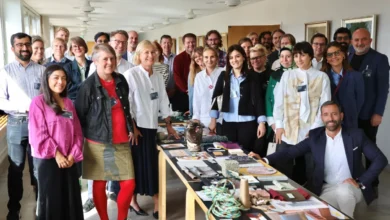
As the curtain closes on the New York showcase, the focus for Indorama Ventures and its partners shifts to Bangkok. On October 21, 2026, the company will host the RECO Collective 2026 Final Show at Nextopia. This event represents the culmination of a year-long cycle of collaboration, bringing together SME entrepreneurs, designers, and industry experts.
The event is expected to highlight the next generation of recycled textile applications, moving beyond apparel into home textiles and accessories. As the program enters its 12th year, it serves as a bellwether for the Southeast Asian textile market. The success of KH Editions in New York provides a roadmap for other participants in the RECO ecosystem, demonstrating that the synthesis of corporate material expertise and independent artistic vision can result in products that are both environmentally responsible and commercially viable.
Analysis of the Circular Fashion Movement
The success of the KH Editions project highlights three core pillars that are likely to define the next phase of the sustainable fashion movement:
- Vertical Collaboration: The model of a chemical/material manufacturer providing direct support to a boutique fashion house creates a feedback loop that accelerates innovation. By giving designers access to the latest material science, companies like Indorama Ventures can iterate their products based on the functional requirements of actual garment construction.
- Design-First Sustainability: The industry is moving away from the "sustainability-first" narrative, which often focuses on the origin of the material, to a "design-first" narrative, which focuses on the longevity and desirability of the garment. If the consumer does not want to wear the item, the circularity of the fabric becomes irrelevant.
- National Branding: Thailand’s state-sponsored support for sustainable fashion brands indicates that circularity is becoming a key component of national industrial policy. This strategy is essential for emerging markets looking to avoid the "race to the bottom" in manufacturing costs by pivoting toward high-value, high-innovation creative industries.
In conclusion, the debut of KH Editions at New York Fashion Week is more than a display of new clothing; it is a signal that the infrastructure for a circular textile economy is maturing. As these materials move from laboratory prototypes to the runways of the world’s fashion capitals, the barriers to entry for sustainable design continue to lower. Whether this momentum can be sustained at scale remains the primary challenge for the coming years, but the progress demonstrated by the RECO Collective suggests that the industry is firmly on the right path. As the world watches, the upcoming Bangkok final show will be the next litmus test for the viability of these recycled technologies in the broader global marketplace.
Related posts: