The Rise of Sustainable Carrywear: A Comprehensive Guide to Ethical Handbags and Accessories in the UK

The contemporary consumer market is undergoing a profound paradigm shift, driven by a growing demand for transparency, ethical manufacturing, and circular economic principles in fashion. As everyday carrywear—ranging from utilitarian backpacks to versatile tote bags and structured handbags—remains an indispensable component of daily life for work, education, and leisure, the environmental footprint of these accessories is increasingly under scrutiny. Traditional leather manufacturing and synthetic polymer production are resource-intensive industries associated with significant greenhouse gas emissions, toxic chemical runoff, and vast quantities of post-consumer waste ending up in municipal landfills. In response, a robust market for sustainable, vegan, and upcycled bags has emerged across the United Kingdom, offering consumers aesthetically sophisticated alternatives that align with rigorous ecological and ethical standards.
Understanding the Financial and Material Landscape of Ethical Accessories
Navigating the sustainable fashion landscape requires an understanding of both material innovation and investment value. Sustainable accessories are generally categorized by accessible pricing tiers to accommodate diverse consumer budgets, denoted here as £ (under £50), ££ (£50 to £100), and £££ (over £100). The materials utilized in this emerging sector diverge sharply from conventional virgin plastics and unethically sourced animal leathers. Instead, manufacturers are prioritizing pre-consumer and post-consumer waste streams, including recycled polyethylene terephthalate (rPET), reclaimed industrial nylon, agricultural byproducts like apple peels and pineapple leaves, and salvaged municipal or industrial artifacts.
This maturation of material science ensures that eco-friendly bags no longer compromise on durability, weather-resistance, or visual appeal. By extending the lifecycle of materials that would otherwise be discarded, these brands are actively mitigating the environmental degradation historically linked to the global textile and leather goods sectors.

BEEN London: Pioneering Zero-Waste Design and Upcycled Innovation
Operating at the intersection of architectural design and environmental advocacy, BEEN London has established itself as a frontrunner in British sustainable manufacturing. Founded on the principle of transforming localized waste into luxury everyday items, the brand constructs its versatile collections entirely from discarded materials destined for incineration or landfill.
The material roster utilized by BEEN London includes recycled leather sourced from tannery trimmings and offcuts, organic cotton, recycled industrial felt, regenerated nylon, and recycled polyester. Furthermore, the brand addresses the ethical and environmental controversies surrounding animal agriculture by incorporating innovative plant-based leathers into its product lines. These include Piñatex, a natural leather alternative derived from cellulose fibers of pineapple leaves harvested during agricultural crop management, and apple skin leather, manufactured from industrial waste generated by the European fruit juice industry.
A core tenet of BEEN London’s operational model is its commitment to localized production and minimal carbon footprints. Every piece is handcrafted within the United Kingdom, a practice that not only reduces transport-related emissions but also supports and preserves traditional British leather-crafting heritage. Structurally, the brand employs strict zero-waste design methodologies. By engineering patterns utilizing exclusively square and rectangular panels, BEEN London eliminates fabric cutting waste entirely. Moreover, the products are engineered for longevity, featuring repairable components and a circular design framework that ensures the bags can be easily recycled at the end of their usable lifecycle.
Baggu: Functional Durability and Scalable Recycled Nylon Production

Originating in the United States and widely distributed across the United Kingdom through high-end retailers such as Selfridges, Baggu approaches sustainable accessories through the lens of utilitarian design and scalable material efficiency. The brand has achieved widespread recognition for its functional, lightweight reusable tote bags, which are engineered from a single continuous piece of recycled nylon material. In an innovative approach to manufacturing optimization, the neck of the bag is repurposed to construct its accompanying carrying pouch, thereby eliminating fabric waste during the cutting phase while simultaneously reinforcing the structural integrity and durability of the tote.
Baggu’s broader portfolio, which includes everything from daily backpacks to travel accessories, relies heavily on recycled heavy-weight nylon, recycled cotton, and rPET plastic derived from post-consumer water bottles. The brand emphasizes that longevity is the ultimate metric of sustainability, subjecting its hardware and textiles to rigorous stress testing to ensure they age resiliently with character, thereby reducing the frequency of replacement cycles among consumers.
From a labor governance perspective, Baggu maintains strict oversight of its international manufacturing partnerships. Its production facilities in China operate in compliance with a comprehensive code of conduct aligned with the fundamental principles and rights at work established by the International Labour Organisation (ILO). This ensures equitable wages, safe working conditions, and the absolute prohibition of forced or child labor within its supply chain.
Elvis & Kresse: Transforming Industrial Salvage into Luxury Lifetimes
Perhaps one of the most radical examples of upcycling in the British fashion industry is the London-based luxury brand Elvis & Kresse. Established to rescue and repurpose industrial waste streams that traditional recycling systems cannot process, the brand’s signature collections are crafted from decommissioned professional fire hoses salvaged directly from British fire brigades. These heavy-duty synthetic rubber hoses, which have endured decades of extreme heat, water pressure, and chemical exposure in the line of duty, are meticulously restored and transformed into durable, water-resistant luxury bags and accessories.

The commitment to circularity extends to the interior architecture of Elvis & Kresse products. The luxury bags are lined exclusively with reclaimed textiles, utilizing either surplus Burberry manufacturing fabrics or decommissioned parachute silk. Although termed "silk," this material is entirely vegan-friendly, constructed from high-tensile rip-stop nylon that possesses minute manufacturing flaws rendering it unsuitable for military parachute deployment, thus saving it from premature disposal.
All Elvis & Kresse items are entirely handcrafted in England. To reinforce its dedication to product durability and anti-consumerist philosophies, the company offers a complimentary repair service for life on all of its goods, ensuring that items remain in circulation indefinitely. Demonstrating a profound philanthropic commitment embedded within its corporate structure, Elvis & Kresse donates 50 percent of the profits generated from its fire-hose product line directly to The Fire Fighters Charity, supporting injured and retired personnel.
Roka: Weather-Resistant Vegan Utility and Pre-Consumer Recycling
For consumers seeking structured, highly organized daily carrywear with a contemporary aesthetic, Roka offers a comprehensive range of vegan-friendly crossbody bags, pouches, and backpacks. The brand addresses the environmental impact of synthetic textiles by utilizing recycled nylon for both the interior linings and exterior shells of its products.
This recycled nylon is sourced primarily from pre-consumer waste streams, capturing unused fiber waste, manufacturing offcuts, and surplus raw materials from industrial garment production before they can enter the waste stream. The resulting fabric undergoes specialized processing to achieve a smooth texture and a subtle sheen, while offering exceptional weather resistance and tensile strength capable of withstanding heavy daily use.

Functionally, Roka’s designs prioritize ergonomic organization, incorporating strategically placed secure compartments, exterior zippered pockets, and internal sleeve structures. By utilizing durable synthetic fibers derived from existing industrial outputs, Roka provides a reliable, cruelty-free alternative to traditional leather and virgin petroleum-based nylon accessories.
Sandqvist: Scandinavian Minimalism and Fair Labor Standards
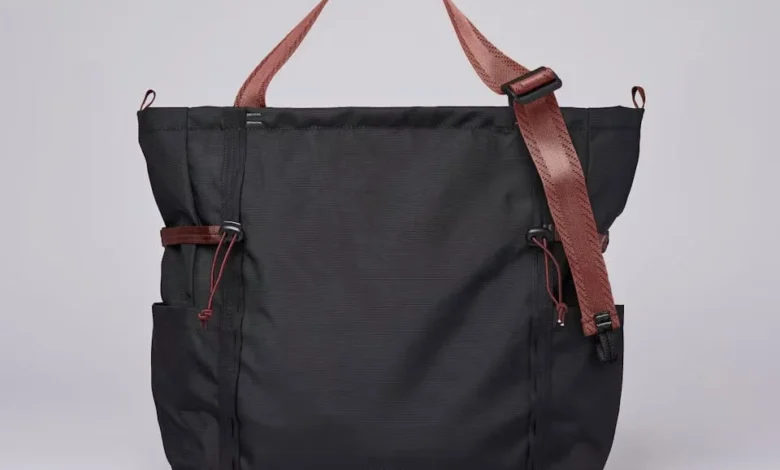
Representing the Scandinavian approach to functional design and environmental stewardship, Swedish brand Sandqvist focuses on the creation of everyday backpacks and minimalist carrywear constructed from certified sustainable materials. The brand’s material portfolio centers on organic cotton, which is cultivated without the use of toxic synthetic pesticides or fertilizers, alongside recycled polyester and recycled nylon.
Sandqvist’s design philosophy dictates that products must be timeless in aesthetic and repairable in construction, discouraging the fast-fashion cycle of obsolescence. Furthermore, the brand enforces strict corporate policies regarding chemical and water management throughout its supply chain, adhering to international environmental compliance standards to minimize aquatic toxicity and ecosystem disruption.
Ethically, Sandqvist is an active member of the Fair Wear Foundation, an independent verification initiative dedicated to improving labor conditions in garment factories. As a member, Sandqvist is subjected to regular third-party audits to verify adherence to the Fair Wear Code of Labour Practices. This guarantees safe physical working conditions, standard working hours, payment of living wages, and strict prohibitions against child or forced labor across its production facilities.

While Sandqvist operates primarily out of Sweden, the brand has streamlined its distribution network for British consumers. Taxes and import duties are factored into the purchase price for shoppers in the United Kingdom, removing unexpected logistical fees, while fulfillment is managed efficiently through established regional courier networks. For consumers preferring domestic retail channels, Sandqvist collections are also widely stocked by specialized British outdoor and ethical retailers such as WildBounds.
Broader Environmental Implications and Industry Trajectory
The proliferation of these sustainable bag brands reflects a broader, structural evolution within the global accessories market. As regulatory pressures mount and consumer awareness regarding microplastic shedding, carbon accounting, and supply chain transparency intensifies, fashion brands are increasingly compelled to adopt circular economic models.
The integration of agricultural waste-derived leathers, upcycled industrial artifacts, and closed-loop synthetic recycling demonstrates that high-performance accessories can be produced without relying on virgin fossil fuel extraction or environmentally destructive livestock farming. However, analysts note that the long-term success of the sustainable accessories sector will depend heavily on scaling collection and sorting infrastructure for post-consumer textile waste, as well as shifting consumer mindsets away from disposability toward product care, repair, and longevity.
As the United Kingdom market continues to expand its offerings of ethical carrywear, consumers are provided with actionable avenues to reduce their personal fashion footprints. Whether through investing in a zero-waste handcrafted tote from BEEN London, a repurposed fire-hose accessory from Elvis & Kresse, or a Fair Wear-certified backpack from Sandqvist, the modern accessories market demonstrates that ecological responsibility and high-end design can successfully coexist.