The Ultimate Guide to Streamlining Your Wedding Planning and Budget Management for Upcoming Seasons

Planning a wedding is frequently celebrated as one of the most joyous milestones in a couple’s life, yet it is equally recognized as a formidable logistical and financial undertaking. As couples look toward upcoming wedding seasons, the sheer volume of choices, vendor contracts, guest list dynamics, and fluctuating expenditures can quickly transform the romantic dream of a celebration into an overwhelming administrative burden. Industry analysts note that modern couples are increasingly seeking digital, highly organized solutions to regain control over their nuptial planning, moving away from chaotic paper notebooks toward dynamic, data-driven frameworks. To address this growing demand for clarity and financial prudence, comprehensive planning tools have emerged as essential assets for engaged couples navigating the complex modern wedding market.

The evolution of wedding planning reflects broader societal shifts toward efficiency, transparency, and collaborative digital management. Historically, couples relied heavily on professional wedding coordinators or manual ledger books to track expenses, a method prone to miscalculations, missed payment deadlines, and misplaced vendor contracts. With the proliferation of cloud-based office software such as Google Sheets and Microsoft Excel, the modern DIY wedding planner has been democratized. Couples now expect real-time financial tracking, automated cost projections, and centralized databases that can be accessed and edited collaboratively by partners, family members, or wedding coordinators from any location.

Recognizing the acute stress points associated with financial oversight, industry experts and experienced planners emphasize that early budget establishment is the single most critical factor in mitigating wedding-related anxiety. Financial transparency from the outset prevents unexpected debt and establishes realistic boundaries for discretionary spending on high-cost categories such as catering, venues, photography, and floral design. However, bridging the gap between initial budget estimation and final invoice settlement requires a robust framework that can evolve dynamically alongside the planning timeline.

To alleviate these common pain points, comprehensive digital resources have been developed to cater to varying levels of planning needs. For couples seeking a straightforward, zero-cost solution to monitor their finances, a specialized wedding budget spreadsheet offers an accessible entry point. Designed from practical, real-world experience, this tool enables users to map out estimated costs, record actual expenditures, track specific payment milestones, and maintain a clear ledger of confirmed vendors. By standardizing the financial tracking process, users can instantly view remaining balances and avoid the common pitfall of scope creep, where minor additions incrementally inflate the overall budget.

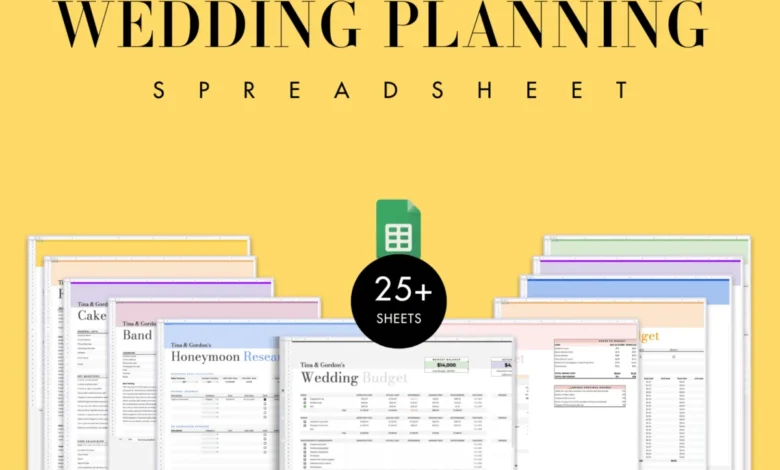
For those requiring a more holistic organizational architecture, advanced all-in-one planning suites have been introduced to cover every conceivable facet of event execution. Priced strategically with promotional incentives, these comprehensive packages integrate more than 25 specialized sheets into a single, cohesive workbook compatible with both Google Sheets and Microsoft Excel. Beyond core financial tracking, these expanded toolkits incorporate granular calculators for specialized expenses, including alcohol and beverage consumption projections, bespoke wedding cake pricing structures, and detailed florist cost analyses. Furthermore, they address peripheral yet vital elements of the celebration, ranging from meticulously organized seating plans and guest list databases to customized wedding weekend packing lists and honeymoon budgeting modules.

The implementation of such multi-faceted digital toolkits carries significant implications for the contemporary wedding economy. By empowering couples with institutional-grade organizational capabilities, these spreadsheets democratize event planning, allowing individuals to execute professionally styled and financially disciplined celebrations without necessarily incurring the high costs of a full-service wedding planner. Furthermore, the inclusion of dedicated vendor research templates encourages informed consumer behavior, enabling couples to rigorously compare quotes, evaluate contract terms, and negotiate effectively within their means.

As the wedding industry continues to adapt to changing economic landscapes and technological advancements, the demand for transparent, accessible, and highly structured planning resources remains unabated. Whether utilizing a foundational budget tracker or investing in an exhaustive all-in-one planning ecosystem, engaged couples are increasingly equipped to approach their nuptial preparations with confidence, precision, and financial peace of mind.