Cooling Bangladesh apparel factories pays for itself in 4 years: study

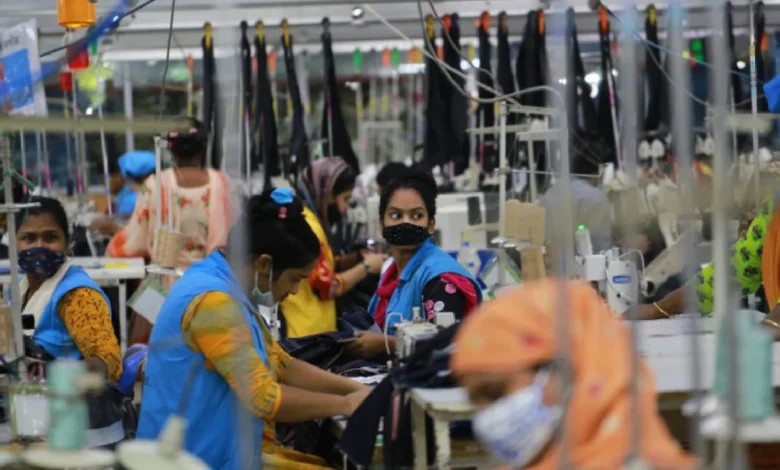
The escalating global climate crisis is increasingly intersecting with international supply chains, creating severe challenges for manufacturing hubs in the Global South. A landmark research report titled “Six seasons, four summers: Inside fashion’s high heat problem and how to solve it” has shed light on the severe toll that rising temperatures are taking on Bangladesh’s vital garment industry. Published jointly by Cornell University, BRAC University, YGEN Engineering, and the Bangladesh Centre for Worker Solidarity, the study breaks new ground by demonstrating that strategic capital investments to mitigate indoor factory heat can completely recover their initial costs within one to four years. More importantly, these interventions simultaneously safeguard worker health and reverse productivity losses that currently threaten the economic viability of the world’s second-largest apparel exporter.
The comprehensive study examined working and living conditions across eight garment manufacturing facilities situated in Dhaka over the course of a full year. By combining advanced engineering assessments with continuous indoor temperature and humidity telemetry—alongside biological and household data gathered from 37 individual garment workers—the research team mapped the profound reach of occupational heat stress. The findings reveal a sobering reality: Dhaka endured a staggering seven-month heat-stress season in 2025, a climatological phenomenon that researchers have formally categorized as “the new norm” for South Asia’s industrial heartlands.
Methodological Rigor and Collaborative Research Framework
The investigation into Bangladesh’s apparel sector was structured to capture both structural and human dimensions of occupational heat exposure. Researchers tracked environmental conditions inside the factories while concurrently monitoring the domestic environments of workers. Hotter nights, driven by urban heat island effects and inadequate housing construction, were found to severely impair workers’ nocturnal physical recovery. Consequently, employees returned to demanding shifts already fatigued, compounding the physiological toll of grueling work environments.
Engineering evaluations pinpointed specific trouble spots within the factory layouts. Ironing, pressing, and finishing zones emerged as critical danger areas where ambient temperatures and humidity levels consistently exceeded both outdoor readings and international occupational health thresholds. In these high-intensity sections, workers spent substantial portions of the hottest months trapped in caution, high, or severe heat-stress zones. Despite experiencing symptoms of heat exhaustion, survey data indicated that intense production quotas and piece-rate pressures forced employees to continue working through dangerous conditions.
The collaborative nature of the project brought together academic rigor, engineering expertise, and grassroots advocacy. BRAC University provided vital local context, YGEN Engineering contributed technical evaluations of building envelopes and mechanical systems, and the Bangladesh Centre for Worker Solidarity ensured that worker voices and lived experiences remained central to the analytical framework.
Financial Viability of Heat Mitigation Strategies
A central contribution of the report is its rigorous economic analysis, which dismantles the long-held assumption that factory-level heat adaptation is a purely sunk cost with no return on investment. Engineering assessments identified a suite of practical, highly effective interventions designed to lower ambient temperatures and improve indoor air quality. These measures primarily include advanced roof insulation, upgraded ventilation architecture, and targeted mechanical cooling systems tailored to individual production lines.
To evaluate financial feasibility, the research team modeled these expenditures across various economic scenarios. Under a conservative “headwinds” scenario—accounting for higher capital costs, elevated energy prices, and modest productivity gains—the average payback period across the studied factories was calculated at 2.9 years. Even within the most pessimistic models examined, the total capital outlay was fully recovered in slightly over four years.
Furthermore, the business case remains robustly positive because uncontrolled heat stress is not a neutral variable; it directly damages productivity. The study established a direct correlation between extreme heat exposure and an average 4.1% loss in working-time productivity across the evaluated sites. By curbing heat stress, factories not only protect their workforce from debilitating heat-related illnesses but also unlock efficiency gains that swiftly amortize the necessary capital expenditure.
Sector-Wide Investment Requirements and Economic Stakes
Scaling these vital solutions across the entirety of Bangladesh’s export-oriented apparel manufacturing sector requires a coordinated financial commitment. According to the report’s projections, a nationwide program to retrofit factories and establish comprehensive heat-stress management protocols would demand an estimated $239 million in capital expenditure.
When distributed across a manageable three-year rollout period, this capital investment equates to merely 0.2% of the sector’s total projected apparel export revenue for 2025. When viewed against the catastrophic financial risks posed by inaction, this expenditure represents an essential baseline for industry survival.
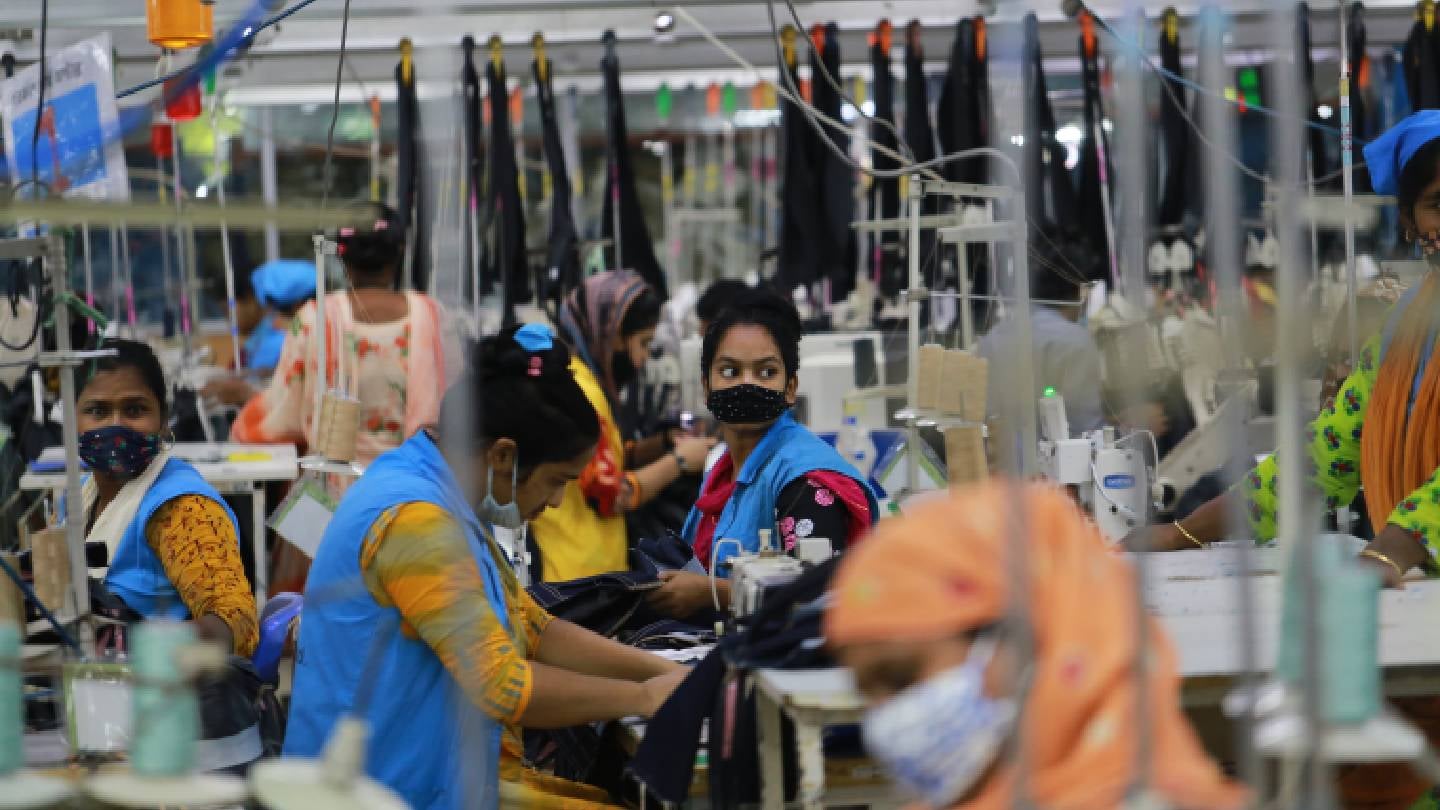
This new research builds directly upon foundational findings from Cornell University’s 2023 “Higher Ground” report, conducted in partnership with Schroders. That earlier analysis warned that unmitigated extreme heat and climate-induced flooding could place a staggering $65 billion in apparel exports at risk across Bangladesh, Cambodia, Pakistan, and Vietnam by the year 2030. For Bangladesh specifically, the previous study estimated that $27 billion in exports and up to 250,000 potential jobs remain highly vulnerable if structural adaptation measures are not swiftly implemented.
Socio-Economic Pressures on the Factory Floor
Beyond the physical factory walls, the research illuminated the heavy domestic burden borne by garment workers during prolonged heat waves. Elevated ambient temperatures at home forced families into difficult financial trade-offs. Workers reported taking on high-interest loans, pawning precious personal belongings, or cutting back on essential household expenditures—including food quality and children’s education—simply to afford fans, increased electricity bills, and basic medical care during peak summer months.
The compounding pressure of depleted savings, chronic sleep deprivation from hot nights, and continuous occupational exposure creates a cycle of vulnerability. Workers are caught between the economic necessity of maintaining employment and the mounting threats to their long-term health and safety.
Stakeholder Responses and the Call for Shared Responsibility
Industry leaders and labor advocates have seized upon the report’s release to demand immediate, collaborative action. Jason Judd, executive director of Cornell University’s Global Labor Institute, emphasized the clarity and urgency of the data.
"The problem is urgent and we already know what can be done to reduce heat stress," Judd stated. "There are practical solutions available to manufacturers. Addressing heat stress makes sense from both business and worker health and safety perspectives. The challenge now is deciding how to share the costs fairly and scaling these solutions across the industry. This means acting together—employers, buyers, workers, government—including through mandatory programmes such as the International Accord, which provide a framework for putting solutions into practice and spell out how responsibility is shared."
Echoing the necessity of tailored, context-specific interventions, Tareq Ahmed Robin, managing director of YGEN Engineering Dhaka, noted the limitations of generalized approaches.
"There is no one-size-fits-all solution to heat stress," Robin explained. "Every factory is different, so measures need to reflect the factory’s design and production processes. The important thing is to start now, with practical steps—insulation, improved airflow, active cooling for the hottest areas—and to build on these measures as heat stress rates go higher."
Broader Implications for Global Supply Chains
The implications of the Cornell University report extend far beyond the borders of Bangladesh, serving as a critical warning for global apparel supply chains operating across tropical and subtropical regions. As climate change accelerates, extreme heat events will no longer be treated as anomalous seasonal spikes but as permanent baseline conditions that fundamentally alter manufacturing realities.
The study argues decisively that heat adaptation cannot be offloaded entirely onto factory owners in developing nations as an isolated operational expense. Because international fast-fashion brands and retail conglomerates reap the financial benefits of outsourced production, an equitable distribution of capital costs is essential. Effective adaptation requires synchronized coordination between multinational buyers, local manufacturers, labor unions, and government regulators.
Ultimately, the report reframes workplace heat stress not merely as an environmental hazard or a localized labor grievance, but as a systemic economic risk. By proving that targeted investments pay for themselves within a few short years while protecting human capital, the research provides a clear, actionable roadmap for securing the future of the global garment industry against the mounting pressures of a warming planet.