Spinnova moves to acquire Portuguese spinner Tearfil to bolster sustainable fibre commercialization

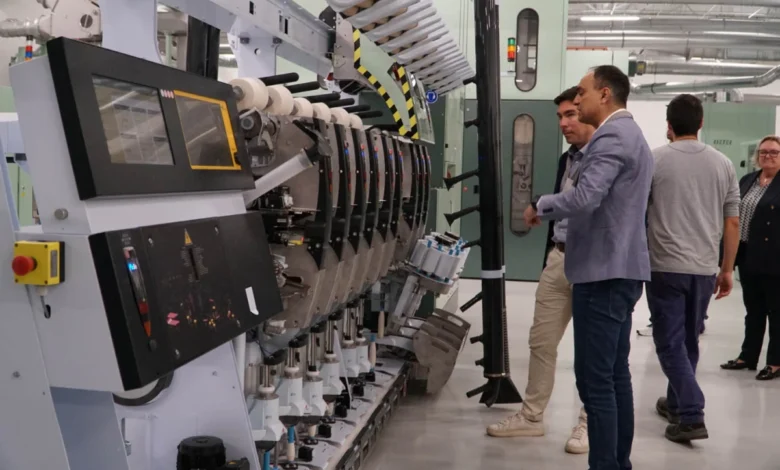
Finnish sustainable fibre technology leader Spinnova is set to deepen its control over the textile supply chain by initiating a strategic acquisition of its long-term Portuguese partner, Tearfil. The proposed transaction, valued at €500,000, comes at a critical juncture for the Guimarães-based yarn spinner, which is currently navigating a court-supervised restructuring process. By integrating Tearfil’s specialized spinning infrastructure, Spinnova aims to accelerate the transition of its proprietary wood-based fibre from experimental R&D stages to high-volume, commercial textile applications.
The Strategic Rationale for Acquisition
For Spinnova, the motivation behind this acquisition is rooted in the practical realities of scaling sustainable materials. Spinnova’s technology produces cellulosic textile fibre from wood pulp and agricultural waste streams without the harmful chemicals typically associated with conventional man-made cellulosic fibres like viscose. However, successfully translating these raw fibres into market-ready yarns requires specialized spinning equipment and technical expertise.
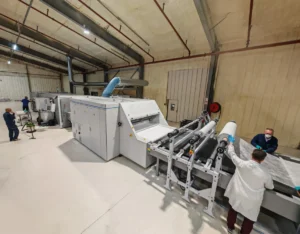
Tearfil has served as a cornerstone of Spinnova’s development cycle for years, providing the R&D yarn spinning line necessary to prove that the material can be processed on existing machinery. By bringing these capabilities in-house, Spinnova effectively shortens the development cycle, allowing for greater precision in fiber-to-yarn engineering. This vertical integration is a common strategy among deep-tech material science companies, which often find that third-party manufacturing partners lack the specialized equipment settings required to handle novel, non-traditional fibres at scale.
Financial Context and Restructuring
The acquisition proposal follows a period of significant financial distress for Tearfil. According to recent filings, the company’s turnover plummeted by approximately 34% in 2025, falling to €8.6 million from €12.9 million in 2024. More concerning for creditors is the company’s widening net loss, which ballooned from €448,000 to €3.27 million in the same period.
As of the end of 2025, Tearfil reported a precarious balance sheet, burdened by €7.9 million in short-term liabilities and an additional €5 million in long-term debt. To prevent insolvency and maintain continuity of operations, Tearfil has entered the Processo Especial de Revitalização (PER), a Portuguese legal mechanism designed to allow companies to negotiate debt recovery plans while continuing to trade.

To support this transition, Spinnova has agreed to provide a €1.5 million bridge loan. This capital injection is intended to stabilize the company’s working capital requirements. The terms of the loan—pegged at the 12-month Euribor rate plus 2%—reflect the risk profile of the venture. Should the acquisition fail to proceed, Spinnova has included contractual clauses to seek early repayment, providing a layer of protection for the Finnish company’s shareholders.
Chronology of the Partnership
The relationship between the two entities spans several years, marked by a series of technical milestones that paved the way for the current bid:
- 2022–2023: Initial trials begin as Spinnova utilizes Tearfil’s facilities to test the blendability of its fibre with other materials, such as organic cotton and recycled polyester.
- 2024: Spinnova achieves increased throughput in its production process, placing higher demand on Tearfil’s specialized spinning lines to keep pace with demand from fashion brand partners.
- 2025: Tearfil faces macroeconomic headwinds, including rising energy costs in Europe and a cooling demand in the textile sector, leading to a sharp decline in financial performance.
- September 2026: Spinnova signs a non-binding letter of intent to acquire Tearfil, concurrent with the initiation of the Portuguese court-supervised restructuring.
- Q1 2027 (Projected): Expected completion of the acquisition, pending regulatory approval, successful due diligence, and the ratification of the restructuring plan by the court and creditors.
Industry Implications and Market Impact
The decision by Spinnova to move "downstream" signals a broader trend in the sustainable textile industry. As fashion brands face mounting regulatory pressure to decarbonize their supply chains—driven by the EU Strategy for Sustainable and Circular Textiles—the demand for proprietary, low-impact fibres is rising. However, the gap between "innovation" and "industrial scale" remains the biggest hurdle for climate-tech firms.
By securing a dedicated yarn plant, Spinnova is insulating itself against the volatility of external suppliers and ensuring that its proprietary fibre can be spun under controlled, high-quality conditions. Analysts suggest that this move could serve as a blueprint for other material science firms. Rather than relying solely on partnerships with established textile mills that may prioritize traditional materials, companies like Spinnova are increasingly seeking to own the infrastructure that bridges the gap between raw fibre and the finished garment.
Furthermore, the acquisition provides Tearfil with a lifeline that a traditional bank might not offer. For the Portuguese workforce, which has deep roots in the textile industry, Spinnova’s investment potentially safeguards jobs and maintains the viability of one of the region’s more sophisticated spinning facilities.
Official Perspectives
Janne Poranen, CEO of Spinnova, has framed the move as a logical progression of the company’s business model. "Tearfil has been an important partner for Spinnova, playing a key role in advancing Spinnova fibre toward commercial applications," Poranen stated. "Bringing these capabilities into Spinnova would strengthen our ability to support broader adoption of our fibre and advance the commercial scaling of our technology."

While no formal statement has been issued by Tearfil’s management regarding the specific terms of the court-supervised recovery, the company’s participation in the PER process suggests a willingness to pivot toward a new ownership structure that offers financial stability and technological integration.
Risks and Regulatory Hurdles
Despite the clear strategic benefits, the deal is not without risks. The acquisition remains subject to several significant conditions precedent:
- Court Approval: The Portuguese court overseeing the PER must be satisfied that the acquisition provides a sustainable path forward for Tearfil and treats creditors fairly.
- Due Diligence: Spinnova must confirm that the underlying assets and liabilities match the representations made by Tearfil during initial negotiations.
- Governance: Approval from Spinnova’s own board of directors is required, which will involve a rigorous assessment of whether the acquisition provides sufficient return on investment, given the company’s own capital allocation priorities.
- Integration Risk: Transitioning a distressed company into a high-growth technology firm requires significant managerial bandwidth. The challenge for Spinnova will be to integrate Tearfil’s existing workforce and operational culture without stifling the agility required for its R&D operations.
Looking Ahead
As the global textile industry shifts away from synthetic polymers and water-intensive cotton, the importance of scalable, sustainable alternatives has never been greater. Spinnova’s move reflects the high-stakes nature of this transition. By securing a dedicated spinning facility, the company is betting that the path to commercial success lies not just in the chemistry of the fibre, but in the control of the entire value chain.
The next few months will be critical. If the restructuring process proceeds as planned, Spinnova will emerge in early 2027 with a captive manufacturing facility, positioning itself to better serve brands that are increasingly demanding circular, bio-based materials. The success of this acquisition will likely be measured by how quickly Spinnova can return Tearfil to profitability while simultaneously ramping up the production of its revolutionary, climate-friendly yarns. As the global push for sustainability accelerates, Spinnova is clearly signaling that it is prepared to move from the laboratory to the factory floor to ensure its place in the future of fashion.