The High Cost of Efficiency: How the Advertising Industry is Grappling with AI-Driven Quality Slump and Talent Loss in Fall 2026

As the advertising industry enters the peak of its annual autumn event cycle in 2026, the term artificial intelligence echoes through conference centers from New York and London to Frankfurt and Tokyo. Yet, the tenor of these gatherings has undergone a stark transformation. In the nascent days of the generative AI boom, main-stage keynotes and panel discussions vibrantly championed raw innovation, accelerated workflows, and unprecedented cost efficiencies. Today, however, that initial euphoria has given way to a palpable fatigue. Years of aggressive automation have yielded widespread industry layoffs, a hollowed-out talent pipeline, and, crucially, a noticeable decline in creative standards.
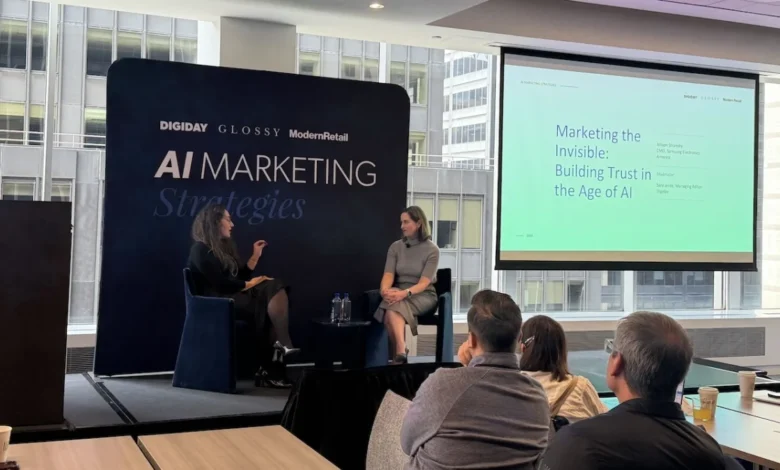
Marketers, brand executives, and agency leaders are no longer content simply asking how fast an algorithm can generate a campaign asset. Instead, they are urgently seeking to establish rigorous new benchmarks, rebuild depleted talent bases, and safeguard brand equity against the erosion caused by unchecked automation. This pivotal shift was the central focus of the inaugural AI Marketing Strategies event, co-hosted on September 24 by industry publications Digiday, Glossy, and Modern Retail. Across closed-door town halls and sprawling keynote presentations, the overarching consensus was clear: the pursuit of maximum output with minimum human intervention has introduced severe vulnerabilities into the digital supply chain.
The Anatomy of Declining Standards in Automated Workflows
At the heart of the current crisis is a race to the bottom regarding creative quality. As brands and agencies grapple with shrinking headcounts—a direct consequence of AI-driven job cuts that have become the new normal across adland—remaining staff are increasingly tasked with managing automated systems rather than crafting original narratives.
During a closed-door town hall session held under Chatham House Rules, brand-side marketers voiced deep anxieties regarding digital supply chain integrity. Participants detailed the inherent risks of leaning too heavily on automated content generation, warning that volume has officially triumphed over value. The result, many argued, is a systematic dilution of the brand equity that premium companies have spent decades cultivating.
"The quality control is so bad," lamented one participant representing a high-end luxury and beauty brand during the session. "Establishing brand standards into AI-driven ad platforms is challenging all of us."
This sentiment was echoed by multiple brand representatives who described a growing corporate complacency—a dangerous industry-wide acceptance of a "good enough, let it run" philosophy. Several executives shared alarming anecdotes of creative executions slipped past overworked or insufficiently supervised agency teams that featured distorted company logos, inappropriate tonal shifts, or glaring factual inaccuracies.
To combat this, brand-side leaders are being forced to institute strict human-in-the-loop protocols. One beauty brand executive outlined what they termed the "10/80/10 formula" for managing generative outputs. Under this framework, 10 percent of human effort is dedicated upfront to crafting precise prompts and strategic direction. The AI then handles the middle 80 percent of heavy lifting, generating the raw assets. Crucially, the final 10 percent of human intervention is strictly non-negotiable—requiring meticulous review, editing, and polish to ensure the work meets elite brand standards.
Yet, a major friction point remains the disconnect between brands and their agency partners. Marketers complained that external agencies, often relying heavily on junior employees ill-equipped to spot subtle AI artifacts or strategic missteps, lack the necessary motivation to rigorously safeguard brand standards. For premium verticals, the stakes could not be higher; rolling out sub-par, AI-generated content directly threatens brand credibility and erodes consumer trust.
Navigating Change Management and the Human Element in the Workplace
Beyond creative quality control, the rapid pivot to automation has created profound human and operational challenges. In a separate strategy session at the conference, participants addressed the delicate art of change management, emphasizing that leadership across brands, agencies, and tech vendors must urgently re-evaluate how they treat the human element during structural transitions.
The psychological toll on the modern workforce cannot be overstated. With job insecurity casting a long shadow across the advertising sector, employees frequently view AI not as a collaborative tool, but as a direct threat to their livelihoods. Industry veterans note that while technology can compress timelines that once took weeks down to mere hours, leadership must clearly define the enduring value of human talent in an automated ecosystem.
"With AI, you can get to where you need to in terms of campaign implementation within weeks," observed the chief executive of a boutique digital agency. "But with AI, you can get there within hours. So, you have to ask yourself: what value do your employees have on top of that? People are going to feel very threatened. But we can help them work out how we fit in that world."
This transition has drawn inevitable comparisons to the structural upheavals of the early 2000s and 2010s, when the industry was forced to adapt to the advent of digital-first advertising, programmatic buying, and social media ecosystems. Just as agencies had to reinvent their billing models and creative disciplines back then, they are now forced to re-engineer their entire operational architectures to survive the agentic era.
Measuring the Gaps: Adapting Strategy for the Post-Digital Era
Addressing the macro-level shifts in consumer behavior, Isabel Perry, Global Executive Vice President of Strategy at digital consultancy DEPT, delivered a keynote address dissecting the evolution of marketing measurement. Perry argued that the traditional playbooks of the digital-first era are no longer sufficient in a landscape where automated bots and AI agent-driven internet traffic are beginning to outnumber human users.
According to Perry, the industry suffers from a severe case of data obesity. "We are drowning in measurement," she told attendees. "Instead of just measuring numbers, we need to measure gaps. If you’re measuring the gap, you can start actually allocating budgets to the pieces that really matter, instead of just chasing semi-generic industry metrics, which are useful but not actually strategic."
Perry advocated for a fundamental reallocation of marketing budgets based on a clear-eyed assessment of where consumer journeys remain genuinely human versus where they are entirely mediated by autonomous AI agents. This strategic realignment requires brands to abandon vanity metrics and focus on the nuanced friction points where human connection genuinely drives conversion and brand loyalty.
The Internet of Two Audiences: Curation in a Zero-Click World
Further compounding these strategic shifts is the migration toward what industry experts describe as a "zero-click world" and the emergence of an "internet of two audiences"—comprising both human consumers and autonomous agentic audiences.
During a dedicated panel session, Rajiv Ragu, Vice President of Digital at health and wellness brand Thorne, explored the complex mechanics of product discovery in this new environment. Ragu highlighted the pressing need for brands to actively curate and maintain their legacy digital content libraries. As search engines and discovery platforms increasingly rely on AI summaries and agentic retrieval rather than traditional web browsing, legacy content that is left unmanaged can become a liability.
"You need to see what content is still being picked up," Ragu told the audience during the Q&A session. He emphasized that keeping extensive content libraries relevant requires continuous capital investment, including updating author credentials, verifying factual accuracy, and refreshing underlying data. Neglecting these maintenance tasks, he warned, introduces severe risks of brand damage as AI agents pull outdated or inaccurate information to present directly to consumers.
Broader Industry Implications and the Road Ahead
The revelations emerging from the Fall 2026 conference circuit underscore a mature, sober realization across the global advertising landscape: artificial intelligence is neither a miraculous silver bullet nor a passing fad, but a disruptive operational reality that requires rigorous governance.
As the industry moves forward, the competitive advantage will likely shift away from those who simply automate the fastest, toward those who master the delicate balance between algorithmic efficiency and human oversight. Brands that successfully enforce strict quality control standards, invest in human change management, and adapt their measurement strategies to account for bot-driven traffic will be best positioned to thrive. Conversely, companies that continue to sacrifice brand equity at the altar of short-term cost-cutting risk alienating discerning consumers in an increasingly crowded and automated marketplace.