The Year of Peptides: A Convergence of Pharmaceutical Breakthroughs and Beauty Innovation Reshapes the Wellness Landscape

The year 2026 stands poised as a landmark period for peptides, marking an unprecedented surge in their prominence across both the pharmaceutical and beauty sectors. This phenomenon is largely driven by two significant forces: the widespread availability and democratization of GLP-1 peptides, which have revolutionized weight management and metabolic health, and a concurrent, powerful wave of innovation within the beauty industry, expanding peptides’ application from topical skincare to hair, body, and ingestible supplements. The confluence of these trends underscores a broader societal shift towards longevity, preventative health, and biohacking, with peptides emerging as key players in this evolving landscape.
The GLP-1 Catalyst: A Pharmaceutical Revolution Democratizes Access
The journey of GLP-1 (Glucagon-Like Peptide-1) receptor agonists, such as Ozempic and Wegovy, has been nothing short of transformative. For the past three years, these medications have faced significant supply shortages due to overwhelming demand, particularly for their efficacy in weight management beyond their original indication for type 2 diabetes. However, 2026 signifies a pivotal moment as these highly sought-after treatments become widely available. This expanded access is further amplified by the recent release of three new GLP-1 pills this month, including an oral formulation of Wegovy.
This shift from injectable, often hard-to-access treatments to readily available oral forms represents a significant democratization of a powerful therapeutic class. GLP-1s work by mimicking a natural hormone that regulates appetite, slows gastric emptying, and improves insulin secretion. Their ability to induce substantial weight loss and improve metabolic markers has captured global attention, with an estimated market size for GLP-1 agonists projected to reach well over $100 billion by the end of the decade. The heightened public discourse and scientific validation surrounding these pharmaceutical peptides have created a halo effect, drawing increased consumer curiosity and acceptance towards the broader peptide category. This growing familiarity with the term "peptide" and its tangible health benefits has paved the way for its accelerated adoption in other areas, notably the expansive beauty and wellness market.
Peptides Defined: Understanding the Building Blocks of Biological Function
To fully appreciate the current peptide boom, it is essential to understand what peptides are. Peptides are short chains of amino acids, the fundamental building blocks of proteins. Unlike proteins, which typically consist of 50 or more amino acids, peptides are generally composed of fewer than 50. Their smaller size allows them to penetrate biological barriers, such as the skin, more effectively than larger proteins. Peptides play crucial roles in virtually every biological process, acting as signaling molecules, hormones, neurotransmitters, and antimicrobial agents. In the context of beauty and wellness, they are often leveraged for their ability to signal cells to perform specific functions, such as stimulating collagen production, reducing inflammation, or promoting cellular repair. This inherent biological activity makes them highly attractive ingredients for targeted interventions in skincare, hair care, and internal health.
The Beauty Industry’s Second Peptide Wave: From Topical Trends to Holistic Wellness
While peptides have been present in skincare formulations for decades, the industry is currently experiencing a dynamic resurgence, building on a significant topical peptide surge observed in 2023. That earlier wave saw prominent brands like Goop, Glow Recipe, and Naturium launching peptide-infused skincare lines, signaling a renewed interest in these potent ingredients. Now, the beauty industry is riding an even larger, more expansive wave, driven by heightened consumer awareness and innovative product development.
Lorne Lucree, an innovation advisor for YSE Beauty, founder of Quiet Coyote Consulting, and CEO of Wizard Wellness, observes this evolution: "At the end of the day, peptides [in skin care] have been around, so it’s interesting how we start to think about things differently once they’re kind of reframed in a way that’s category-specific." This reframing, he suggests, is deeply influenced by the broader popularity of peptides in health and wellness, amplified significantly by social media.
Indeed, market research confirms a dramatic increase in public engagement. According to Alyssa Williams Atkinson, category insights manager at Spate market research, "peptide therapy" witnessed a staggering year-over-year popularity growth of 281% on Google, 459% on TikTok, and 412% on Instagram as of early April this year. Spate further projects an additional 33% growth across the board over the next year. This digital enthusiasm is often linked to adjacent health trends, with recent searches for "peptide therapy" frequently accompanied by terms like NAD (up 601%), GLP-1 (up 177%), and anti-aging (up 162%), indicating a consumer base increasingly connecting systemic health benefits with cosmetic applications.
K-18’s Groundbreaking Impact: A Blueprint for Success
Beyond the general halo effect from GLP-1s, a crucial catalyst for the current beauty peptide boom is attributed to the groundwork laid by K-18. Launched in 2020, K-18, a peptide-based hair-repair brand, rapidly achieved sales success and was acquired by Unilever in 2023 for over $1 billion. Lucree highlights K-18’s pivotal role: "It wasn’t until K-18 came out that I think people were like, ‘Oh my God, peptides!’ [because] they did an amazing job educating on what peptides are and how they work." This success demonstrated the power of clear scientific communication in demystifying complex ingredients for the mass market, creating a receptive audience for subsequent peptide innovations. The brand effectively translated scientific efficacy into tangible consumer benefits, setting a new benchmark for ingredient-led marketing.
The success of K-18 has had a ripple effect throughout the supply chain. Lucree notes that ingredient suppliers, seeing the market potential, have ramped up their development of new peptide compounds. "When you look upstream, ingredient suppliers often think the same way, too," he states, drawing parallels to the past proliferation of collagen as an ingredient. This influx of readily available, innovative peptide ingredients from manufacturers, combined with consumer trends like longevity, preventative health, and biohacking, has created a fertile ground for the current market explosion.
Innovation from Ingredient Suppliers to Bespoke Formulations
The burgeoning market has led to a flurry of new product development. In June of 2025, Lucree accompanied YSE Beauty founder Molly Sims to Supplier’s Day in New York City, a key convention where ingredient manufacturers showcase their latest advancements. There, they secured access to a novel proprietary ingredient blending Tripeptide-1 and Hexapeptide-9 with hyaluronic acid. Lucree was particularly impressed by the ingredient’s ability to deliver both immediate and long-term benefits, a rare combination in the peptide realm. "It’s rare in peptides that you can get some of these more immediate claims that speak outside of some of the [long-term] firming benefits, elastin benefits, etcetera," he explained.
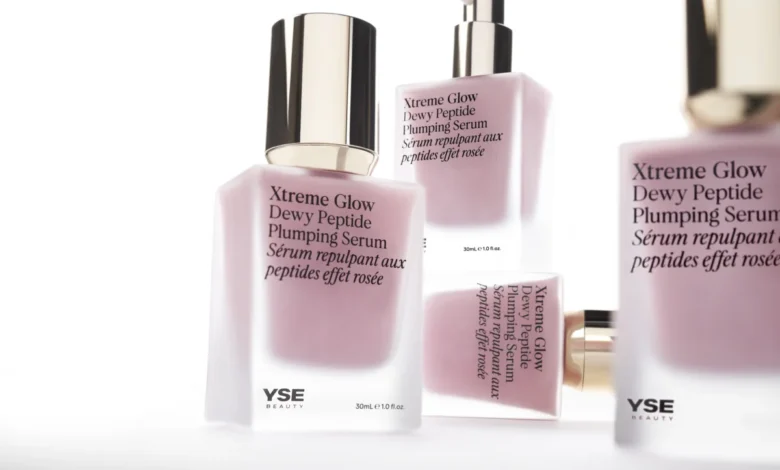
This discovery culminated in the launch of YSE Beauty’s $68 Xtreme Glow Dewy Peptide Plumping Serum on March 26. The serum leverages hyaluronic acid for an immediate "glass-skin" effect, complemented by the peptide blend for long-term firming. The market’s reception has been overwhelmingly positive, with the company reporting the serum as its strongest launch to date, setting records for both first-day and first-week sales, over-delivering on its four-week unit forecast by 10%, and quickly selling out on Sephora.com. This commercial success underscores consumer readiness for sophisticated, science-backed beauty solutions that promise both instant gratification and enduring results.
Pioneering Proprietary Peptides: The High-Stakes Game of Discovery
While licensing peptides from manufacturers offers a quicker route to market, some brands are opting for the more arduous but potentially more rewarding path of developing custom, proprietary peptides. One Skin, founded in 2016 by four PhD scientists, exemplifies this approach. The brand was built around a unique topical peptide called OS-01, specifically designed to remove senescent cells—often dubbed "zombie cells"—which are no longer functioning correctly and contribute to inflammation and aging.
Alessandra Zonari, PhD, chief science officer and co-founder of One Skin, highlighted the significant investment required: "It cost millions of dollars to go the route we did, so it was very expensive, and we know that not all brands can do something like that to really discover something new." However, she emphasized the substantial payoff: "If you find something, the pay-off is really high, because then you have something that’s unique, that’s proprietary and of which you can validate the efficacy." Dr. Zonari and her co-founders sourced the OS-01 molecule from a peptide library in Brazil, meticulously validated its efficacy through rigorous testing, and then built One Skin as the consumer-facing brand. Backed by investors like Prelude Growth Partners and Unilever Ventures, One Skin now offers peptide formulas for face, body, lips, scalp, and hair, with its bestselling face moisturizer retailing for $100. This model of deep scientific research and proprietary ingredient development allows for stronger intellectual property and more robust efficacy claims, setting a high bar for the industry.
Precision Delivery Systems: Maximizing Efficacy in Application
Another critical aspect of peptide efficacy, particularly for topical applications, lies in the delivery system. Nayan Patel, PharmD, a longtime peptide expert, professor at USC’s School of Pharmacy, and founder of Auro Wellness, has focused heavily on this challenge. His line, sold through doctor offices and direct-to-consumer channels, utilizes popular peptides within bespoke delivery systems.
Auro Wellness’s Copper Tripeptide serum, priced at $160, taps into the growing awareness of copper peptides, also known as GHK-Cu. GHK-Cu is widely recognized, particularly among biohackers, and is often injected. However, it is one of the rare injectable peptides also effective when applied topically. Dr. Patel underscores the persistent challenge: "The question is, ‘How do I get the GHK inside the body?’ Because any peptides, I don’t care what it is, can never get through your skin [without the right delivery system]."
In 2007, Dr. Patel pioneered a patented delivery system called "Auro GSH" designed to effectively transport peptides into cells. His philosophy transcends mere skin penetration: "Our goal is not to just get through your skin and into your bloodstream… My goal is to get inside your skin cells [and stay there] where the benefits are going to be." This emphasis on precision delivery ensures that the active peptide ingredients reach their intended cellular targets, maximizing their therapeutic potential and distinguishing truly effective products from those with superficial claims. Both Dr. Zonari and Dr. Patel agree that proprietary peptides and precision application represent the next frontier in the expanding peptide market.
Beyond Skincare: Peptides Expand Across Wellness Categories
The peptide phenomenon is not confined to skincare alone; its influence is rapidly spreading across various wellness categories. In March, P&G-owned Ouai Haircare launched its $50 topical hair peptide product, the Bond Repair Balm, targeting hair strength and repair. Building on this trend, Omi Well Beauty, which introduced four peptide supplements in 2025, is set to expand its offerings in May with a hair-loss-focused range called Hair Growth Peptides. This signals a growing recognition of peptides’ potential in addressing hair health concerns, from follicle stimulation to structural repair.
The ingestible segment is also seeing significant innovation. Mendora Health, founded by Beverly Hills surgeon Kami Parsa, MD, who gained viral recognition in 2025 for his content on tissue expansion caused by dermal fillers, launched his new line in February with skin-focused oral collagen peptides. These products aim to provide systemic benefits, working from within to support skin health.
Meanwhile, Neurogan Health, an oral and topical supplement line launched in 2023, has emerged as a first mover in the body-care space. Earlier this month, the brand introduced a copper peptide body care line featuring 2% GHK-Cu. Clinical trials demonstrated impressive results for this formulation, showing a 32.8% reduction in wrinkle depth and a 20-30% improvement in skin firmness over a 12-week period. These diverse applications highlight the versatility of peptides and the industry’s commitment to exploring their full potential across a spectrum of consumer needs.
The Future Frontier: AI, Personalization, and Regulatory Oversight
The confluence of newfound consumer demand and rapid technological advancements, particularly in artificial intelligence (AI), is creating an exponentially expanding opportunity within the peptide industry. AI is revolutionizing the discovery and design of new peptide molecules, significantly accelerating the research and development process. By analyzing vast datasets of amino acid sequences and their biological activities, AI algorithms can predict novel peptides with desired functions, optimize their stability, and even design targeted delivery mechanisms.
Dr. Zonari emphasizes the transformative potential: "Really understanding how you can deliver something that’s very precise to activate a desired target is kind of the beauty and the opportunity of working with peptides, and it’s interesting, because the opportunities are endless, right? Now with AI, you can even expedite this in many ways." This suggests a future where peptide-based solutions could be highly personalized, tailored to individual biological needs and genetic predispositions, pushing the boundaries of precision wellness.
However, with rapid expansion comes the critical need for maintaining high standards. Dr. Zonari cautions, "So, from cosmetics to skin care to longevity, it’s an area that will continue to grow, but I think it needs to continue to have a high level of high standards [to] deliver the benefits that [brands] are promising." This highlights the importance of rigorous scientific validation, transparent communication of efficacy, and potentially, increased regulatory scrutiny to ensure consumer safety and trust in a booming market. As the lines between pharmaceuticals, supplements, and cosmetics continue to blur, clear guidelines and robust testing will be paramount to sustain the industry’s growth and credibility.
Market Outlook and Investor Interest
The robust growth metrics, coupled with significant M&A activity like the K-18 acquisition, signal strong investor confidence in the peptide market. Venture capital and private equity firms are increasingly looking for opportunities in companies developing novel peptide ingredients, delivery systems, and consumer-facing brands. The convergence of medical breakthroughs, scientific innovation, and heightened consumer awareness positions peptides as a cornerstone of the future health and beauty industries. As research continues to uncover new applications and AI accelerates discovery, the "year of peptides" in 2026 may well be remembered as the beginning of a sustained era of peptide-driven wellness transformation.