UK Fashion Rental Platform Hirestreet Acquired by Thrift+ Parent CTR Group in Multi-Million Pound Deal

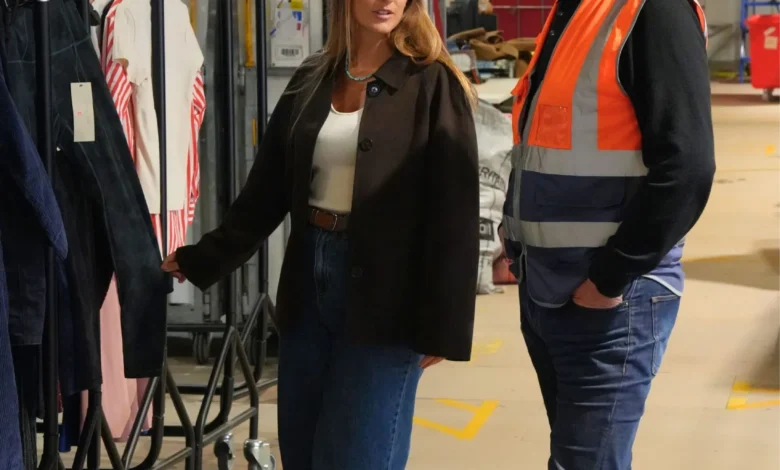
Popular UK fashion rental platform Hirestreet has been acquired by circular economy logistics and technology company CTR Group in a transaction valued at over seven figures. The deal, finalized recently, brings together two prominent forces in the sustainable fashion sector, as CTR Group—which also owns pre-loved fashion marketplace Thrift+—continues to consolidate its footprint in the circular economy infrastructure space.
While the precise financial terms of the acquisition remain confidential, industry sources indicate that the total investment surpasses the seven-figure threshold, reflecting the growing economic viability and investor confidence in circular fashion business models. For Hirestreet, the partnership offers a vital bridge to large-scale operations, granting the company immediate access to CTR Group’s extensive 560,000 square feet of UK and European warehousing and fulfillment sites.
Chronology of Growth and Strategic Evolution
Founded in 2018 by Isabella West, a recognized figure in the fashion industry and an alumna of the Drapers 30 Under 30 rankings, Hirestreet initially launched with a clear mission: to combat the environmental degradation driven by single-use fashion, particularly occasionwear and party dresses. Over the subsequent eight years, the platform evolved from a peer-to-peer and direct rental model into a trusted B2B and B2C partner for some of the UK’s most recognizable high street and online retailers.
To date, Hirestreet’s inventory features prominent partnerships with mainstream brands such as Marks & Spencer (M&S), Nobody’s Child, ASOS, and French Connection. These collaborations allowed legacy retailers to test the waters of the rental economy without having to build out complex reverse logistics and dry-cleaning infrastructure themselves.
A pivotal turning point in Hirestreet’s corporate timeline occurred in 2024 with the introduction of its monthly subscription rental service. Designed to shift consumer habits away from purely seasonal or event-based rentals toward everyday wardrobe maintenance, the subscription model proved to be an immediate catalyst for growth. Under this scheme, subscribers pay a flat fee of £75 per month to rent five rotating items at a time, allowing them to continually refresh their daily wardrobes without committing to permanent ownership.
According to company metrics, this subscription tier has scaled rapidly, quickly surpassing legacy income streams to account for more than 50% of Hirestreet’s total revenue. However, this exponential volume growth placed unprecedented operational demands on the company’s existing infrastructure, necessitating a strategic partner capable of handling industrial-scale reverse logistics, quality control, garment restoration, and rapid dispatch cycles.

The CTR Group Ecosystem and Consolidation Strategy
The acquisition of Hirestreet represents the latest aggressive move by CTR Group to cement its status as a dominant infrastructure provider for the sustainable fashion industry. The deal follows CTR Group’s acquisition of pre-loved fashion marketplace Thrift+ via a pre-pack administration process in March 2025, a rescue and restructure that saved the pioneering resale platform from collapse and integrated its technological capabilities into CTR’s logistics network.
Under the terms of the new agreement, CTR Group has constructed a bespoke, dedicated operational facility for Hirestreet within its expansive network. Crucially, this setup allows Hirestreet to maintain strict, independent control over its core end-to-end customer operations and brand identity, while simultaneously plugging into the parent company’s heavy-duty industrial machinery, automated sorting systems, and pan-European transport networks.
By uniting Hirestreet and Thrift+ under a single corporate umbrella, CTR Group is operationalizing a comprehensive, multi-stage lifecycle model for garments. The strategic vision is to guide retail inventory through a continuous loop: clothing items will initially enter circulation via Hirestreet’s rental and subscription platforms, where they generate maximum commercial value across multiple consumer cycles. Once garments reach a stage where traditional rental demand tapers off, they can seamlessly transition into Thrift+’s resale ecosystem, extending their wearable lifespan before finally showing signs of permanent wear and tear. This closed-loop pipeline is designed to help partner brands maximize stock recovery value while drastically reducing textile waste.
Industry Perspectives and Leadership Statements
Industry leaders from both organizations have emphasized the long-term strategic alignment of the merger, framing it as a necessary maturation step for the sustainable fashion sector.
Reflecting on the evolution of the brand she founded nearly a decade ago, Hirestreet CEO and founder Isabella West highlighted the changing psychology of the modern fashion consumer.
"When I started Hirestreet, it was because buying a dress to wear once simply didn’t make sense to me," West said. "Eight years on, our subscription service lets customers enjoy clothes that make them feel good, without the guilt of overspending or the commitment of ownership. They can try styles, keep what they love, and send back the rest. That is clearly where the market is heading, and to meet that demand properly, we need to scale our operations and customer care alongside it. Partnering with CTR Group gives us the industrial-scale muscle to do exactly that."

Mark FitzGerald, Chief Executive Officer of CTR Group, echoed these sentiments, positioning the acquisition as a cornerstone of a broader industry consolidation strategy aimed at transforming how traditional fashion brands manage excess and returned inventory.
"Hirestreet is unquestionably one of the strongest consumer brands in the circular economy, and this acquisition builds directly on the foundation we established with Thrift+," FitzGerald noted. "Our overarching corporate strategy is to bring the leading direct-to-consumer circular businesses together under one roof. By doing so, we provide major fashion retailers with a streamlined, profitable way to recover more value from their stock—first through high-margin rental, followed by secondary resale, and only resorting to traditional end-of-life channels as a last resort."
Market Implications and the Future of Circular Fashion
The integration of Hirestreet into CTR Group arrives at a critical juncture for the global retail and apparel industries. As regulatory pressures mount regarding textile waste, extended producer responsibility (EPR) schemes take shape across Europe and the UK, and consumers increasingly scrutinize the carbon footprints of their retail purchases, traditional linear business models are facing unprecedented strain.
For years, the fashion rental market—while widely praised by environmentalists and consumers alike—struggled with fundamental economic hurdles. The operational costs associated with reverse logistics, dry cleaning, pressing, minor repairs, and high shipping frequencies often made scaling difficult for independent startups. By absorbing these logistical friction points into a massive, centralized infrastructure network, the CTR Group-Hirestreet-Thrift+ alliance offers a potential blueprint for achieving profitability within the sustainable fashion sector.
Furthermore, the pivot toward everyday subscription models—exemplified by Hirestreet’s £75-per-month offering—demonstrates that the addressable market for rental is expanding far beyond niche wedding guest attire and red-carpet event dressing. By capturing everyday casualwear, office attire, and weekend lounging clothes, platforms like Hirestreet are beginning to directly challenge fast fashion business models on price, convenience, and variety.
As the newly combined entity moves forward, analysts will be closely watching to see how quickly Hirestreet can expand its active subscriber base utilizing CTR Group’s European footprint. If successful, the partnership could accelerate the mainstream adoption of circular fashion, transforming rental from an alternative eco-conscious choice into a primary pillar of modern retail consumption.