Target Transforms Its Iconic Soho Location Into a Design-Forward Retail Playground to Combat Growing Competition and Shifting Consumer Expectations

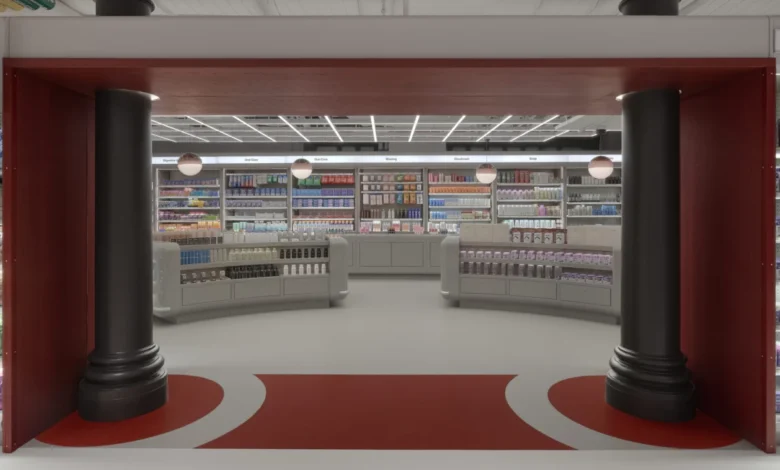
Target has officially pulled back the curtain on its meticulously transformed Soho location in New York City, unveiling a retail environment that merges high-design curation with the accessibility of a big-box store. Located at the bustling corner of Houston Street and Broadway—a high-traffic intersection seeing roughly 70,000 pedestrians daily, evenly split between local residents and international tourists—the newly completed two-story space is designed to function as much more than a traditional shopping venue. It is an experiential destination, a social media backdrop, an event space, and an experimental testing ground for the Minneapolis-based retail giant as it navigates a shifting and increasingly competitive commercial landscape.
The comprehensive redesign brings together an eclectic mix of trend-forward merchandise under one roof. Shoppers navigating the floors can discover Kourtney Kardashian’s Lemme gummy vitamins, the latest Nyx lip oil, viral apparel pieces, home decor, wellness products, food and beverages, and collectibles alongside unique offerings like Jake Shane’s vegan gummies. Yet, according to corporate leadership, the true innovation lies not necessarily in the inventory itself, but in the deliberate curation and artistic presentation of the goods.
A New Aesthetic and Experiential Blueprint
The retail giant originally took over the classic, historic cast-iron building in Soho—formerly a Hollister & Co. storefront—back in 2022. However, the vision for a dramatic overhaul truly took shape in November 2025, when the company began executing a major redesign focused heavily on curated merchandising and experiential event hosting. Nearly a year later, that vision has materialized into a sophisticated, two-floor retail ecosystem realized in close collaboration with the design agency Something Special Studios.
The aesthetic departure from traditional Target branding is immediately noticeable. The space introduces a more refined, sophisticated palette, incorporating a subdued cherry shade that gracefully complements the signature, bright red Target bullseye. Furthermore, the store has been engineered with interactive customer touchpoints, including a dedicated photo station that allows shoppers to capture and instantly print custom on-site selfies.
Target’s executive team views the Soho location as a laboratory for the brand’s broader retail strategy. Gigi Guerra, Vice President of Marketing and Creative Curation at Target, described the motivation behind the sweeping overhaul during a recent walkthrough.
"This is a chance for us to test and play," Guerra explained. "It’s a style and design playground for us, and we can take pieces from it and apply them to broader change."
Guerra emphasized that the fundamental inventory within the Soho store is identical to what can be found at any standard Target location across the United States. The differentiator, she noted, is entirely in the merchandising strategy. "Everything you see in the store is at any Target. It’s just the way we’ve curated and merchandised it [that’s unique]. It actually shows how style-forward Target is."
Cultivating Community, Creators, and Real-Time Data
Beyond traditional retail, the revamped Soho store has been purposely optimized to capture digital engagement and foster live community interactions. The beauty and wellness department, for instance, was intentionally architected to encourage content creators and influencers to record high-quality social media content directly on-site. The venue has already successfully hosted high-profile promotional events featuring prominent public figures and athletes, including NBA star Karl-Anthony Towns and model-entrepreneur Jordyn Woods.
Matthew Arrington, Target’s Director of Curation, pointed to broader cultural and consumer shifts to explain the strategic imperative behind the new store format. In an era where consumers are constantly bombarded with options, physical retail spaces must evolve to reduce decision fatigue.
"We’re just inundated with things," Arrington said. "There’s so much choice, there’s so much for anyone to take in. In a retail space like ours, even in one store, we’re just trying to make that even easier. We’ve kind of already done that edit for you."
For Target’s internal corporate and merchandising teams, the location serves as a valuable, real-time learning ground. By monitoring consumer traffic, dwell times, and purchasing patterns in one of the densest retail markets in the world, the company can quickly identify which emerging trends and product lines genuinely resonate with consumers, utilizing the Soho site as a predictive indicator for nationwide rollouts.
A Broader Industry Trend Toward Curated Experiential Retail
Target’s strategic pivot in Soho is part of a larger, systemic evolution sweeping through the retail sector, particularly within high-density urban markets like New York City. As e-commerce continues to handle routine replenishment and staple purchases, brick-and-mortar retailers are increasingly forced to transform their physical spaces into destination experiences that justify the trip.
In 2024, Banana Republic similarly overhauled its historic Soho flagship, introducing on-site tailoring, dedicated concierge services, and flexible event spaces to elevate its brand positioning. Meanwhile, major department store chains such as Macy’s and Nordstrom have systematically revamped their beauty and cosmetics floors in recent months, integrating high-touch, in-service beauty bars and experiential zones designed to drive physical foot traffic. Even the fitness industry has adopted this hybrid community model; fitness chain Life Time transformed its Midtown Manhattan location into a multi-functional community hub featuring an on-site podcasting studio alongside its traditional athletic and wellness offerings.
Outside of the five boroughs, big-box competition is intensifying along similar experiential lines. Walmart, which maintains a massive nationwide footprint but currently lacks physical retail locations within New York City’s five boroughs, has aggressively expanded its Beauty Bars strategy. By introducing dedicated beauty advisors and heavily curated, premium beauty assortments to dozens of stores across the country, Walmart is similarly attempting to capture market share in categories traditionally dominated by specialty retailers and department stores.
Navigating Internal Challenges and Consumer Sentiment
The grand reopening of the Soho flagship arrives at a critical juncture for Target. The Minneapolis-based retailer has recently wrestled with a series of public relations hurdles and operational headwinds that have strained customer loyalty.
In recent months, the company has faced organized calls for boycotts across multiple regions. These grassroots protests were sparked by corporate decisions to scale back internal diversity, equity, and inclusion (DEI) policies, alongside criticism regarding the company’s public response—or perceived lack thereof—to Immigration and Customs Enforcement (ICE) activity near store properties in both New York and the Twin Cities.
Compounding these socio-political friction points, Target has also faced mounting consumer complaints regarding operational friction inside its stores. Over the past year, shoppers frequently voiced frustrations on social media and consumer forums regarding disorganized aisles, cluttered floors, and understocked shelves at various national locations—issues tied in part to broader debates surrounding corporate retail investments and staffing cuts.
Despite these headwinds, Target’s financial performance remains robust. In its most recent quarterly earnings report published in August, the company reported a solid 5.3% increase in net sales, bringing total quarterly revenue to $26.5 billion.
Early Indicators of Success and Future Implications
There are early signs that the design-forward experiment in Soho may be successfully shifting the narrative and repairing consumer sentiment, at least on a local and perceptual level. According to internal data cited by Gigi Guerra, a national awareness study conducted by Target revealed that among consumers who were familiar with the newly transformed Soho location, an impressive 60% reported an improved overall perception of the Target brand.
Whether the curation-led philosophy tested on Broadway and Houston Street can be successfully scaled to hundreds of suburban and urban big-box stores remains to be seen. However, as traditional retail boundaries continue to blur and consumer expectations shift toward personalized discovery, Target’s Soho experiment offers a compelling glimpse into the future of physical merchandising—proving that even the largest mass-market retailers are willing to think small, design deliberately, and play creatively to win over the modern shopper.