How Oribe is Battling Generative AI with Artisanal Holiday Collaborations and Winning Over Luxury Beauty Consumers

In the contemporary landscape of retail and consumer goods, brand collaborations have become an exhaustive playbook. Typically, when a company announces a partnership, the underlying strategy is to leverage the expansive marketability, cultural footprint, and dedicated audience of a high-profile collaborator. This is the predictable formula whenever a mainstream beauty label teams up with an A-list celebrity, a legacy fashion house, or an acclaimed industrial designer. The goal is instant recognition and frictionless market penetration driven by sheer star power.
However, prestige hair-care brand Oribe takes a radically different approach to its most critical annual retail window. Rather than chasing fleeting internet virality through mainstream celebrity endorsements, the luxury brand intentionally seeks out brilliant, yet under-the-radar artists from eclectic creative mediums to design its coveted holiday gift sets. For Oribe, the core philosophy is rooted in the psychology of discovery. The thrill of uncovering an avant-garde artistic medium one has never encountered before can be just as potent, if not more so, than the passive comfort of recognizing a household name.
This deliberate strategy serves as a foundational pillar of Oribe’s overarching fourth-quarter business model. According to Daniel Kaner, co-founder and president of Oribe, alongside Diana LaMura-Scarrone, vice president of global marketing and creative, these annual artist collaborations function as a dual-engine mechanism. They act as both an elevated brand-building tool designed to firmly cement Oribe’s positioning within the ultra-luxury and artisanal tier, and a high-yielding sales driver. To maximize this commercial impact, Oribe strategically partners with its best-performing regional and flagship salons to highlight the collection, creating a deeply integrated physical retail experience.
The Evolution and Commercial Weight of Oribe’s Holiday Strategy
The fourth quarter represents an outsized commercial opportunity for the beauty industry, and Oribe is no exception. The brand’s holiday collection historically drives the vast majority of its fourth-quarter sales figures. While core maintenance products—such as shampoos, conditioners, and texture sprays—experience a natural lift heading into the festive season as consumers groom for events, the gift sets act as the crown jewel of the inventory.
These curated packages are strategically tiered to capture a wide spectrum of luxury spenders. Pricing spans from accessible entry points, such as smaller travel-friendly sets priced around $42, to the opulent flagship collection priced at $310. This tiered approach allows the brand to capture both self-purchasing consumers looking for a modest indulgence and affluent gift-buyers seeking a comprehensive luxury regimen.
While the specific creative partners, color palettes, and packaging geometries shift on an annual basis, the overarching strategic framework remains steadfast. Oribe consistently recruits a highly skilled artisan whose primary craft exists completely outside the realm of hair care. This cross-pollination of disciplines has yielded a rich historical tapestry of collaborations. In previous years, Oribe has partnered with a meticulous Japanese calligrapher, a vibrant Kenyan textile artist, and a visionary French tapestry artisan, each bringing their unique tactile sensibility to the brand’s iconic geometric packaging.
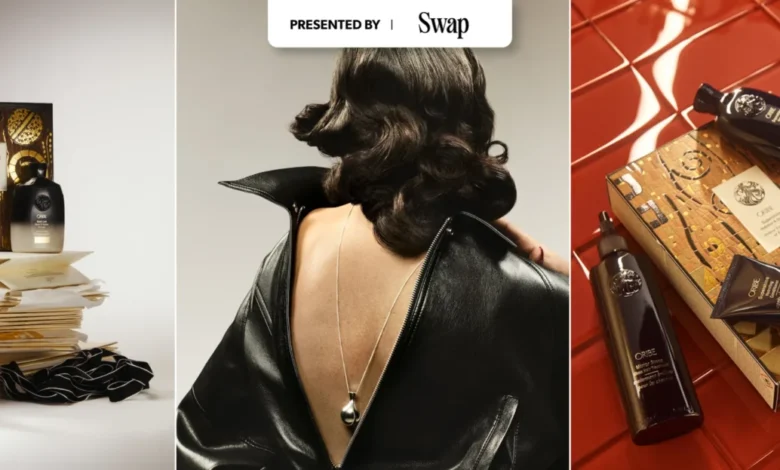
For the current holiday season, Oribe enlisted Mathilde Herrero, a celebrated contemporary mosaicist. Herrero’s bespoke designs for the gift sets drew heavy inspiration from the rigid symmetries of Byzantine geometry paired with the organic, flowing lines of the Art Nouveau movement. The collection officially debuted to the market last month, perfectly timed with the synchronized kickoff of the global holiday shopping season.
The Antidote to Generative AI: Doubling Down on the Human Touch
Beyond offering consumers a visually arresting unboxing experience, these collaborations inject a vital jolt of creative inspiration directly into Oribe’s internal corporate ecosystem. Kaner notes that the brand operates with a uniquely horizontal organizational structure, fostering cross-functional participation.
“We try to work in a very horizontal collaborative way as an organization,” Kaner explained. “The holiday collaboration is a way to develop and play with our own art and craft, and it becomes a form of leadership and development of the collaborative spirit. Everyone in the company gets involved in creating the holiday collaboration. It’s really good for the team.”
Marketing campaigns accompanying these launches deliberately pivot away from slick, digital-first shortcuts. Instead, they meticulously document the artist’s physical process, highlighting the painstaking manual labor and tactile elements required to bring the art to life. In Herrero’s case, the campaign assets do not feature computer-generated mockups; rather, they showcase the artist physically drawing the blueprints, mixing raw plaster, and hand-placing individual gold tesserae tiles to construct the original master mosaic that inspired the product packaging.
According to Diana LaMura-Scarrone, this strategy is an intentional, philosophical stand against the surging tide of generative artificial intelligence and the concurrent erosion of the human touch across modern product design and marketing campaigns. Notably, Oribe maintains a strict internal policy: the brand does not utilize generative AI for any creative product development or consumer-facing marketing asset.
“A lot of brands are doing artist collabs right now in reaction to AI,” LaMura-Scarrone stated. “It’s a big trend in beauty and fashion, and this is just another stake in the ground in support of human-made art. That feels more meaningful than ever right now.”
In an era where consumers are increasingly fatigued by hyper-processed digital imagery and algorithmically optimized content, Oribe’s insistence on physical craftsmanship serves as a powerful differentiator. The ultimate objective is dual-pronged: to capture the curiosity of new luxury consumers and to profoundly reinforce brand identity and loyalty among existing patrons.
Bridging Digital Commerce and Salon Heritage
Oribe’s commitment to physical artistry extended beyond mere packaging inspiration this year, manifesting in a historic retail activation. For the first time in the brand’s history, Oribe bypassed traditional static merchandising and shipped an original, physical artwork directly to a retail partner for an in-store display.
While Oribe maintains a robust direct-to-consumer (DTC) e-commerce presence and a selective wholesale distribution network spanning premier partners like Nordstrom, high-end independent salons were the brand’s foundational sales channel. To this day, salons continue to drive a substantial percentage of total revenue. Currently, Oribe’s sales are evenly distributed across three main channels: online DTC, wholesale partners, and professional salon networks. However, wholesale and e-commerce are currently charting as the fastest-growing segments of the business.
To honor this heritage, the Oribe team packed up Herrero’s original gold-and-plaster mosaic and shipped it across the country to Flaunt Salon in Oklahoma, a premier destination managed by master hairstylist Faith Mouse. Flaunt stands as one of Oribe’s most successful commercial partners in terms of overall sales volume.
The brand’s trajectory since its founding has been meteoric. When Oribe was acquired by Japanese consumer goods giant Kao Corporation in 2017, its reported annual revenue sat at approximately $170 million. In the years following the acquisition, under the stewardship of its original leadership team and the backing of Kao, the brand’s revenue has effectively doubled.
“We’ve always worked with our salons on their displays, but this is the first time we’re actually shipping them the art,” LaMura-Scarrone noted. “That’s how important salons are to us. Faith is actually one of our top sales drivers, too.”
Macroeconomic Landscape: Beauty Shoppers Prepared to Spend More
Oribe’s strategic push into elevated holiday gifting arrives against a fascinating macroeconomic backdrop. According to comprehensive new holiday spending data compiled by technology consultancy Accenture, beauty and personal care consumers are approaching the festive season with robust confidence, prioritizing self-care and experiential treats despite ongoing economic anxieties.
In a detailed survey tracking 1,393 beauty and personal care shoppers across the United States, generational divides in spending intentions became immediately apparent. Among Generation Z respondents, 44% stated they expect to increase their holiday expenditures compared to the previous year. Millennial shoppers expressed an even higher conviction, with 46% anticipating higher spending.
When questioned about the primary catalysts behind their increased budgets, 53% of respondents pointed to the compounding effects of higher retail prices across consumer goods. However, 49% explicitly stated a psychological motivation: a conscious desire to treat themselves. In terms of absolute capital, millennials reported an expected average holiday spend of $1,088, while Generation Z respondents projected an average of $1,005. Both figures sit comfortably above the broader baseline average of $885 recorded across all surveyed beauty and personal care consumers.
Strategic Value-Seeking and Channel Shifts
Increased spending power does not equate to reckless purchasing. The Accenture data highlights a pragmatic consumer base that is actively hunting for value and optimizing their shopping journeys.
Notably, 48% of beauty and personal care shoppers indicated plans to source holiday gifts through mass merchants and warehouse clubs, marking a significant surge from 34% in the previous year. Similarly, 38% of respondents noted intentions to patronize discount stores, up from 34%. This behavior underscores a modern consumer habit: trading up on prestige categories like luxury hair care through targeted splurges while simultaneously economizing on routine purchases via discount channels.
When examining retail channels, holiday beauty shopping is projected to split down the middle, with 52% of transactions occurring online and 48% taking place within physical brick-and-mortar environments. Interestingly, even among active users of generative AI tools, 45% of expected holiday shopping is slated for physical stores, proving that the tactile retail experience remains deeply valued.
Ultimately, beauty and personal care products are capturing a larger share of consumers’ psychological and financial wallets. In broader rankings of planned holiday purchases across a sample of 4,048 U.S. shoppers, the beauty category climbed from the sixth position to the fifth position. As brands like Oribe lean heavily into human-made artistry, physical salon displays, and experiential gifting, the market appears primed to reward authenticity, craftsmanship, and emotional resonance.
Related posts: