Redefining Ergonomic Luxury: How Les Tells Bridges the Gap Between Bag and Human Anatomy

The modern luxury accessories market has long prioritized rigid architectural silhouettes and dramatic visual statements over physical comfort. For decades, consumers have accepted that carrying high-concept designer handbags often means navigating awkward angles, bulky corners, and perpetual friction against the body in motion. However, a new luxury accessories brand is challenging this long-standing industry norm. Les Tells, founded by designer Brianna Tell, officially launched its debut collection, introducing a meticulously crafted line of Italian-made leather goods engineered specifically to harmonize with the human silhouette.
The launch collection, which debuted to the public on November 3, encompasses six distinct pieces—including four versatile bags, a sophisticated wallet, and a functional wristlet—with price points starting at $350. Available directly through the brand’s official e-commerce platform, the collection represents a two-year journey of intensive research, unconventional prototyping, and a steadfast dedication to functional ergonomics. By blending the artisanal traditions of generations-old Italian craftsmanship with experimental design principles, Les Tells is positioning itself at the forefront of a shifting paradigm in fashion accessories, where utility and comfort are no longer secondary to aesthetics.
The Genesis of an Ergonomic Vision
The conceptual foundation of Les Tells can be traced back to a specific moment of observation in Paris. While watching stylish pedestrians navigate the historic streets of the French capital, Brianna Tell experienced a profound disconnect between apparel and accessories. While the outfits worn by the locals moved fluidly with their natural anatomy, the handbags they carried appeared rigid, jutting outward and awkwardly interrupting the wearer’s physical flow.

This observation sparked a critical design question that would ultimately define the brand’s mission: Why shouldn’t handbags function as a natural extension of the body rather than an intrusive accessory?
Tell’s unique design perspective is heavily influenced by the intersections of her life experiences. Growing up in Lancaster, Pennsylvania, she developed a deep familiarity with leather as a material, surrounded by local horse farms and agrarian traditions. This early tactile exposure later merged with her professional and educational pursuits in Milan and Florence, Italy, where she immersed herself in the world-renowned ecosystem of European luxury leather goods. By uniting her American upbringing with Italian atelier expertise, Tell set out to create a collection that eliminates the physical awkwardness typically associated with structural luxury items.

Unconventional Prototyping and Atelier Collaboration
The path from a Parisian street observation to a finished luxury collection was neither straightforward nor conventional. Recognizing that standard computer-aided design software could not fully capture the dynamic interaction between a bag and a body in motion, Tell resorted to tactile, low-tech experimentation.
In the earliest stages of development, she constructed rough paper models of her concepts. By wearing these paper prototypes, she could physically test mobility, pinpoint friction points, and observe how different shapes interacted with human kinetics. This hands-on, iterative approach initially raised eyebrows among her peers.

Recalling the early skepticism, Tell notes that showing up with paper models drew criticism from acquaintances who warned that it lacked the polish of a professional design process. Yet, fueled by an unwavering conviction in her ergonomic thesis, she bypassed conventional validation and sought out expert manufacturing partners in Italy.
Her search led her to a family-run atelier nestled in Scandicci, just outside Florence—a region globally celebrated for its leather-crafting heritage. When Tell presented her unconventional paper mock-ups and avant-garde structural concepts to the Italian artisans, their reaction validated her intuition. Rather than dismissing the unorthodox methods, the master craftspeople recognized the distinctiveness of her vision. Over the subsequent two years, Tell and the atelier collaborated closely to refine the silhouettes, selecting premium Italian leather and developing custom hardware that mirrored the organic curves of the bags.

Anatomy of the Debut Collection: Form Meets Function
The resulting six-piece launch collection is a masterclass in ergonomic luxury. Each piece is designed to accommodate various body types and personal styles without compromising interior capacity or structural integrity.
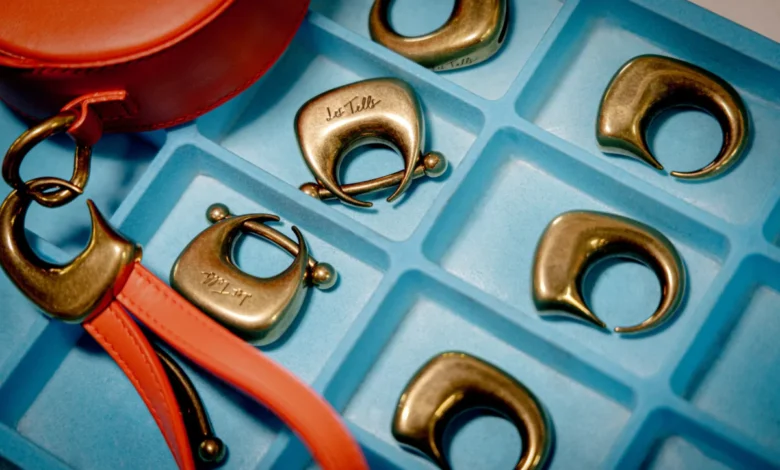
Among the standout designs is the Alexandras, a cylindrical bag featuring a detachable strap and a carefully engineered inward curve designed to nestle comfortably and seamlessly against the wearer’s hip. To enhance both form and function, the bag incorporates discreet details, such as an embossed "Les Tells" leather tab that cleverly doubles as a latch for the magnetic clasp securing the front flap.

Another key piece, the Logans, utilizes an asymmetrical, oblong silhouette configured as a crossbody bag. It is specifically proportioned to sit flush under the arm or follow the natural curvature of the back, dramatically reducing the bounce and bulk commonly experienced with traditional messenger bags. Meanwhile, the Kathleens shoulder bag offers a gentle, body-hugging curve that preserves ample interior space, complemented by a hidden strap extender tucked discreetly inside and a specialized microfiber case designed for eyewear.
Complementing the leather goods is a line of custom hardware and jewelry designed concurrently with the bags. Featuring open, crescent-like forms in polished gold-tone metal, these metallic accents echo the curved motifs of the leather collection, providing a cohesive aesthetic finish.

Challenging Gender Norms and Embracing Inclusivity
Beyond its ergonomic innovations, the Les Tells launch collection challenges traditional gender categorization within the luxury accessories market. While the handbag industry has historically divided its offerings strictly along gender lines, Tell intentionally designed her pieces to transcend these traditional boundaries.
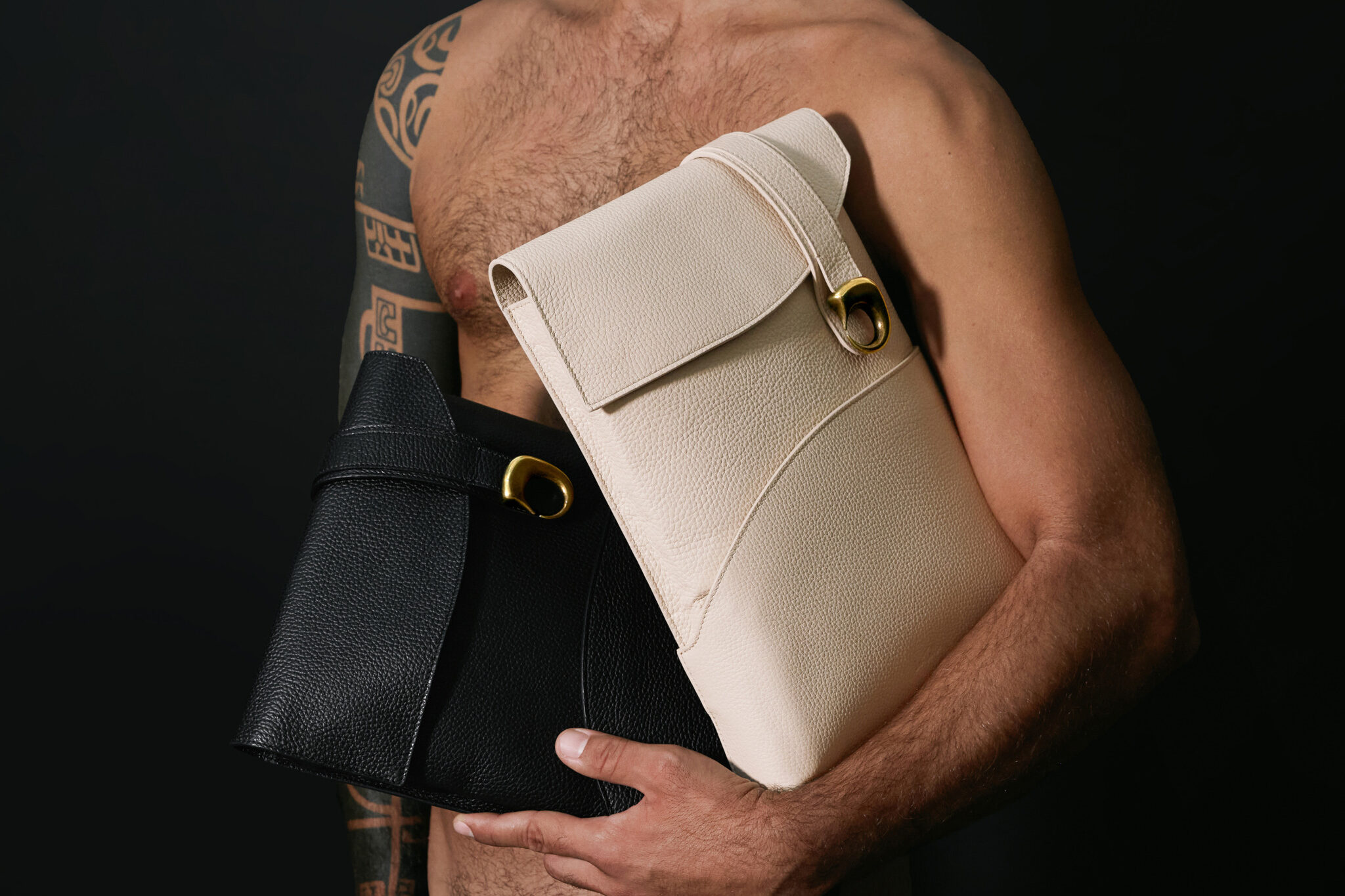
The accompanying marketing campaign features diverse models representing a wide spectrum of ages, body types, and personal aesthetics. By presenting the bags on varied physiques—from tailored ensembles to casual, tattooed streetwear—the brand emphasizes a philosophy of user-defined styling. The accessories are not marketed exclusively to women or men; rather, they are presented as universal objects of design that adapt to the individual carrying them.

This inclusive approach extends to the meticulous attention paid to the collection’s colorways and tactile finishes. Offered in four distinct color palettes, the line balances personal expression with universal appeal, ensuring that the accessories can integrate effortlessly into diverse wardrobes.
Market Implications and the Future of Ergonomic Design
The launch of Les Tells arrives at a time when consumers are increasingly demanding higher utility, comfort, and longevity from their luxury purchases. The global luxury leather goods market, valued at tens of billions of dollars, has traditionally relied on brand heritage and static visual prestige. However, the rise of independent, design-forward labels indicates a growing consumer appetite for products that solve practical pain points, such as physical strain, poor weight distribution, and awkward sizing.

By addressing the biomechanical relationship between wearer and accessory, Les Tells has established a distinct niche in the contemporary accessories sector. Industry analysts note that brands focusing on functional innovation alongside artisanal craftsmanship are better positioned to capture the attention of younger, design-conscious demographics who value intentional living and ergonomic well-being.
With her debut collection now available to the global market, Brianna Tell is already looking ahead to the future. She has officially commenced work on the brand’s next iteration, once again utilizing the same hands-on paper-modeling techniques that initially drew skepticism from her peers. Armed with the validation of her successful launch and the backing of her Florentine manufacturing partners, Tell approaches the next phase of production with absolute confidence.

As consumers increasingly prioritize comfort without sacrificing aesthetic sophistication, the debut of Les Tells serves as a compelling reminder that the most enduring luxury innovations often stem from solving the simplest, most overlooked everyday frustrations. The complete Les Tells collection is currently available for purchase online through the brand’s official web store, marking the beginning of what promises to be an influential chapter in modern accessories design.
Related posts: