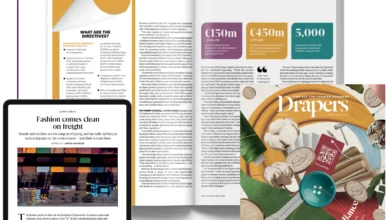
Digital Edition: How are brands tackling the over-production problem?


The fashion retail industry has long operated under a shroud of opacity regarding the true volume of its surplus goods. For decades, the systemic issue of over-production has remained a heavily guarded industry secret, with major high-street labels and luxury houses alike declining to disclose precise figures regarding unsold inventory and the methods used to dispose of excess stock. However, a significant paradigm shift is currently underway. Driven by looming regulatory pressures, mounting consumer scrutiny, and escalating environmental concerns, forward-thinking retailers are beginning to break their silence. Industry giants and contemporary labels—most notably H&M Group, Asos, Seasalt, and Rixo—are spearheading efforts to confront the over-production crisis head-on, offering a rare glimpse into the strategies required to decouple fashion growth from resource depletion.
The Anatomy of Fashion’s Over-Production Crisis
To understand the gravity of the current initiatives, one must examine the sheer scale of the global over-production problem. Historically, the fashion business model has relied on volume to drive profitability. Trend-driven forecasting models, combined with low manufacturing costs in offshore facilities, frequently resulted in brands producing millions more garments than the market could organically absorb.
For generations, the standard industry practice for handling unsold merchandise involved deep discounting, outlet redistribution, and, in the worst-case scenarios, the incineration or landfill disposal of pristine garments. Environmental watchdogs and investigative journalists have periodically exposed these practices, revealing that billions of dollars worth of brand-new clothing are destroyed annually to protect brand prestige and artificial scarcity.
The repercussions of this linear "take-make-dispose" model extend far beyond waste management. The textile industry is one of the largest global contributors to greenhouse gas emissions, water pollution, and microplastic contamination. Over-producing garments means squandering finite natural resources—such as water, energy, and arable land—before a piece of clothing has even reached a consumer’s wardrobe. As regulatory bodies across the European Union and the United Kingdom prepare to implement stringent Extended Producer Responsibility (EPR) schemes and potential bans on the destruction of unsold goods, the cost of inaction is rapidly eclipsing the cost of transformation.
A Chronology of Regulatory Pressure and Industry Awakening
The transition from a secretive, volume-obsessed industry to a transparent, demand-driven ecosystem did not happen overnight. The timeline of this transformation reflects a steady accumulation of pressure from policymakers, investors, and consumers alike.
The journey began in earnest during the late 2010s, when sustainability advocates successfully brought the issue of textile waste to the forefront of political agendas. In 2018 and 2019, parliamentary inquiries in the UK shed light on the environmental impact of fast fashion, forcing retailers to defend their stock management practices.
By 2020, the COVID-19 pandemic served as an unprecedented stress test for the global fashion supply chain. Lockdowns and retail closures left brands stranded with billions of dollars worth of seasonal inventory. This shock to the system forced retailers to cancel orders, renegotiate supplier contracts, and reckon with the fragility of long-lead-time forecasting. The pandemic exposed the immense financial and environmental vulnerabilities of over-production, accelerating internal discussions about digital transformation and agile manufacturing.
Between 2021 and 2024, legislative pressure intensified. The European Commission introduced its Strategy for Sustainable and Circular Textiles, proposing measures that include Digital Product Passports (DPPs) and a ban on the destruction of unsold textiles. These regulatory signals transformed over-production from a mere ethical dilemma into an urgent compliance issue.
Entering 2025 and 2026, brands could no longer afford to treat surplus inventory as an operational afterthought. Retailers like H&M Group, Asos, Seasalt, and Rixo found themselves at the vanguard of a new compliance-driven era, forced to implement radical technological and logistical changes to curb over-manufacturing before items ever leave the factory floor.
How Industry Leaders Are Responding
In the wake of these mounting pressures, major players across the fashion spectrum are deploying diverse strategies to tackle excess inventory at its root.
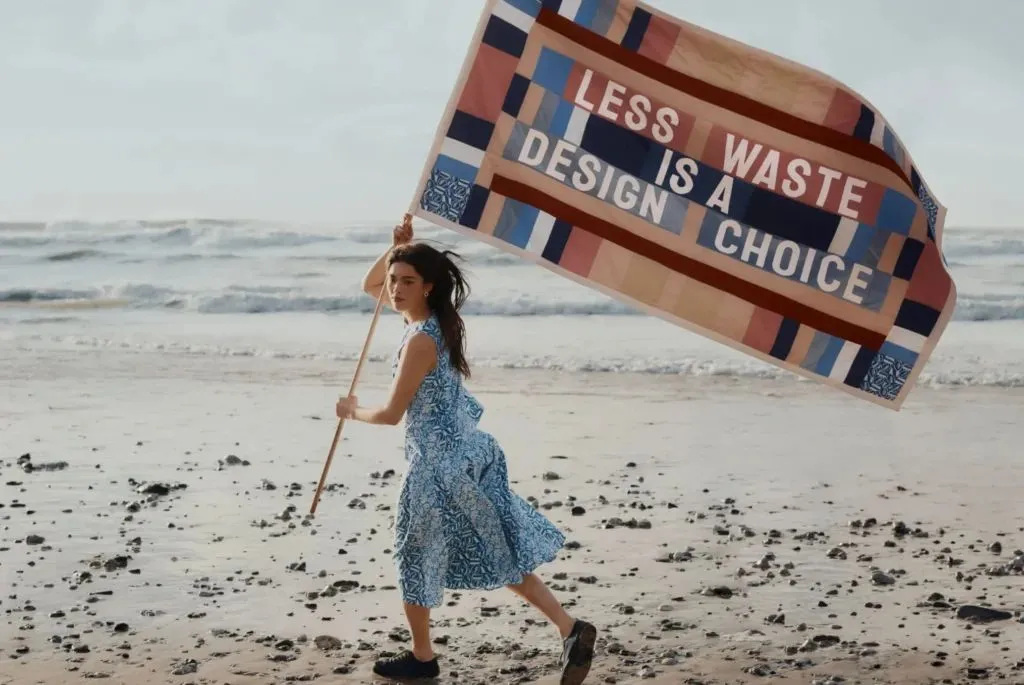
H&M Group, one of the world’s largest fashion conglomerates, has increasingly turned to advanced data analytics and artificial intelligence to refine demand forecasting. By analyzing real-time sales data, regional preferences, and shifting consumer trends with greater precision, the group aims to align production volumes much more closely with actual consumer demand. Furthermore, H&M has invested heavily in automated distribution centers and near-shoring initiatives, which allow the company to place smaller initial orders and replenish stock rapidly based on verified consumer uptake rather than speculative forecasting.
Online retail titan Asos has faced unique challenges as a digital-first platform offering tens of thousands of styles at any given time. To combat over-production, Asos has refined its Test & Buy model. This approach involves ordering very small initial quantities of a new design, testing customer response on the platform, and rapidly scaling up production only for items that demonstrate verified commercial traction. This drastically reduces the likelihood of accumulating dead stock that must later be cleared at a loss.
Independent and contemporary brands are approaching the problem through different yet equally effective lenses. Seasalt, known for its heritage Cornish lifestyle clothing, has leaned into timeless design principles and lower inventory turnover rates. By prioritizing durable, multi-seasonal collections over rapid micro-trends, Seasalt ensures that its products remain relevant for longer periods, significantly mitigating the risk of end-of-season surplus.
Meanwhile, contemporary label Rixo has focused on curated production runs and pre-ordering mechanisms for specific high-demand collections. By gauging customer interest prior to manufacturing, Rixo can calibrate its production batches to closely match true demand, demonstrating that even smaller, design-led brands can pivot away from speculative mass manufacturing.
Data, Technology, and the Shift Toward Circularity
Underpinning these individual corporate strategies is a broader technological revolution centered on transparency and traceability. The implementation of data-driven inventory management systems allows brands to track garments from the raw material stage to the point of sale with unprecedented accuracy.
Machine learning algorithms are replacing traditional human forecasting methods, utilizing historical sales data, social media sentiment analysis, and macroeconomic indicators to predict purchasing patterns with far greater fidelity. When brands produce fewer items that miss the mark, the volume of unsold goods naturally declines.
For the inventory that is still inevitably left unsold, brands are adopting sophisticated secondary-market strategies. Rather than relying on traditional deep-discount outlets that can devalue a brand’s primary market positioning, companies are partnering with specialized resale platforms, B2B liquidation tech firms, and upcycling enterprises. These partnerships ensure that surplus garments find a secondary home, keeping them in circulation and out of landfills.
Broader Impact and Strategic Implications for Fashion Retail
The concerted effort by brands such as H&M Group, Asos, Seasalt, and Rixo to tackle over-production signals a permanent structural transformation in fashion retail. The era of cheap, disposable fashion manufactured on speculative volume is facing its twilight, challenged by a combination of tightening regulations, rising raw material costs, and a more discerning consumer base.
The implications for the broader industry are profound. First, financial markets are increasingly factoring sustainability and inventory efficiency into their valuations. Investors are favoring companies that demonstrate strong circular business models and low inventory write-downs, recognizing that over-production is fundamentally a sign of capital inefficiency.
Second, supply chains are undergoing a permanent decentralization and acceleration. The reliance on hyper-distant manufacturing hubs that require six-to-nine-month lead times is giving way to more agile, regional sourcing models. While transitioning to these models requires significant upfront capital expenditure in technology and logistics, the long-term savings realized by avoiding mass inventory write-downs provide a compelling economic justification.
Finally, consumer expectations are shifting. Modern shoppers—particularly among Gen Z and millennial demographics—are demanding radical transparency regarding supply chain ethics and environmental footprints. Brands that openly acknowledge their over-production challenges and transparently communicate their reduction strategies are building deeper brand loyalty than those maintaining a facade of perfection.
As the industry moves forward, the success of these early adopters will serve as a blueprint for the wider retail landscape. The transition from a volume-driven, secretive industry to a demand-driven, transparent ecosystem is no longer a matter of corporate philanthropy or optional public relations; it is an absolute prerequisite for long-term commercial survival in a resource-constrained world.
Related posts: