Bridging the Trust Gap: How Threedium and Custom Wrkshop are Architecting the Future of Agentic Fashion Commerce

The fashion and luxury sectors are currently grappling with a profound paradox: while the computational power and predictive reliability of Artificial Intelligence (AI) have reached unprecedented heights, the adoption rate among enterprise-level decision-makers remains hindered by a persistent "trust gap." This tension between the potential for autonomous workflows and the fear of catastrophic output errors serves as the central focus of the 17-part executive series featured in The Interline’s AI Report 2026. Among the industry leaders addressing this disconnect are Threedium and Custom Wrkshop, two entities currently deploying advanced digital twin technology to transform the traditional, linear fashion development cycle into a synchronized, agent-ready ecosystem.
The Anatomy of the Trust Gap
In the current industry climate, the prevailing narrative surrounding AI in fashion often focuses on "confidence intervals"—a metric that suggests AI is a probabilistic tool that may occasionally fail. However, industry experts argue that this framing is fundamentally flawed. For high-stakes environments like those found within LVMH or L’Oréal, where a millimetre of dimensional inaccuracy or an incorrect material render can lead to significant supply chain disruption and financial loss, the requirement is not for better confidence intervals, but for "hard constraints."

The trust gap is not merely a symptom of conservative corporate culture; it is a rational response to historical over-promising by software vendors. Fashion, as an industry, operates on a "precision culture." Aesthetic standards are uncompromising, and the tolerance for ambiguity is near zero. Consequently, trust in AI must be earned through demonstrably measurable benchmarks rather than vague promises of efficiency.
Chronology of AI Integration in Fashion
The trajectory of AI adoption in the fashion sector has unfolded in three distinct phases over the past decade.
- 2016–2020: The Exploratory Phase. Initial interest was characterized by experimental, standalone AI tools used primarily for basic image generation or simple demand forecasting. These tools operated in silos and rarely interacted with product lifecycle management (PLM) systems.
- 2021–2024: The Pilot Phase. As generative models matured, brands moved toward "refined pilots." This period saw the integration of AI into specific segments of the workflow, such as virtual sampling and basic 3D asset generation. However, these assets were often "visually convincing but structurally hollow," lacking the metadata required for true industrial-scale application.
- 2025–2026: The Infrastructure Phase. We are currently witnessing the shift toward enterprise-grade AI. This era is defined by the demand for "agent-ready" products—assets that possess internal intelligence, such as material properties, structural constraints, and dimensional metadata, allowing them to be understood and processed by autonomous agents without human intervention.
Defining the Agent-Ready Product
The bottleneck for widespread "agentic commerce"—a state where AI systems can independently execute tasks from design to procurement—has never been the capacity of the agents themselves. Instead, it has been the quality and accessibility of product data.
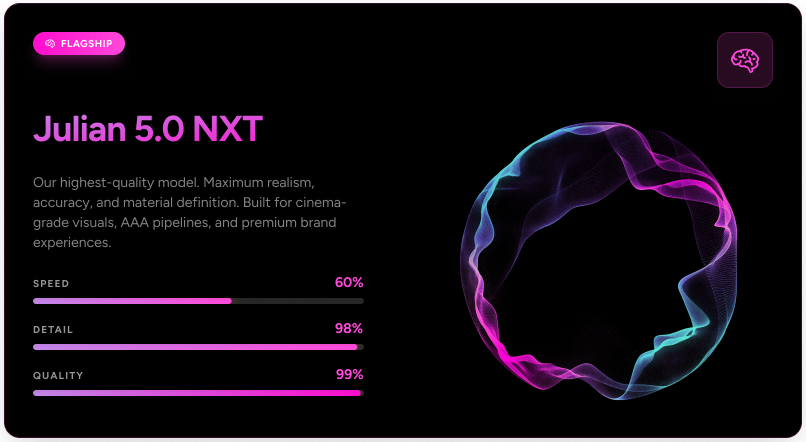
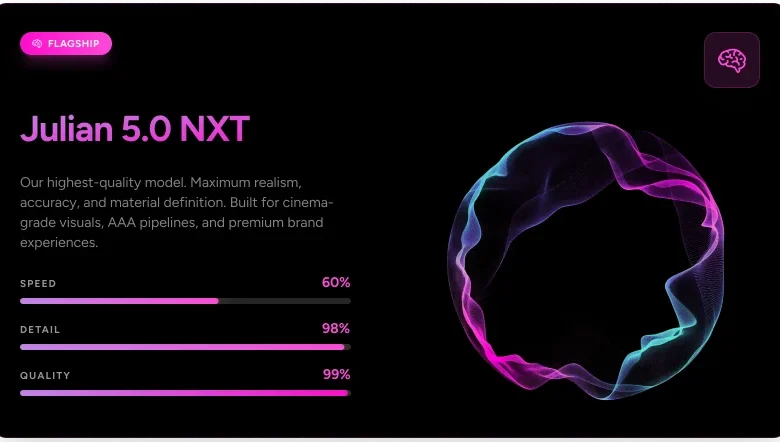
An "agent-ready" product is defined by its ability to be interpreted by a machine without external explanation. Most existing 3D assets in the industry are merely meshes with textures. They lack the semantic depth required for an AI to understand what it is "looking at." To solve this, platforms like Threedium’s Julian NXT are moving beyond simple 3D modeling. By segmenting a product into its constituent parts and tagging each with physical and dimensional metadata, the resulting digital twin becomes a "structured, queryable object." This represents a shift from viewing a 3D file as a visual asset to viewing it as a piece of intelligent infrastructure.
The Business Impact of Compressed Development Cycles
The primary economic incentive for adopting these technologies is the compression of the product development cycle. The traditional fashion model is inherently sequential: a designer creates a sketch, followed by iterative sampling, physical photography, merchandising documentation, and eventually, manufacturing hand-off. Each of these stages is a potential point of delay and risk.
By deploying platforms like Wrkspace AI, companies can effectively collapse these sequential stages into a single, collaborative workflow. The data suggests that the return on investment (ROI) is not derived solely from the automation of minor tasks, but from the elimination of "wait time." When marketing and merchandising teams can access high-fidelity digital twins before a physical sample has even been produced, the timeline from concept to consumer is significantly shortened.
Furthermore, the "delta" between AI-generated outputs and final production approval serves as a vital internal quality benchmark. By tracking how often a digital twin requires human rework before being approved, companies can quantify trust. This level of transparency is increasingly being demanded by enterprise stakeholders as a condition for long-term vendor partnerships.
Industry Implications and Future Adoption
As AI moves from experimental pilots to core enterprise infrastructure, the industry is seeing a migration away from fragmented, niche tools toward centralized, purpose-built platforms. The current operational pain—characterized by scattered assets and a lack of interoperability—is unsustainable for large-scale operations.
The trigger for the next wave of deep adoption will likely be the availability of "end-to-end" systems that offer strong data governance, robust APIs for integration with existing PLM software, and SLA-backed reliability. When AI is no longer "bolted on" but fully embedded into the enterprise tech stack, it ceases to be a novelty and becomes a fundamental component of the supply chain.

Strategic Analysis: Beyond Automation
While the industry continues to talk about autonomous decision-making, the real, measurable impact of AI in 2026 is found in the ability to iterate at speed. By shifting the focus from "does this look right?" to "is this data correct?", brands are fundamentally altering their approach to product development.
The role of the designer is not being diminished by this transition; rather, it is being elevated. By removing the administrative and technical friction associated with revision cycles and asset recreation, designers are afforded more time for creative decision-making.
In summary, the transition toward agent-ready infrastructure is inevitable for those seeking to remain competitive in an increasingly volatile market. The organizations that will secure the greatest market share in the coming years will not be those that simply run the most AI experiments, but those that have been ruthless in identifying where human error is most costly and surrounding those points with the hard, intelligent constraints of modern, agent-ready digital twins. As the industry looks toward the latter half of the decade, the integration of these systems will move from a competitive advantage to a prerequisite for survival.