Why Textile Partnerships Struggle to Scale and What Businesses Should Do First


The modern global apparel industry is undergoing a profound structural transformation, driven by mounting regulatory pressures, aggressive corporate sustainability targets, and shifting consumer demands for supply chain transparency. At the heart of this evolution lies a paradox: while brand owners, textile manufacturers, chemical innovators, and recycling pioneers publicly commit to collaborative partnerships, a vast majority of these ventures fail to scale beyond the pilot phase. Industry analysts and supply chain executives increasingly recognize that the path from a successful proof-of-concept to commercial-grade integration is fraught with systemic, financial, and operational friction. Understanding why these strategic alliances stall is critical for businesses seeking long-term viability in a market that increasingly penalizes stagnation.
The Anatomy of Supply Chain Collaboration in Textiles
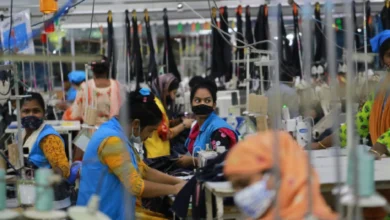
To comprehend why textile partnerships struggle to scale, one must first examine the traditional architecture of the apparel supply chain. Historically, the garment and textile sector has operated on linear, transactional models. Brands design products, tier-one manufacturers assemble them, and various upstream suppliers—spanning yarn spinners, weavers, garment dyers, and raw material extractors—operate in relative isolation. These relationships are traditionally governed by short-term contracts, margin pressures, and strict adherence to cost and delivery timelines.
When sustainability and circularity became strategic imperatives in the late 2010s, the industry attempted to overlay collaborative frameworks onto this inherently fragmented foundation. New partnerships began forming between legacy apparel giants and innovative clean-tech startups specializing in textile-to-textile recycling, bio-based fibers, and waterless dyeing technologies. However, these partnerships often treat collaboration as an isolated corporate social responsibility initiative rather than a fundamental restructuring of commercial operations. Consequently, when pilot projects conclude successfully on a laboratory or small-batch scale, the partners frequently find themselves unequipped to transition to multi-tonnage, continuous production.
Chronology of a Stalled Partnership: The Lifecycle of a Pilot Project
The trajectory of a typical textile partnership reveals distinct phases where momentum is lost. Examining this chronology highlights the recurring bottlenecks that prevent scaling.
Phase 1: The Ideation and Proof-of-Concept (Months 1–12)
The partnership begins with high optimism. A brand and a sustainable material innovator sign a Memorandum of Understanding (MoU). Funding is secured, often bolstered by venture capital or innovation grants. A pilot collection is announced with significant public relations fanfare, showcasing how the innovation reduces carbon emissions, water usage, or landfill waste.
Phase 2: The Pilot Validation and Consumer Testing (Months 12–18)
The pilot products enter the market, usually in limited quantities. Consumer reception is generally positive, validating the market demand for sustainable alternatives. However, during this phase, hidden operational costs begin to emerge. Small-batch production relies on specialized equipment and hand-selected inputs, masking the inefficiencies that will appear at scale.
Phase 3: The Commercialization Wall (Months 18–30)
This is where the vast majority of textile partnerships stagnate or dissolve. When the brand requests an order increase from 5,000 units to 500,000 units, the innovator’s supply chain breaks down. Issues regarding feedstock consistency, capital expenditure for manufacturing infrastructure, and regulatory compliance clash with commercial reality. Without a clear framework for sharing financial risk, the partnership stalls.
Phase 4: Stagnation or Dissolution (Months 30+)
Unable to bridge the gap between pilot output and industrial-scale volume, the parties quietly shelve the project, redirecting resources to safer, traditional supply chain channels.

Supporting Data and Market Realities
Recent industry data underscores the fragility of these commercial relationships. According to supply chain research conducted across major global apparel markets, approximately 85% of sustainable material and recycling pilot projects fail to transition to tier-one commercial supply agreements within a three-year window. Furthermore, a comprehensive study by sustainable fashion non-profits revealed that while over 70 apparel brands have set ambitious circularity targets for 2030, less than 15% have secured reliable, long-term offtake agreements for recycled textile inputs at scale.
Financial risk aversion remains the single largest deterrent. Scaling a new textile technology requires capital investments that often run into tens or hundreds of millions of dollars for industrial facilities. Venture-backed innovators lack the balance sheets to fund heavy capital expenditure independently, while risk-averse legacy brands are historically reluctant to provide upfront capital or long-term volume guarantees without immediate cost parity with virgin materials.
The Root Causes of Scaling Failures
Several structural impediments explain why textile partnerships encounter such high failure rates when attempting to scale:
-
Feedstock Inconsistency and Supply Volatility
Unlike virgin synthetic fibers derived from petrochemicals, which offer uniform quality, recycled textile fibers and bio-based inputs are inherently variable. Post-consumer garments consist of blended fibers (e.g., cotton-polyester blends), various dyes, and hardware. Sorting and processing technologies struggle to deliver the consistent feedstock required by industrial-scale spinning mills. When a textile mill experiences downtime due to inconsistent yarn inputs, financial losses mount quickly, souring the relationship between the brand and the material supplier. -
Price Premium Disconnect
Sustainable textile innovations frequently command a green premium, often costing 20% to 50% more than conventional alternatives during early production phases. While affluent consumer segments may absorb marginal price increases, mass-market brands operate on razor-thin margins. Without government subsidies, carbon pricing mechanisms, or massive consumer willingness to pay higher baseline prices, brands cannot justify scaling the procurement of premium-priced sustainable materials. -
Misaligned Corporate Incentives
Within apparel corporations, different departments operate under competing Key Performance Indicators (KPIs). The sustainability team is incentivized to maximize recycled content and carbon reduction, while the procurement and merchandising teams are judged on cost reduction, inventory turnover, and gross margin targets. When a scaling partnership threatens immediate margin compression, procurement teams frequently veto the initiative, effectively overriding sustainability goals. -
Intellectual Property and Risk Allocation Disputes
Collaborative ventures often founder on legal and strategic disagreements regarding intellectual property (IP) ownership and liability. Innovators fear having their proprietary technology reverse-engineered or appropriated by deep-pocketed manufacturing partners, while brands demand exclusivity clauses that can restrict the innovator’s ability to achieve necessary economies of scale with other market players.
Industry Perspectives and Stakeholder Reactions
Trade associations and manufacturing executives have become increasingly vocal about the need to overhaul partnership models. In recent industry forums, representatives from major textile manufacturing hubs in Asia and Europe have emphasized that brands must move beyond passive support.
"Brands cannot expect innovators to shoulder 100% of the industrial scaling risk while maintaining short-term, transactional purchasing behaviors," noted a senior supply chain strategist during a recent global apparel roundtable. "True scaling requires multi-year financial commitments, co-investment in physical infrastructure, and shared accountability for operational hurdles."
Conversely, startup innovators argue that legacy brands often lack the organizational agility required to integrate disruptive technologies. "A tech startup moves at breakneck speed, iterating weekly," remarked the CEO of a European bio-fiber enterprise. "A traditional apparel brand operates on an 18-month product calendar with rigid bureaucratic layers. Bridging that cultural and operational divide is often harder than solving the technical chemistry itself."
What Businesses Should Do First: A Strategic Blueprint
To overcome these systemic barriers and successfully scale textile partnerships, industry leaders must adopt a proactive, foundational approach before launching new collaborative ventures. Businesses should implement the following strategic steps first:
Step 1: Align Internal Stakeholders and Redefine KPIs
Before engaging external partners, apparel brands must achieve internal alignment. Procurement, design, merchandising, and sustainability teams must share unified objectives. Adjusting procurement metrics to account for long-term risk mitigation, regulatory compliance, and brand equity—rather than purely short-term unit cost—is essential for preventing internal friction when partnerships reach the scaling phase.
Step 2: Establish Risk-Sharing and Long-Term Offtake Frameworks
To unlock capital for manufacturing infrastructure, brands must move away from short-term purchase orders. Establishing multi-year offtake agreements guarantees baseline demand, giving innovators and their investors the confidence to build commercial-scale facilities. Furthermore, brands should explore co-investment models, joint ventures, or equity stakes in key supply chain partners to demonstrate genuine skin in the game.
Step 3: Invest Upstream in Sorting and Traceability Infrastructure
Many scaling failures originate not at the chemical or recycling facility, but further up the chain in collection, sorting, and pre-processing. Businesses must invest in digital traceability tools and automated sorting infrastructure to ensure a steady, reliable stream of homogeneous feedstock. Without transparency and consistency at the raw material stage, downstream manufacturing will inevitably falter.
Step 4: Adopt Modular and Phased Scaling Metrics
Instead of leaping abruptly from a 5,000-unit pilot to a 500,000-unit mass rollout, companies should design modular scaling pathways. This involves intermediate stages where supply chain bottlenecks can be identified and resolved incrementally. Regionalized manufacturing hubs can also serve as effective stepping stones, allowing partners to test operational capacity at a manageable scale before committing to global deployment.
Broader Industry Implications and the Road Ahead
The imperative to scale textile partnerships is no longer merely a matter of corporate reputation; it is becoming a strict legal requirement. Regulatory bodies in the European Union and various North American jurisdictions are rolling out stringent Extended Producer Responsibility (EPR) laws, digital product passports, and bans on the destruction of unsold textiles. Companies that fail to establish functioning, scalable circular supply chains face severe financial penalties, import restrictions, and potential obsolescence in regulated markets.
Ultimately, navigating the transition from pilot projects to industrial-scale collaboration requires a cultural shift across the global apparel ecosystem. By abandoning short-term transactional mindsets in favor of deep, risk-shared partnerships, businesses can transform sustainability goals from theoretical aspirations into operational realities. Those that act decisively to address structural bottlenecks today will secure their position as resilient, compliant leaders in the textile economy of tomorrow.