The Timeless Legacy of the Carmen Lúcia Ruby: A Gift of Eternal Devotion to the American People

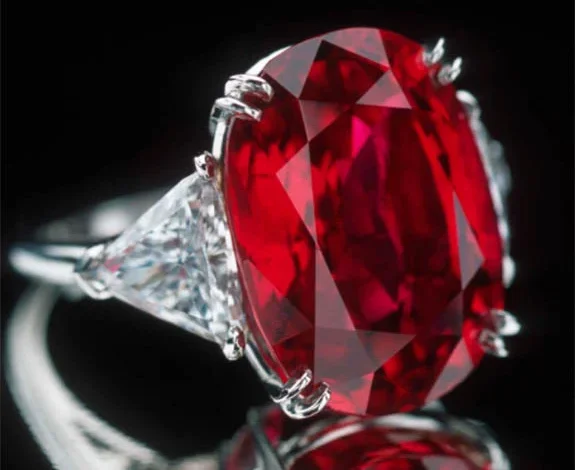
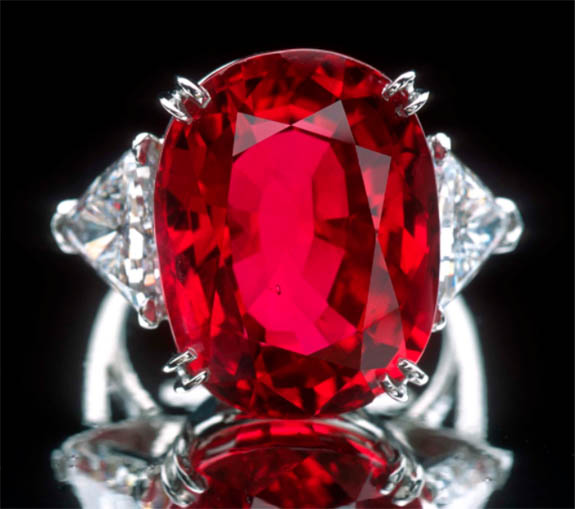
Since its grand unveiling in 2004, the Carmen Lúcia Ruby has remained one of the most significant and captivating highlights of the National Gem and Mineral Collection at the Smithsonian’s National Museum of Natural History in Washington, D.C. As the official birthstone of July, the ruby holds a place of prestige in mineralogy, yet few specimens in human history possess the physical characteristics and the poignant emotional backstory of this specific 23.10-carat marvel. It is not merely a geological treasure; it is a manifestation of historical rarity and a profound personal tribute that bridges the gap between private wealth and public cultural enrichment.
Geological Rarity and the Mogok Provenance
The Carmen Lúcia Ruby is an extraordinary example of a Burmese ruby, a classification highly coveted by gemologists and collectors alike for its intense, natural fluorescence and color saturation. Sourced from the fabled Mogok region of Myanmar—historically known as Burma—the stone carries the geological signature of one of the most prolific ruby-mining districts in the world. Mogok rubies are celebrated for their “pigeon’s blood” coloration, a term denoting a deep, vivid red with a subtle hint of blue, caused by the presence of chromium and the absence of iron within the crystal structure.
In the world of fine gems, size and quality are often inversely proportional. While diamonds or sapphires can reach weights of hundreds of carats while maintaining clarity, rubies are notoriously difficult to find in large, high-quality facets. A ruby exceeding 20 carats that remains transparent and exhibits uniform color is an extreme rarity. To put this in perspective, the vast majority of rubies found globally are under one carat. The Carmen Lúcia, at 23.10 carats, represents a pinnacle of natural formation that has been carefully cut into an oval, faceted shape to maximize its internal light reflection and brilliance.
A Chronology of the Stone and the Donation
The history of the stone before it arrived in Washington remains largely shrouded in the privacy of private collections. It was extracted in the 1930s, a period when the Mogok mines were producing some of the most legendary stones in history. For decades, it remained in private hands, moving through elite circles of jewelry collectors before its existence was noted by the late Carmen Lúcia Buck.
In 2002, during a period of personal challenge, Carmen Lúcia Buck expressed a profound admiration for the gem, having heard reports that it might soon reach the open market. Her hope was to acquire the piece as a symbol of her resilience and recovery. Tragically, she passed away in 2003 before this dream could be realized. Her husband, Dr. Peter Buck—a man who had built a global empire starting from a single sandwich shop—chose to honor her memory not by placing the stone in a private vault, but by gifting it to the Smithsonian Institution.
In 2004, the ring was officially donated. The acquisition was hailed by curators, including Jeffrey Post, the long-standing curator of the National Gem and Mineral Collection, as the most significant addition to the museum’s inventory in two decades. It was placed permanently in the Janet Annenberg Hooker Hall of Geology, Gems and Minerals, situated in proximity to other world-famous artifacts, such as the Hope Diamond and the Logan Sapphire.
Dr. Peter Buck: From Physics to Philanthropy
The donor, Dr. Peter Buck, was a figure of significant historical interest, both for his scientific background and his commercial acumen. A nuclear physicist by training, Buck’s life took a historic turn in 1965 when he provided a $1,000 loan to a young family friend, Fred DeLuca. This investment was intended to assist DeLuca in funding his education at the University of Bridgeport. DeLuca used the funds to open "Pete’s Super Submarines," which eventually evolved into the Subway restaurant chain.
The growth of this enterprise is one of the most documented success stories in modern business, expanding to over 44,000 locations across 112 countries. Despite his accumulation of a multi-billion dollar net worth, Dr. Buck maintained a commitment to public service and institutional support. His decision to purchase the Carmen Lúcia Ruby and donate it to the American people was rooted in the belief that such a rare object should not be sequestered from public view. As he remarked to The New York Times shortly after the donation, the intention was to allow the public to appreciate the stone’s beauty, ensuring it remained known as the "Carmen Lúcia Ruby" in perpetuity.
Valuation and Market Implications
While the exact figure of the purchase price remains undisclosed, expert analysis provides a framework for the stone’s value. In May 2015, the "Sunrise Ruby," a 25.59-carat Burmese stone, set a world record when it sold at a Sotheby’s auction in Geneva for $30.3 million. Given the similar origin, high quality, and significant carat weight of the Carmen Lúcia Ruby, it is categorized within the highest echelon of global gemstone valuations.
The donation serves as a prime example of high-value cultural philanthropy. By choosing to donate the stone rather than sell it or hold it as a private asset, Dr. Buck ensured that the Smithsonian would remain the steward of a premier mineralogical specimen. This act significantly enhanced the museum’s stature, providing researchers and the public with access to a stone that would otherwise be inaccessible to those outside of the ultra-high-net-worth demographic.
The Broader Impact on Mineralogical Education
The presence of the Carmen Lúcia Ruby in a public institution like the Smithsonian provides more than just aesthetic value; it serves as a cornerstone for educational initiatives in mineralogy. The stone is a primary reference for gemologists studying the characteristics of Burmese corundum. Its display allows students, scientists, and the general public to engage with the realities of geological formation and the history of the mining industry in Southeast Asia.
Furthermore, the story of the ruby provides a humanizing context for the study of minerals. Museum visitors are often drawn to the Hope Diamond for its legendary curse, or the Logan Sapphire for its sheer size. The Carmen Lúcia Ruby, however, draws visitors for its narrative of affection and legacy. This intersection of science and humanity is a hallmark of the Smithsonian’s mission: to increase and diffuse knowledge while preserving objects of historical and cultural significance.
Preservation and Exhibition Standards
Maintaining a gemstone of this caliber requires rigorous environmental controls. The National Museum of Natural History utilizes specialized lighting and climate-controlled display cases to ensure the ruby remains stable. Because rubies are a variety of the mineral corundum, they are physically durable—ranking 9 on the Mohs scale of mineral hardness—but they remain sensitive to extreme temperature fluctuations and improper light exposure, which can affect the perception of their color.
The curation team at the Smithsonian, led by experts like Jeffrey Post, oversees the periodic inspection of the stone to ensure it remains in pristine condition. As part of the permanent collection, the ruby is viewed by millions of visitors annually, cementing its role as a permanent fixture in the cultural landscape of Washington, D.C.
Conclusion
The Carmen Lúcia Ruby stands as a testament to the intersection of nature’s rarest geological wonders and the enduring power of human memory. From its origins in the depths of the Mogok mines to its place under the glass of the Smithsonian, the stone has traveled a path that few gems ever experience. Through the generosity of Dr. Peter Buck, the ruby has transcended its status as a piece of jewelry or a store of wealth, becoming a public treasure that honors a life, a love, and the curiosity of the American public. In the heart of the Janet Annenberg Hooker Hall, it continues to serve as an invitation for visitors to marvel at the extraordinary beauty that the Earth can produce, and to reflect on the stories that make such objects truly priceless.