Invista launches new 1 dpf Nylon 6,6 fibre; sets webinar date for technical session.

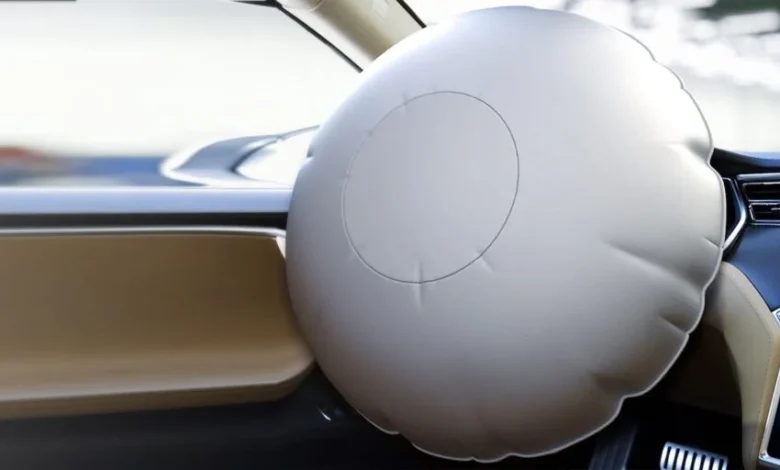
The automotive safety industry is entering a new era of precision engineering as Invista, a global leader in fibre production, officially introduces its ultra-fine 1 denier per filament (dpf) Nylon 6,6 fibre. This development marks a significant shift in the material science behind occupant restraint systems, specifically addressing the growing demand for smaller, more efficient, and highly performant airbag modules. As modern vehicles incorporate more complex electronic systems and integrated cockpit designs, the physical space allocated for safety equipment has shrunk, forcing engineers to reconsider the fundamental building blocks of airbag fabric.
The Evolution of Airbag Technology and Material Constraints
For decades, the standard for airbag fabrics has relied on higher denier counts, typically ranging from 3 dpf to 6 dpf. While these materials have proven reliable in meeting industry-standard deployment requirements, they present inherent limitations in terms of packability and texture. Airbag modules must remain folded within tight dashboard compartments, steering wheels, or side-impact curtains for years at a time, only to deploy in milliseconds when triggered.
The challenge for materials engineers has always been the "trilemma" of safety design: achieving the necessary burst strength, maintaining optimal air permeability to manage inflation pressure, and minimizing the physical volume of the folded cushion. Historically, using thicker fibres helped maintain structural integrity but resulted in bulkier, stiffer fabrics that were harder to pack and less adaptable to complex, space-constrained vehicle interior geometries.
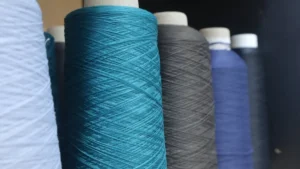
Invista’s introduction of the 1 dpf Nylon 6,6 fibre represents a departure from these conventional parameters. By reducing the filament diameter to one-third of the traditional 3 dpf standard, the company is enabling a new generation of fabrics that are inherently more flexible and capable of finer, more compact folds without sacrificing the mechanical robustness required for high-velocity deployment.
A Chronology of Material Innovation in Automotive Safety
The journey toward ultra-fine fibres in the automotive sector has been a gradual process of refinement over the last fifteen years.

- 2010–2015: The industry focused heavily on weight reduction, driven by fuel economy mandates. Fabrics shifted toward high-tenacity polymers, but the focus remained on coating technologies to manage permeability.
- 2016–2020: As autonomous driving features and "living room" vehicle interiors emerged, the focus shifted toward safety systems that could operate in unconventional spaces, such as seats that rotate or swivel. This necessitated smaller, more flexible airbags.
- 2021–2025: Research into polymer chemistry at the molecular level allowed for the creation of thinner filaments that retain high tensile strength. Invista’s development of the 1 dpf Nylon 6,6 is the culmination of this period, leveraging advanced spinning techniques to maintain consistent fibre orientation.
- Late 2026: The official announcement of the 1 dpf fibre signals the commercial availability phase, with major tier-one suppliers expected to begin integration testing for 2028 and 2029 vehicle model years.
Technical Deep Dive: Comparing 1 dpf vs. Traditional Standards
The upcoming technical webinar, hosted by Jenna Ott, Global Nylon Fiber R&D Director at Invista, is designed to provide engineers with the comparative data necessary to evaluate this new material. The session will focus on the empirical differences between the new 1 dpf Nylon 6,6, standard 3 dpf and 6 dpf Nylon 6,6 variants, and the 3 dpf PET (polyethylene terephthalate) alternatives.
Key metrics to be discussed include:
- Packability Ratios: By reducing filament diameter, the "void space" within the woven fabric architecture is minimized. This leads to a higher density of material within the same volume, allowing for a smaller folded package that maintains the same surface area of the inflated cushion.
- Air Permeability Management: While finer filaments create a denser weave, they also change the way air escapes through the fabric during the critical first milliseconds of inflation. The webinar will address how this influences the pressure curve of the airbag, providing a smoother deployment that is gentler on the vehicle occupant.
- Fabric Haptics and Flex Fatigue: The increased flexibility of 1 dpf fabric significantly reduces the "stiffness" of the folded module. This is critical for automotive interiors where the airbag module must be integrated behind leather or soft-touch plastic dashboard surfaces without creating "print-through" or visible contours.
Industry Implications and Market Outlook
The shift toward 1 dpf technology is expected to have a ripple effect across the automotive supply chain. Tier-one airbag module suppliers, such as Autoliv, ZF, and Joyson Safety Systems, are constantly seeking ways to differentiate their products through reduced weight and increased design freedom.
From a design perspective, the ability to create more flexible fabrics allows for "sculpted" airbag shapes. Instead of simple circular or rectangular pillows, designers can now explore complex geometries that wrap more effectively around passengers in a side-impact scenario. Furthermore, the reduction in weight—while marginal at a single-unit level—contributes to the broader industry push for total vehicle weight reduction, which is essential for extending the range of electric vehicles (EVs).
"The material is the foundation of the safety system," noted an industry analyst familiar with textile engineering in the automotive sector. "If you can improve the base fabric, you change the entire physics of the module. Moving to 1 dpf isn’t just about making the bag smaller; it’s about enabling new safety functionalities that were previously impossible due to space constraints."
Official Webinar Details and Expert Participation
Invista has structured the technical session on 15 December 2026 to be as accessible as possible, recognizing the global nature of the automotive manufacturing industry. The 30-minute format is intended to provide high-density technical information, focusing on actionable data rather than marketing rhetoric.

Event Logistics:
- Date: 15 December 2026
- Time: 10:00 am ET / 4:00 pm CET
- Format: Live, interactive webinar with Q&A session
- Target Audience: Airbag design engineers, materials scientists, automotive safety researchers, and supply chain managers in the restraint systems sector.
The webinar will serve as the primary platform for Invista to share internal test data. By providing comparative benchmarks against PET—a common alternative in the industry—Invista aims to demonstrate the specific performance advantages of its Nylon 6,6 formulation, which remains the gold standard for high-performance airbag applications due to its superior heat resistance and energy absorption capabilities.
Future-Proofing Automotive Safety
The introduction of this fibre is not an isolated event but part of a broader trend of "material optimization" within the automotive industry. As vehicles transition to software-defined architectures and automated driving systems, the cabin environment is being redesigned to prioritize comfort and occupant interaction. In this new landscape, safety systems must be invisible, unobtrusive, and highly efficient.
By focusing on the micro-structure of the fibre, Invista is enabling the next generation of restraint systems to become more efficient, lighter, and more versatile. For the engineer, this means more "real estate" within the vehicle to allocate to electronics, sensors, and interior amenities, all while maintaining—or potentially exceeding—current safety standards.
For those in the sector, the 15 December session offers a critical window into the future of passive safety. With registration currently open, the event is positioned to be a landmark discussion on how foundational material science continues to drive the most important aspect of automotive design: the protection of human life. As the industry looks toward the next decade of mobility, it is innovations such as the 1 dpf Nylon 6,6 fibre that will provide the necessary technical headroom for the next wave of safety breakthroughs.
Related posts: