The Evolution of Modern Nursery Design: An In-Depth Review of Sustainable Convertible Cribs and the Nestig Wave

The contemporary nursery furniture market has undergone a significant transformation over the past decade, driven by a growing consumer demand for sustainability, non-toxic materials, and multi-functional design. As millennial and Gen Z parents increasingly prioritize ecological responsibility alongside infant safety, traditional single-stage cribs are frequently being replaced by adaptable, long-lasting furniture systems. Among the emerging leaders in this space is Nestig, a direct-to-consumer brand founded in 2020 that has gained notable traction for its made-to-order business model and eco-conscious manufacturing practices. This review explores the structural, safety, and logistical dimensions of the Nestig 3-in-1 Wave Crib, framing it within the broader context of modern sustainable parenting trends and juvenile product manufacturing standards.
Understanding the Shift Toward Sustainable Nursery Ecosystems
The ritual of preparing a home for a newborn—historically referred to as "nesting"—has evolved from a purely aesthetic endeavor into a rigorous exercise in consumer consciousness. Historically, parents often purchased disparate pieces of furniture for every stage of infancy and toddlerhood: a bassinet, a standard crib, and later, a toddler bed. This linear purchasing cycle not only contributed to excessive household clutter but also placed a heavy burden on natural resources and waste streams as children rapidly outgrew each phase.
In response, the infant furniture industry has seen a surge in convertible engineering. According to market analysts tracking sustainable home goods, products that offer multi-stage adaptability have recorded steady year-over-year growth. Parents are increasingly willing to invest higher upfront capital in exchange for extended product lifecycles. Furthermore, heightened awareness surrounding indoor air quality and chemical exposure has brought stringent certifications—such as GREENGUARD Gold and JPMA (Juvenile Products Manufacturers Association) compliance—to the forefront of purchasing decisions.
Company Profile and Manufacturing Ethics: Inside Nestig’s Operational Model
Founded with the explicit mission of reducing the carbon footprint traditionally associated with mass-market baby furniture, Nestig operates on a made-to-order manufacturing framework. Rather than maintaining massive warehouses filled with pre-manufactured inventory that risks ending up in landfills, the company utilizes a low-waste facility located in Brazil.
This family-owned production center sources its wood exclusively from responsibly managed, reforested lands, aligning with guidelines set by the Forest Stewardship Council (FSC). The operational model heavily restricts overproduction, addressing one of the most critical environmental criticisms of the modern retail and e-commerce sectors. By building furniture to order, Nestig minimizes surplus waste while ensuring strict quality control over every unit produced.
Safety Certifications and Material Integrity
When evaluating infant furniture, safety regulators and pediatric health advocates emphasize the elimination of volatile organic compounds (VOCs), heavy metals, and toxic chemical finishes. Nestig’s product portfolio meets several rigorous industry benchmarks designed to protect infant health:
- FSC-Certification: Ensures that the structural wood components originate from forests that maintain strict environmental, social, and economic standards.
- GREENGUARD Gold Certification: Indicates that products have been rigorously tested for thousands of chemical emissions, ensuring they contribute to healthier indoor air quality—a vital consideration for nurseries where infants spend up to 16 to 18 hours a day.
- JPMA Certification: Administered by the Juvenile Products Manufacturers Association, this certification verifies that the product meets or exceeds federal safety standards established by the Consumer Product Safety Commission (CPSC) and ASTM International. Testing includes evaluations for structural integrity, lead, cadmium, mercury, and phthalates.
Additionally, the brand employs water-based, non-toxic finishes on its natural wood frames, avoiding the synthetic lacquers and formaldehydes historically common in conventional furniture manufacturing.
Chronology and Logistics: The Unboxing and Assembly Experience
Navigating the logistics of nursery preparation requires careful timeline management, particularly when purchasing made-to-order goods. The procurement and setup process for the Nestig Wave Crib illustrates both the advantages and logistical considerations of direct-to-consumer sustainable manufacturing.
Order Placement and Delivery Timeline
From the initial online transaction to final delivery at the consumer’s doorstep, the lead time for the Wave Crib typically spans approximately four weeks. This delivery window is a direct result of the brand’s made-to-order production model. Expectant parents must account for this manufacturing period when compiling baby registries or scheduling nursery setup, as it differs significantly from traditional retail models offering immediate in-store pickup or next-day shipping.
Unboxing and Packaging Evaluation
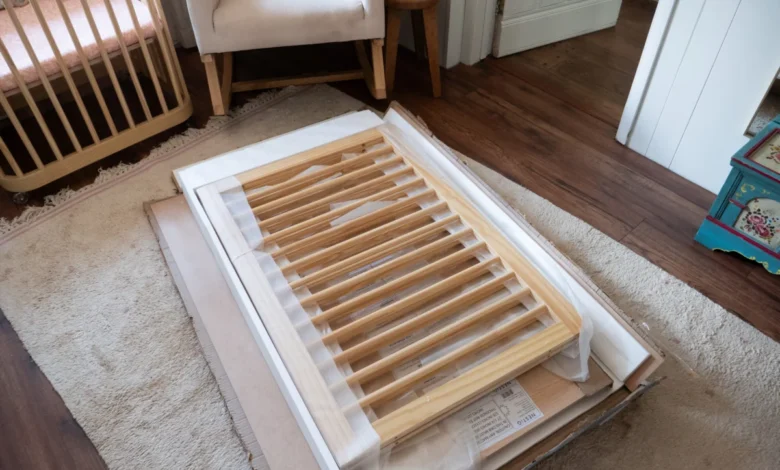
Upon dispatch, shipments are systematically divided into multiple packages—typically separating the foundational mini crib components from the full-size expansion kit, with organic bedding and accessories shipped independently. Industry observers have noted that sustainable brands face a unique challenge in balancing durable protective packaging with ecological responsibility. Reports from consumers indicate that while cardboard packaging is kept to a minimum and utilizes eco-friendly materials, shipping conditions can occasionally result in exterior box wear, though internal components are generally well-protected.
Assembly Process and Ergonomic Considerations
Assembling the Wave Crib requires a dedicated time commitment, typically ranging from two to three hours. The process involves multiple steps, including fastening structural bolts, adjusting base plates, and installing mattress support platforms.
Because many parents undertake this project during advanced stages of pregnancy, ergonomic challenges must be anticipated. The assembly instructions are generally reviewed as clear, comprehensive, and logically organized, with all hardware neatly categorized. The structural design allows for a seamless transition between configurations, though assembling heavy wood components on floor levels can prove physically demanding without assistance.
The Wave Crib: Design, Dimensions, and Stage Transitions
Priced at $849, the Nestig Wave Crib in Natural Wood occupies the mid-to-high tier of the juvenile furniture market. Its distinct aesthetic is characterized by minimalist yet organic lines inspired by ocean tides, utilizing warm, bright Brazilian pine for the main frame alongside TSCA-compliant eco-engineered wood for the mattress support board.
Stage 1: The Mini Crib Configuration (Newborn to 6 Months)
During the initial postnatal phase, the Wave functions as a compact mini crib measuring 30.25 inches in length, 22 inches in width, and 31 inches in height. Equipped with removable caster wheels, this configuration offers high mobility, allowing parents to effortlessly reposition the sleep space within a room. The higher mattress position is specifically calibrated for newborns, minimizing deep bending for parents during nighttime checks and soothing routines.
Stage 2: The Full Crib Configuration (6 Months and Beyond)
As infants develop motor skills and transition from co-sleeping or bassinet setups to independent room sleeping, the mini crib inevitably becomes restrictive. The full crib conversion kit expands the dimensions to 54 inches in length, 30.25 inches in width, and 36 inches in height.
This substantial expansion requires parents to re-evaluate room layouts to accommodate the larger footprint. Functionally, the full crib retains adjustable height settings. As infants begin to crawl and subsequently pull themselves up to a standing position, the mattress platform can be systematically lowered to comply with safety guidelines regarding fall prevention.
Practical Observations and Considerations
While convertible furniture provides long-term financial and ecological value, real-world usage often reveals nuanced challenges. For instance, parents have noted that as infants become mobile and begin crawling, standard vertical slat spacing can occasionally lead to limbs slipping through the gaps, necessitating the addition of breathable mesh bumpers or specialized padding compliant with current safe-sleep guidelines. Furthermore, the physical transition from a mini footprint to a standard full crib marks a major milestone in an infant’s developmental timeline, requiring minor behavioral and spatial adjustments.
Broader Market Implications and Industry Impact
The commercial success of brands like Nestig highlights a permanent shift in consumer expectations. Modern parents are increasingly skeptical of fast-furniture models that prioritize low initial cost over durability, safety, and environmental impact. By combining transparent manufacturing, rigorous third-party safety certifications, and adaptive engineering, companies operating within the sustainable juvenile sector are redefining industry standards.
The long-term economic implications of convertible cribs are also noteworthy. While the initial investment of $849 for the Wave Crib surpasses budget alternatives, the ability to transition the furniture through mini, full, and toddler bed configurations eliminates the recurring cost of purchasing multiple standalone beds over a span of several years. When evaluated on a cost-per-year basis, durable convertible systems present a compelling economic argument alongside their undeniable environmental benefits.
Conclusion
The Nestig Wave Crib exemplifies the intersection of thoughtful design, ecological responsibility, and functional adaptability. From its sustainably harvested Brazilian pine origins to its multi-stage transformation capabilities, the product addresses the core practical needs of modern families while upholding rigorous environmental and safety standards. As the market for sustainable parenting goods continues to expand, products that successfully marry aesthetic minimalism with long-term utility will undoubtedly set the benchmark for future generations of nursery design.