The Global Tapestry of Ethical Fashion: Saheli Women Weaves Empowerment, Inspiring Collective Action Through Volunteer Alexandra Simpson

The global fashion industry, a behemoth valued at trillions, often conceals a darker underbelly of exploitation, environmental degradation, and systemic injustice. In this landscape, a compelling counter-narrative is being woven by organizations like Saheli Women, a social enterprise based in Rajasthan, India. Dedicated to economically empowering women through ethical fashion, Saheli Women champions a model that prioritizes fairness, respect, and community, a vision passionately underscored by the transformative experience of volunteer Alexandra Simpson. Her three-month immersion reveals how a commitment to ethical production, combined with profound cultural exchange, can redefine the very fabric of sustainable change.
The Genesis of a Movement: Ethical Fashion’s Imperative
The call for a more transparent and humane fashion system intensified dramatically after the Rana Plaza factory collapse in Bangladesh in April 2013. This catastrophic event, which claimed over 1,100 lives, exposed the horrific working conditions endemic to fast fashion supply chains and galvanized global advocacy groups. Among these, Fashion Revolution emerged, founded in the wake of the disaster, to demand greater transparency and accountability from brands, urging consumers to ask, "Who Made My Clothes?" Fashion Revolution New Zealand, where Abby Brooks contributes, plays a vital role in localizing this global movement, fostering awareness and supporting ethical alternatives. The documentary "The True Cost" (2015) further amplified these concerns, laying bare the human and environmental toll of unchecked consumerism and prompting individuals like Alexandra Simpson to seek more conscious engagement with the industry.
The conventional fashion model, driven by speed and low costs, has historically externalized its true expenses onto garment workers, predominantly women in developing countries, and onto the planet. This has resulted in widespread poverty wages, unsafe working environments, and a significant environmental footprint from resource extraction to waste generation. In this context, the efforts of enterprises like Saheli Women represent not just an alternative, but a crucial blueprint for a regenerative future. Their work directly addresses the glaring deficiencies in the current system, demonstrating that fashion can be a force for good, providing dignified livelihoods while preserving cultural heritage.
Saheli Women: A Beacon of Empowerment in Rajasthan
Operating from the vibrant, culturally rich state of Rajasthan, Saheli Women stands as a testament to the power of ethical enterprise. Founded on the principle of co-creation, the organization collaborates with international fashion partners to produce slow fashion garments, eschewing the rapid, disposable cycles of fast fashion. Their approach is deeply rooted in the preservation and utilization of traditional Indian craft practices, transforming them into meaningful livelihood opportunities for women who might otherwise face limited economic prospects. This model directly addresses two critical needs within our fashion system: profound fairness and unwavering respect for artisans and their craft.
Rajasthan, known for its majestic palaces, desert landscapes, and rich textile traditions, also presents socio-economic challenges for women, particularly in rural areas. Access to education, healthcare, and independent income streams can be limited by prevailing cultural norms and economic disparities. Saheli Women directly tackles these barriers, providing a sanctuary of economic independence and personal growth. Their extensive array of services showcases a holistic production capability, spanning sample making, handloom weaving, full garment production, quality assurance, packaging, and export. Beyond these technical skills, they specialize in intricate traditional techniques such as block printing, eco-printing, artisanal textiles, elaborate embroidery, and the ancient art of natural dyeing. By integrating these heritage crafts into contemporary fashion, Saheli Women not only creates unique, high-quality products but also ensures the continuity of valuable cultural knowledge, making them a significant contributor to the "Make in India" initiative through an ethical lens.
Beyond Wages: Holistic Empowerment for Artisans
Saheli Women’s commitment to fairness extends far beyond merely providing employment; it encompasses a holistic approach to artisan well-being. A cornerstone of their model is the provision of fair wages, with artisans receiving remuneration that is at least 50% higher than the national average income for similar work in India. This stands in stark contrast to the prevalent practice in the global garment industry, where workers often earn below living wages, struggling to meet basic needs. For instance, reports indicate that a significant portion of garment workers in India and Bangladesh often earn less than half of what is considered a living wage, highlighting the severity of the pay disparity.
Furthermore, Saheli Women meticulously manages working hours. Their artisans typically work 6 to 7 hours a day, a humane schedule that allows for personal time, family responsibilities, and community engagement. This is a radical departure from the norm in many garment factories across India and Bangladesh, where 12-hour days, often extending to 14 or even 16 hours during peak seasons, are common, leading to burnout and severe health issues. This humane scheduling reflects a fundamental respect for the artisans’ time and well-being, acknowledging their multifaceted roles within their families and communities.
The empowerment initiatives at Saheli Women transcend financial compensation and working hours. They encompass a robust suite of support services designed to uplift women comprehensively:
- Skills Development Training: Continuous learning opportunities enhance their craft and expand their capabilities, fostering professional growth.
- Transportation Assistance: Addressing a common barrier for women in rural areas, ensuring safe and reliable access to work.
- Health Insurance: Providing crucial financial security and access to medical care, a significant benefit in a region where healthcare costs can be prohibitive.
- On-site Childcare Support: Enabling mothers to work without compromising their children’s care, a vital provision that addresses a major hurdle for women’s workforce participation.
- Flexible Working Options: Accommodating individual needs and family commitments, further enhancing work-life balance.
Crucially, Saheli Women is paramount in consciously cultivating a safe and welcoming work environment. This space is explicitly free from gender, religious, and caste discrimination, which remain persistent challenges in many parts of India. Their operational framework is deeply embedded in an extensive list of fair trade principles, meticulously adhering to the Ethical Fashion Initiative’s Code of Conduct. This code champions fair labor practices, safe working conditions, environmental responsibility, and transparent supply chains. Moreover, Saheli Women has integrated nine of the United Nations Sustainable Development Goals (SDGs) into its core mission, demonstrating a global commitment to sustainable development. Specifically, their work aligns with:
- SDG 1: No Poverty (through fair wages and economic empowerment).
- SDG 2: Zero Hunger (indirectly through increased household income for food security).
- SDG 3: Good Health and Well-being (through health insurance and a safe work environment).
- SDG 4: Quality Education (through skills training and financial literacy workshops, potentially enabling children’s education).
- SDG 5: Gender Equality (their foundational mission).
- SDG 8: Decent Work and Economic Growth (fair wages, humane hours, skills development).
- SDG 10: Reduced Inequalities (addressing caste and gender discrimination).
- SDG 12: Responsible Consumption and Production (slow fashion, traditional crafts, natural dyes).
- SDG 17: Partnerships for the Goals (collaborations with international brands and ethical fashion organizations).
Community Hubs: More Than Just Workplaces
The centers operated by Saheli Women are far more than mere production facilities; they are vibrant community hubs designed to feel like home. These are joyous spaces where women not only work but also socialize, brew chai, cook, bring their children, and collectively celebrate life and traditional Indian festivals. This communal aspect is deeply ingrained, regularly opening their doors to the wider community for cultural festivals and holidays, fostering a strong sense of belonging and mutual support.
Further strengthening this communal fabric, the centers host regular workshops on a broad range of topics crucial for personal and societal advancement. These include essential discussions on human rights, feminism, menstrual hygiene, general health and well-being, and vital financial literacy. Such initiatives equip the women with knowledge and tools that empower them beyond their craft, fostering independence and informed decision-making in all aspects of their lives. A representative from Saheli Women might state, "Our centers are designed as nurturing ecosystems where women can thrive economically, socially, and personally. We believe true empowerment means equipping them with not just a livelihood, but also the knowledge and confidence to advocate for themselves and their communities."
Alexandra Simpson’s Transformative Journey: A First-Hand Account
Alexandra Simpson, affectionately known as Ali, embarked on a three-month volunteering stint at Saheli Women, a journey that profoundly reshaped her understanding of fashion and community. A student of fashion at Whitecliffe, Ali’s commitment to environmental consciousness in her daily life and practice was already strong, particularly after being deeply affected by the Rana Plaza collapse and the revelations of "The True Cost." Now a dedicated sewing teacher, sharing her skills with people of all ages, and working for the renowned Aotearoa brand Ruby, Ali brought a unique blend of practical expertise and ethical conviction to her volunteer role.
Her long-standing admiration for Saheli Women, cultivated through years of following their work on social media, drew her to their mission and values. India, with its unparalleled depth of textile heritage and fashion craftsmanship, was an undeniable magnet for someone seeking to deepen their understanding of the industry. "I wanted to be able to give my support, learn, and get a hands-on experience of what it would be like alongside the women who make ethical and sustainably made garments from start to finish," Ali explains, "and to see how they are doing processes within fashion differently and changing the industry." Her desire was to witness firsthand the intricate dance of ethical production and cultural preservation.
The Power of Collective Action: Bridging Cultures and Visions
Ali describes her time in India as a life-altering experience. "I learned a lot about sustainable fashion practices and it was a very expansive experience. I don’t think you can go to India and come back the same!" she recounts. The vivid contrast between India’s bright, colourful, loud, and sense-stimulating aura and New Zealand’s more serene atmosphere provided a powerful backdrop for personal growth. A particular highlight was her ability to forge meaningful connections with the women at the center, despite minimal shared English and Hindi. "I will cherish the moments of just drinking chai outside with the natural dye ladies and yapping away about life," she fondly recalls, highlighting the universal language of human connection.
Following her immersion, Ali now defines collective action as people coming together to support a shared vision, even if that vision initially seems beyond individual imagination. At Saheli Women, this principle is exemplified daily. Despite potential language barriers, the collective finds ways to "make it work." The enterprise’s collaborations with international brands underscore this global collective action. "At Saheli Women, we were working with international brands, which is pretty amazing to see how two cultures can come together and work together," Ali observes. This cross-cultural collaboration, working with people not only geographically close but from all parts of the world, has allowed Saheli Women’s empowering story to be shared worldwide, amplifying its impact and inspiring similar initiatives. An international fashion partner might reflect, "Working with Saheli Women goes beyond mere production; it’s a partnership built on shared values and mutual respect. Their commitment to ethical practices and artisan welfare not only ensures exceptional quality but also enriches our brand’s narrative and deepens our customers’ connection to the garments."
Ali felt the pulse of collective action instantly and consistently throughout the entire production process. "Whether that’s the pattern master showing the ladies a certain sewing technique or someone is off sick or away, so they all have to chip in to get the garments done! They all function together, which is beautiful. Collective action is constant." This continuous, organic collaboration ensures that production flows smoothly and that every member feels valued and supported, creating a resilient and harmonious working environment.
Spirituality and Devotion: The Soul of Saheli Women
Beyond the tangible aspects of production and community building, Ali was deeply moved by the spiritual dimension interwoven into the daily life at Saheli Women’s Bhikamkor Centre. As the sun would set after a long day, a local village lady would play a large drum, while Madhu and others would perform puja at the temple, singing devotional mother goddess songs. Amidst this, everyone would be packing up, and children would laugh and play, creating a scene of profound serenity and communal harmony.
"The first time I experienced this, it moved me, it was so powerful," Ali shares. "It is one thing to create something that is empowering this community, but I find it so special to be interwoven with religion and spirituality. It’s such a sense of devotion." This integration of spiritual practice into daily work life highlights a unique aspect of Saheli Women’s model, where cultural and religious values are not separate from, but integral to, the enterprise’s mission of holistic well-being and community strength. It speaks to a deeper connection to purpose and place, enriching the lives of the artisans beyond material gains.

Shifting Perspectives: Redefining Fashion and Sustainability
For Ali, experiencing ethical fashion from the ground up fostered a newfound level of respect and a genuine understanding of the immense hard work involved in manufacturing – a reality largely unfathomable to most consumers. This immersive experience solidified her personal values, particularly her commitment to garment repair, eco-dyeing, and the overarching importance of sustainability and circularity in fashion. She now recognizes that the glossy images seen on social media or in brand campaigns often belie the complex, arduous, and dedicated process behind truly ethical production.
"What you see on Instagram with any brand is the beautiful process and reaping of their hard work," Ali reflects. "I respect the hustle a lot. It’s nowhere near as easy as it seems to put the sustainable practices to work." This insight underscores the challenges inherent in building and maintaining an ethical supply chain, requiring unwavering dedication, innovative problem-solving, and a deep-seated commitment to values over profit margins.
The intangible learnings Ali gleaned from her volunteering experience are now being translated into her personal and professional life. She places a greater emphasis on community and empowerment in her work, inspired by the strength, willingness to learn, and perseverance she witnessed amidst hardships. At Saheli Women, community truly is everything, characterized by a depth of connection and vulnerability shared within a safe space – values that, as Ali notes, have sadly been lost in many contemporary societies. "I find I’m already taking these in and applying them in my work and personal life," she states. "Yes, there can be differences within any culture, but this allows you to be more open, connect more deeply, and appreciate what they have to offer."
Saheli Women’s Latest Endeavor: The Jazam Collection
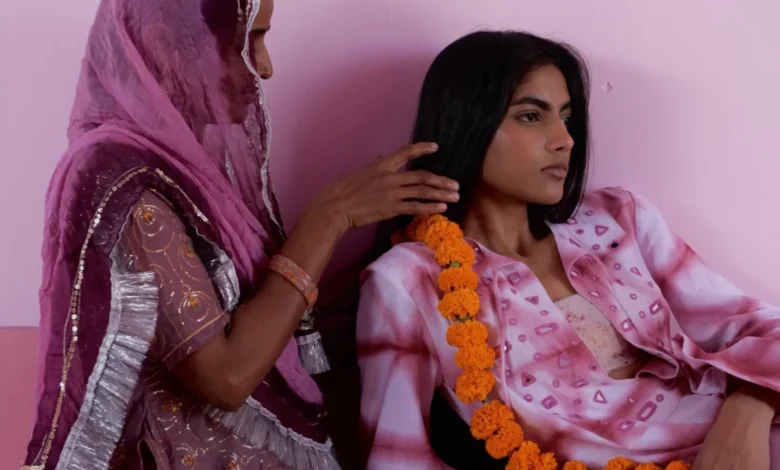
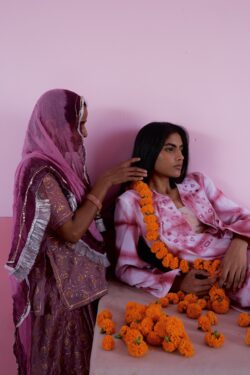
In a testament to their continuous innovation and commitment to showcasing traditional crafts, Saheli Women has recently unveiled their inaugural menswear collection, "Jazam." The collection is a heartfelt ode to the Jazam Mattress, symbolizing community gatherings and togetherness. It masterfully incorporates elements of traditional Pattu weave, known for its intricate patterns and warmth, alongside natural dyeing techniques and exquisite Shisha embroidery, reflecting Rajasthan’s rich textile heritage.
Ali, having been present during its creation, recounts the magic of the collection’s photoshoot. "It was really amazing to support this photoshoot and there is so much meaning behind it. It was shot at both centers and at the sand dunes near the village. Everyone was involved and it was a magical day." This collective involvement, from the artisans who crafted the garments to the community members who participated in the photoshoot, underscores the integrated, community-centric approach that defines Saheli Women. The "Jazam" collection, beautifully photographed by Mayuri Kataria, is now live and available on their website, saheliwomenshop.com, and their Instagram, @saheliwomen, offering a tangible way for individuals worldwide to support their impactful work.
Empowering Change: How Individuals Can Foster Collective Action
Ali’s experience at Saheli Women culminates in a powerful message for individuals: collective action is within everyone’s reach, regardless of scale. "You don’t need to think big. You don’t need to be perfect. Change doesn’t come from just one person. It comes from collectivity." She believes that supporting collective action begins by starting exactly "where you are."
At the workplace, even without a specific "sustainability" job title, individuals can instigate change. This might involve digitizing marketing materials to reduce printing, implementing digital business cards, suggesting carpooling or bike-to-work schemes, ensuring correct recycling procedures are rigorously followed, or organizing team participation in local volunteering initiatives. These seemingly small actions collectively contribute to a more sustainable and community-minded corporate culture.
Among friends and family, Ali advocates for reinventing the perception of "fun" and "cool" to encourage more planet-friendly choices. This could mean suggesting activities like volunteering, supporting local upcycling and circular economy events, choosing op-shopping over fast fashion malls, opting for independent cinemas, swapping clothes before a night out instead of buying new, visiting local produce markets, or dining at independent vegetarian restaurants instead of large chains. These shifts in lifestyle choices not only reduce environmental impact but also strengthen local economies and foster community bonds.
At home, curating one’s social media feed serves as a constant, gentle reminder of what’s important. Following activists, circular economy accounts, sustainability news, eco-conscious creatives, and second-hand fashion influencers can provide daily inspiration and information. Critically, Ali emphasizes the eye-opening power of researching, reading, and watching more about causes one is passionate about. She particularly highlights the importance of listening to and amplifying BIPOC (Black, Indigenous, and People of Color) and Indigenous voices, recognizing their invaluable perspectives on systemic injustices and holistic approaches to respecting both people and the planet.
In essence, Ali’s journey from a fashion student conscious of industry failings to a hands-on volunteer with Saheli Women illustrates that profound change is achievable. Saheli Women provides a living example of how fashion can be ethical, empowering, and culturally rich, offering a beacon of hope and a practical blueprint for a more just and sustainable world. Their model, amplified by the experiences of individuals like Alexandra Simpson, demonstrates that true transformation arises from collective dedication, empathy, and a shared vision for a better future.