American Apparel & Footwear Association Pioneers Global Heat Stress Guidance for Garment Workers Amid Escalating Climate Crisis

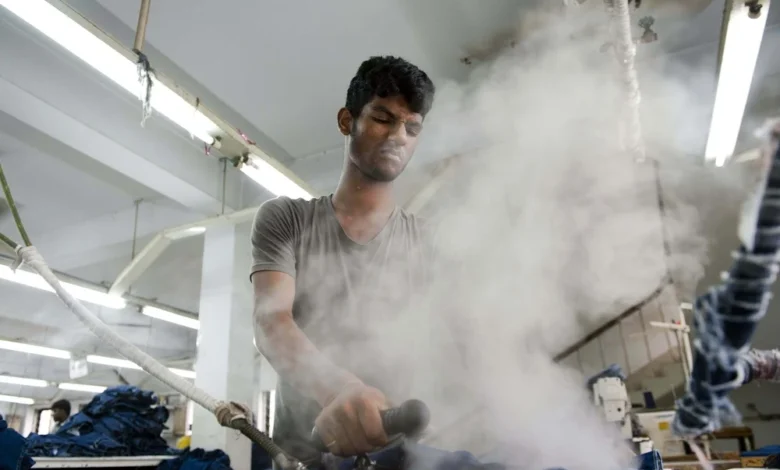
The American Apparel & Footwear Association (AAFA), a leading voice for the U.S. apparel and footwear industry, has released groundbreaking guidance designed to combat heat stress in garment factories worldwide. This initiative marks a pivotal moment, as the AAFA becomes the first fashion trade group to establish maximum workplace heat thresholds, recommend specific structural mitigation strategies, and champion a model of shared responsibility between buyers and suppliers across the global supply chain. This comprehensive framework arrives amidst an intensifying climate crisis, where rising global temperatures disproportionately affect garment workers in the Global South, highlighting the urgent need for actionable protection.
The release of this guidance is, as Nate Herman, AAFA’s executive vice president, aptly puts it, "a long time coming." For years, the industry has grappled with the silent, insidious threat of extreme heat, a danger amplified by climate change. Garment manufacturing, often concentrated in tropical and subtropical regions, relies heavily on a workforce exposed to conditions that are increasingly becoming unsafe, if not outright deadly. While reports detailing the dire circumstances have mounted and pilot projects showcasing best practices have emerged, a clear, scalable roadmap for intervention has remained conspicuously absent. The AAFA’s move aims to fill this void, providing a much-needed industry-wide compass.
The Mounting Crisis: Unbearable Conditions in the Global South
The data underscores a rapidly escalating crisis. Garment manufacturing hubs across South and Southeast Asia now routinely endure over 100 days annually with temperatures soaring at or above 35 degrees Celsius (approximately 95 degrees Fahrenheit). These aren’t merely uncomfortable conditions; they pose severe health risks and cripple productivity. A sobering study conducted in Cambodia revealed that 64 percent of 100 surveyed garment workers registered core body temperatures exceeding 38 degrees Celsius—a level unequivocally deemed unsafe—at least once within a single seven-day work period. The human toll extends beyond immediate physiological stress. In India, a survey of 115 garment workers found that a staggering 87 percent reported experiencing heat-related ailments such as debilitating headaches, dizziness, profound weakness, and muscle cramps within the past year alone. The desperation is palpable, encapsulated by a Bangladeshi woman’s stark description of her predicament: "My body is burning."
These conditions are not merely an unfortunate consequence of geography; they are exacerbated by factory designs often lacking adequate ventilation, cooling systems, or even basic insulation. Workers, predominantly women, labor long hours in physically demanding roles, often under immense pressure to meet production quotas, which further elevates their risk of heat-related illness. The economic impact is also significant, with studies indicating substantial losses in productivity due to heat stress, translating into reduced wages for workers and decreased output for factories, creating a vicious cycle of poverty and vulnerability.
A Collaborative Blueprint for Change
Recognizing the multifaceted nature of the challenge, the AAFA did not develop its recommendations in isolation. The guidance is the product of extensive consultation with a broad spectrum of expert stakeholders. This collaborative approach included invaluable input from institutions such as Cornell ILR School’s Global Labor Institute, the Fair Labor Association, the International Labour Organization’s Better Work program, the International Accord for Health and Safety in the Textile and Garment Industry, the AFL-CIO, and the International Trade Union Confederation, alongside numerous individual brands, retailers, and manufacturers. This wide-ranging engagement was critical to crafting a framework that is both comprehensive and practical.
A central tenet of the AAFA’s approach was the deliberate avoidance of a "cookie-cutter" solution. The garment industry operates across diverse geographies, each with its unique national laws—or, in some cases, a concerning lack thereof when it comes to specific heat protection regulations. Furthermore, factories themselves exhibit vast differences in their capabilities, resources, and existing infrastructure. As Herman pointed out, not all facilities possess the expertise or financial means to immediately invest in sophisticated monitoring equipment or expensive air conditioning systems. The guidance, therefore, seeks to offer adaptable strategies rather than rigid mandates, allowing for tailored implementation that respects local contexts and factory capacities. This flexibility is crucial for fostering widespread adoption and ensuring that solutions are sustainable rather than burdensome.
Operationalizing Protection: Key Strategies and Thresholds
The AAFA’s guidance outlines a dual-pronged approach to identifying and mitigating high-risk conditions. In the short term, it provides specific temperature and humidity thresholds designed to inform immediate workplace safety protocols. These align with established global occupational guidelines, which typically recommend maximum temperatures ranging from 29-30 degrees Celsius (84.2-86 degrees Fahrenheit) for high-intensity work, 30-31 degrees Celsius (86-87.9 degrees Fahrenheit) for moderate-intensity work, and 31.5-32.5 degrees Celsius (88.7-90.5 degrees Fahrenheit) for low-intensity work. These numerical benchmarks offer a clear starting point for factories to assess risk and implement basic interventions.
For the long term, the guidance advocates for a more sophisticated, data-driven strategy. It recommends the strategic placement of Wet Bulb Globe Temperature (WBGT) monitors at various locations within factories. These monitors provide a more comprehensive measure of heat stress by accounting for temperature, humidity, radiant heat, and air movement—factors that collectively determine the body’s heat burden. The AAFA advises collecting and tracking this WBGT data over a period of five years. This longitudinal data will enable facilities to develop excessive heat thresholds that are precisely tailored not only to the specific factory environment but also to the most at-risk processes and areas within it. This nuanced approach recognizes that heat stress can vary dramatically even within the same room, as Laurie Parsons, senior lecturer in human geography at Royal Holloway, University of London, highlights. The interplay of ambient environmental temperatures, local heat sources (like machinery), and physical exertion can amplify heat stress significantly, sometimes by a factor of 10, necessitating highly localized solutions.
Beyond numerical thresholds, the guidance emphasizes practical structural and operational mitigation strategies. While air conditioning remains largely out of reach for most factories, simpler, cost-effective solutions include improving ventilation systems, optimizing insulation, creating designated cooling stations, and ensuring readily available hydration. Operationally, the AAFA stresses that rest is a mandatory safety intervention, not merely a production break. This paradigm shift encourages flexible work schedules, adjusted shift timings during peak heat, and increased water breaks. The document also subtly encourages design changes in new or renovated factories to optimize natural airflow and reduce heat absorption.
Shared Responsibility and Economic Imperatives
A cornerstone of the AAFA’s framework is the principle of shared responsibility across the supply chain. Nate Herman firmly stated, "We didn’t want this to be something that the buyers are imposing on suppliers. This is something that can work and hopefully will work for everyone involved in the supply chain." This sentiment underscores a recognition that the burden of implementation cannot fall solely on the shoulders of manufacturers in the Global South, who often operate on razor-thin margins.
The AAFA explicitly recommends that buyers collaborate with suppliers to support responsible purchasing practices that facilitate heat mitigation measures, including covering the associated costs. This is a critical point, as the financial implications of structural upgrades or operational changes (like reduced productivity during extreme heat) can be substantial. Without buyer support, many suppliers would be unable to implement the necessary changes, rendering the guidance ineffective. This financial collaboration is not merely an act of corporate social responsibility; it is an investment in supply chain resilience. Factories experiencing frequent heat stress events face higher absenteeism, increased health-related costs, and reduced output, all of which can disrupt delivery timelines and impact product quality. As Herman notes, "not doing anything as the heat issue becomes worse is going to impact your ability to meet timelines and other things." Furthermore, failing to address heat stress can lead to violations of other social responsibility requirements, potentially leading to further complications and reputational damage for brands.
Suppliers, in turn, are urged to engage directly with their workers. The guidance emphasizes that workers, being on the front lines, possess invaluable insights into the hottest parts of the factory, the reasons why, and the most effective mitigation strategies. This participatory approach ensures that solutions are practical, worker-centric, and truly effective. Changing timelines or processes might be necessary, requiring open communication and cooperation between all parties.
The Urgency of Enforcement and Worker Agency
While the AAFA’s guidance is a significant step, some experts and advocates argue for stronger, more binding commitments. Jason Judd, executive director of the Global Labor Institute, whose organization has extensively researched heat stress among garment workers, emphasizes that extreme heat in apparel production, much like building safety, is not a "should" or "nice to have" issue. "The science is clear," Judd asserts. "The rules aren’t complicated. The tech is well-known." For Judd, the true measure of success will be the proportion of workers in high-heat-stress factories who are demonstrably safer and better able to cope with rising temperatures, both at work and at home, in the coming months and years.
Judd expresses a desire for the framework to evolve beyond mere suggestions. He advocates for the AAFA and its members to consider joining binding agreements that legally obligate adherence to heat safety standards. He also calls for the swift collection of real-time heat stress data, within weeks rather than years, and for collaborative efforts with workers, management, and governments to establish robust enforcement mechanisms.
Sonia Mistry, director of climate and labor at the Solidarity Center, the largest U.S.-based international worker rights organization, reinforces the critical role of worker empowerment. She argues that technical fixes alone are insufficient. Ensuring workers have the right to organize and bargain collectively across the supply chain is equally, if not more, crucial. Mistry cites research indicating that unionized workers experience half as much heat stress as their non-unionized counterparts, primarily because collective bargaining empowers them to negotiate for better working conditions, including heat protection. "Ensuring that workers have an enforceable mechanism for raising concerns, participating in the design and implementation of protections, and reporting gaps in enforcement will ensure these guidelines deliver real results for impacted workers," Mistry states.
Laurie Parsons further elaborates on the importance of worker agency, particularly the ability to self-pace. He notes that intense pressure on workers to increase speed directly correlates with a higher risk of heat stress. Conversely, when workers have more autonomy to report issues and manage their workload, their risk decreases. These labor questions, Parsons concludes, must be taken seriously and integrated more fully into any effective policy.
A Living Document for an Evolving Threat
Herman acknowledges that forging consensus on the guidance was not without its challenges. While simple thermometers are inexpensive and easy to install, some manufacturers expressed concerns about the creation of additional audits or bureaucratic burdens. The guidance was therefore designed to integrate seamlessly into existing workflows and health and safety systems, rather than imposing entirely new, potentially disruptive requirements.
Despite initial reservations, Herman found it "enlightening" that effective heat stress mitigation doesn’t always require "complicated, super-expensive" measures. Simple interventions like increasing water breaks and accommodating additional bathroom use, for instance, often do not reduce productivity. In fact, workers who are hydrated and rested may ultimately be more productive than those struggling in extreme heat. The long-term cost of inaction—in terms of worker health, absenteeism, reduced output, and potential ethical violations—far outweighs the investment in preventative measures.
The AAFA views this document as a "living" one, subject to an annual review process. This commitment to continuous improvement will allow for the incorporation of new research, emerging best practices, and lessons learned from implementation, ensuring the guidance remains "as relevant as possible" in the face of an evolving climate.
While guidance without binding mandates can sometimes be perceived as merely suggestive, the AAFA’s strategic intent is to make it effortlessly easy for companies to integrate these recommendations into their existing operational frameworks. The immediate next steps involve extensive outreach, including webinars, training sessions, and conference programming, to disseminate the guidance widely and facilitate its adoption. Herman emphasizes the collaborative spirit: "We already started outreach to the same organizations that provided input into the guidance, and we’re going to continue and expand those conversations over the next few months to try and get as much industry-wide adoption as possible." Ultimately, the core message remains clear: "The responsibility for protecting workers from heat stress must be shared across the supply chain." This unified approach, if successfully implemented, could set a new global standard for worker protection in a world increasingly defined by extreme heat.