The Rising Threat of Negative SEO and Sophisticated Typosquatting Targeting the Luxury Jewelry E-commerce Sector

The first indication of a systemic breach often arrives not through a compromised server or a customer complaint, but through the sterile interface of the Google Search Console. For luxury jewelry retailers, this warning has recently manifested as a quiet but catastrophic surge in the disavow report, where referring domains jump by hundreds within a single week. These domains, which lack any historical connection to the jewelry industry, are increasingly being identified as part of a coordinated effort to undermine the digital authority of high-end brands. This phenomenon represents a significant shift in the cyber threat landscape for e-commerce, moving away from traditional phishing and toward a more patient, technically sophisticated form of algorithmic sabotage known as typosquatting paired with negative SEO.
The Evolution of Digital Sabotage in Luxury Retail
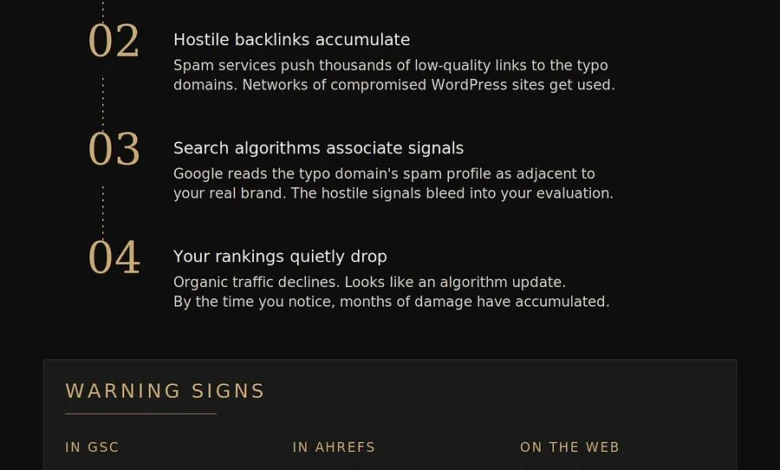
For over eighteen months, a new pattern of attack has been quietly targeting the luxury jewelry sector. While traditional typosquatting involves registering misspelled domain names to host fraudulent storefronts or harvest credit card data, this contemporary variation is designed to remain invisible to the consumer. These "hostile" domains often host no content and feature zero outbound links; instead, they exist solely to accumulate thousands of spam-flagged inbound links. By building a toxic backlink profile for a domain that closely mimics a legitimate brand, attackers exploit the way search engines understand brand identity.
When a domain that is a single character off from a major retailer—such as a missing letter or an extra character—becomes associated with massive quantities of link spam, the negative signal can "bleed" into the real brand’s search evaluation. Google’s algorithms, which attempt to map the broader signal landscape around a brand name, may begin to associate the legitimate entity with the low-quality signals of the typosquat. The result is not a stolen password, but a steady decline in search engine results page (SERP) rankings, a loss of organic traffic, and the erosion of digital visibility for high-value queries.
Why the Luxury Jewelry Market is the Primary Target
The selection of luxury jewelry as a primary target for these attacks is a matter of calculated economic incentive. Unlike mass-market retail, the luxury sector operates on high average order values (AOV). For a retailer specializing in pre-owned Cartier Love bracelets or authenticated Van Cleef & Arpels Alhambra pieces, individual transactions frequently reach four or five figures. In this environment, even a marginal 5% drop in organic traffic due to a loss in search ranking can translate into hundreds of thousands of dollars in lost monthly revenue.
Furthermore, the keyword landscape for luxury jewelry is exceptionally competitive yet highly specific. There is a limited inventory of authoritative retailers capable of ranking for terms with high commercial intent, such as "authenticated luxury jewelry" or "pre-owned designer bracelets." By successfully pushing a competitor down just one or two positions on a SERP, an attacker can effectively redirect a significant portion of the market’s digital spend toward other players or simply cause irreparable financial harm to the target.
The vulnerability is further exacerbated by the industry’s reliance on trust and authentication content. Legitimate retailers invest heavily in provenance documentation, high-resolution photography, and expert educational content to build authority. This "content-rich" environment is precisely what attackers seek to undermine by polluting the brand’s digital footprint with automated, low-quality signals.
Chronology of the 2024 Surge
The intensity of these coordinated attacks reached a peak in late 2024. Monitoring by industry experts at Opulent Jewelers revealed that what initially appeared to be routine spam had evolved into a sophisticated infrastructure of manipulation. The timeline of these attacks suggests a three-stage evolution:
- Infrastructure Building: Attackers utilized link-spam services and networks of compromised WordPress sites to inject commercial anchor text into the digital ecosystem.
- Acquisition of Aged Domains: Attackers began leveraging aged-domain marketplaces, recycling domains with existing (often hostile) profiles to accelerate the "poisoning" process.
- Coordinated Launch: In late 2024, multiple variants of typosquat domains for specific brands began appearing simultaneously, suggesting a scripted and automated deployment.
This coordinated approach allows an attacker to surround a brand with four or five different misspelling clusters, creating a "shield" of negative signals that search engines struggle to differentiate from the legitimate brand’s activities.
Identifying the Symptoms of an Algorithmic Attack
For most jewelers, the symptoms of a negative SEO attack are often misdiagnosed as the result of a general Google algorithm update. However, specific technical indicators can reveal the true nature of the threat. In Google Search Console, retailers should remain vigilant for sudden spikes in referring domains that occur in the absence of a marketing campaign. These new URLs often feature anchor text that combines the brand name with unrelated commercial terms or "discount" keywords.
A geographic mismatch is another hallmark of this attack class. A sudden surge of inbound links from regions where the retailer does not operate or sell—often featuring language mismatches—is a clear indicator of automated spam. Tools such as Ahrefs or SEMrush may also flag these referring domains as having extremely high outbound link counts, a characteristic of "link farms" or compromised sites used in negative SEO campaigns.
On the typosquatting side, the clearest signal is the existence of a misspelled version of the brand domain that hosts no content but shows rapid backlink growth. There is no legitimate business reason for a parked, content-free domain to accumulate thousands of high-velocity backlinks unless it is being used as a weapon for algorithmic sabotage.
Defensive Protocols and Legal Recourse
Defending against a negative SEO attack requires a layered approach that combines technical maintenance with legal action. The primary line of defense remains the Google Search Console disavow tool. By maintaining a frequently updated disavow file, a retailer can instruct Google’s algorithms to ignore specific toxic domains. For brands under active attack, this is not a one-time task but a piece of ongoing digital infrastructure that may require weekly updates to keep pace with the attacker’s scripts.
Beyond technical mitigation, legal frameworks provide a path for the permanent removal of typosquat domains. The Uniform Domain-Name Dispute-Resolution Policy (UDRP), managed by the World Intellectual Property Organization (WIPO), allows brand owners to challenge and transfer domains registered in bad faith. While a UDRP proceeding typically costs approximately $1,500 in filing fees and takes 60 to 75 days, it is a highly effective way to dismantle an attacker’s infrastructure.
For US-based retailers, the Anticybersquatting Consumer Protection Act (ACPA) offers an even more robust remedy. Under 15 U.S.C. § 1125(d), a trademark owner can sue for statutory damages ranging from $1,000 to $100,000 per domain. While ACPA litigation is more expensive and time-consuming than a UDRP filing, the potential for significant financial awards can alter the economic reality for the attacker, making the brand a "harder" and less attractive target.
Strategic Mistakes in Crisis Management
When faced with a coordinated typosquatting attack, many retailers react with instincts that can inadvertently worsen the situation. One common mistake is attempting to purchase the typosquat domains from the attacker or a marketplace. Acquiring a domain that has already been "poisoned" with a hostile backlink profile means the brand now officially owns a toxic asset. The spam links remain pointed at the domain, and the negative association continues to persist in the eyes of search algorithms.
Furthermore, retailers are advised against filing phishing reports through services like Cloudflare for domains that do not host content. Most infrastructure providers define phishing narrowly as the theft of credentials; filing reports under the wrong category can lead to a loss of credibility with the provider and a failure to achieve a takedown. Finally, public confrontation with the attacker is rarely productive. These attacks are typically automated and run by operators who view them as a business; public threats often only serve to confirm that the attack is causing distress, potentially encouraging the operator to intensify their efforts.
Broader Impact and the Future of Search Integrity
The emergence of typosquatting-linked negative SEO highlights a fundamental vulnerability in the architecture of modern search engines. As Google and other search platforms rely more heavily on "entity-based" search and brand signals, the ability for bad actors to pollute those signals becomes a potent weapon. The burden of defense currently falls heavily on individual brands, creating a resource asymmetry that favors the attacker.
For independent jewelry boutiques and smaller e-commerce players, the cost of monitoring, legal counsel, and technical mitigation can be prohibitive. However, industry awareness is becoming the most effective form of collective defense. As jewelers share data on the patterns they observe and the defensive tactics that prove successful, the "playbook" for these attacks becomes less effective.
In the long term, the solution will likely require search engine algorithms to develop more sophisticated ways of decoupling brand signals from the noise of typosquat domains. Until then, the security of a luxury brand depends not just on its firewalls and encryption, but on the constant, vigilant monitoring of its digital shadow. Documentation of WHOIS data, backlink profiles, and timeline records remains the most underrated yet essential piece of defensive infrastructure in the modern jeweler’s arsenal. In this new landscape, the work of protecting a brand’s value is as much about noticing the quiet shifts in a disavow report as it is about the physical security of the vault.