Beyond Hydration: How Extreme Heat Transformed Portable Fans Into Fashion’s Newest Statement Accessory

The modern urban summer has developed a distinct aesthetic, one defined not merely by lightweight fabrics and sunglasses, but by the ubiquitous presence of personal cooling devices. For anyone navigating the subterranean depths of the New York City subway system during the peak of summer, a portable fan has swiftly transitioned from a niche utility item to an essential daily companion. Alongside electric handheld models, wearable neck devices, and classic paper folding fans, these instruments of thermal relief have achieved a level of cultural saturation typically reserved for designer handbags, smartphones, or high-end headphones.
This consumer shift is occurring against a backdrop of mounting meteorological data. New York City recently recorded staggering temperatures reaching 100 degrees Fahrenheit, marking the hottest conditions observed in the metropolitan area in over a decade. However, these sweltering days are no longer isolated meteorological anomalies; they represent an escalating global baseline. According to comprehensive data from Berkeley Earth’s 2025 Global Temperature Report, 2025 cemented its place as the third-hottest year recorded across the planet since temperaturekeeping began in 1850. Furthermore, the Fifth National Climate Assessment highlights a troubling trend for the United States, revealing that the frequency of annual heat waves has doubled since the 1980s.
The Evolution of the Cooling Industry
Recognizing that rising global temperatures are a permanent reality rather than a temporary inconvenience, manufacturers across the health, beauty, and tech sectors are applying playbook strategies straight from the fashion and luxury industries. By deploying strategic design collaborations, trend-focused color palettes, and aggressive influencer marketing campaigns, brands are successfully recasting functional cooling devices into highly coveted lifestyle accessories.
“We are witnessing the start of a huge category explosion because being dangerously hot isn’t a summer gimmick — it’s a daily comfort issue,” explains Katie Sturino, founder of the prominent body-care brand Megababe. “There’s no ‘cooling aisle’ on retail shelves yet, which means we get to build that space, educate shoppers, and lead the conversation.”
Sturino’s entry into the market was born out of personal necessity. Following a particularly sweltering trip to Japan where she struggled to find immediate relief from the oppressive humidity, Sturino conceptualized Megababe’s “Coldies” cooling patches. Engineered to be discreetly worn beneath undergarments or wrapped comfortably around the neck, the reusable patches achieved viral status, selling out entirely within a single week of their August release and generating an unprecedented 6,000-person waitlist for subsequent inventory drops. The momentum continued when Megababe partnered with floss brand Cocolab to market Coldies directly to university students at the University of Georgia during the peak of campus Rush Week.
High-Design Engineering Meets Daily Routine
While wearable adhesive patches remain concealed beneath clothing, handheld electric fans occupy a position of high visibility, functioning much like sunglasses or jewelry. Acknowledging this visual exposure, premium Swedish air-care brand Blueair adopted a design-first philosophy to capture market share in an increasingly crowded arena.
“I think what people are doing is they’re really utilizing these items as an extension of their wardrobe and how they want to feel that day,” says Lindsay Lane, head of brand at Blueair. “Rather than leading with specs and dimensions and how many feet the airflow will reach, I wanted to lead first and foremost with a lifestyle and with a design story.”
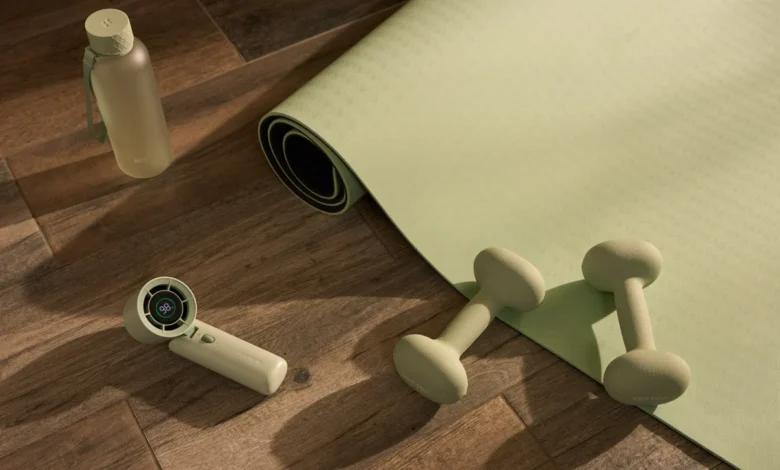
Blueair’s flagship $59.99 AlwaysCool Portable Handheld Fan is offered in versatile, minimalist neutral tones like black and white, yet the brand reports that its sage green colorway has rapidly outpaced competitors to become its top-selling SKU. To amplify its cultural footprint, the company introduced a vibrant tennis ball-green variant developed in direct collaboration with professional tennis star and brand ambassador Jessica Pegula just ahead of the 2026 U.S. Open.
The integration of elite athletes—including American tennis standout Tommy Paul, who joined Blueair’s roster of brand ambassadors in September—serves a precise demographic purpose. It allows the brand to capture the attention of wellness-focused consumers: a demographic characterized by their willingness to invest heavily in premium products designed to elevate their overall quality of life.
“These are the people that are habit-stacking,” Lane notes, describing the psychological profile of the modern wellness consumer. “They’re constantly improving their routines and wearing all the wearables, and thinking about, ‘How can I do my sleepy-girl mocktail at night?’ We become a part of all of these different things by way of [these consumers] optimizing their lives in all ways.”
Competitive Landscapes and Luxury Partnerships
Blueair is far from alone in recognizing the commercial viability of design-forward climate control tools. Industry competitors have rapidly escalated their own aesthetic offerings to capture consumer interest across digital and physical marketplaces.
Dyson, known for its high-end household appliances, introduced the $99.99 Hushjet Mini Cool Fan, promoting it through strategic cultural placements. The brand partnered with digital content creator Mina Ceran for a high-profile “What’s in my bag?” feature filmed at the prestigious Cannes Film Festival, showcasing how the blush pink miniature fan easily fits inside a designer clutch alongside everyday essentials like lip liner and gloss. Similarly, JisuLife offers its Handheld Fan Pro1 Mini for $69.99 in curated shades including classic black and an on-trend lilac. Meanwhile, SharkNinja has entered the fray with its $149.99 ChillPill Personal Fan and Cooling System, available in a broad spectrum of high-impact shades ranging from hot pink to matcha green.
Digital engagement metrics underscore the sudden spike in consumer demand. According to platform data released by Reddit, the dedicated community r/PortableFans generated 16,900 global views between September 2025 and August 2026, marking a staggering 2,075.8% increase year over year. Pinterest search analytics reflect a parallel surge: searches for mini handheld fans rose by 64% between August 2025 and August 2026, while portable neck fan queries climbed 55%. Most telling of the aesthetic shift is a 98% surge in searches specifically for the term “hand fan aesthetic.”
The Precedent of the Collectible Hydration Vessel
This phenomenon of transforming a mundane utility item into a lifestyle collectible is not entirely unprecedented within the modern consumer goods market. The trajectory closely mirrors the evolution of the reusable water bottle industry over the past half-decade.
The Stanley brand was long recognized as a manufacturer of rugged, industrial-grade thermoses before successfully pivoting the humble metal tumbler into a cultural phenomenon driven by limited-edition colorways and high-profile collaborations with fashion labels like LoveShackFancy and Farm Rio. Market rival Owala achieved comparable success through ergonomic portability and vibrant color blocking, routinely staging retail pop-up events that drew lines rivaling exclusive sneaker releases. As consumer preferences continue to shift rapidly, industry analyses—such as those published in Casey Lewis’s After School Substack—noted that brands like Hydrojug managed to capture the top spot as the quintessential water bottle trend of the 2025 holiday season. The portable fan market is utilizing this exact blueprint, proving that functionality combined with aesthetic customization is a potent retail formula.
The Enduring Appeal of Analog Alternatives
Despite the influx of high-tech gadgetry, the market has simultaneously experienced a robust renaissance for traditional, low-tech cooling instruments. During New York Fashion Week in September, high-end fashion houses including Retrofête and PatBo distributed branded portable hand fans directly to front-row attendees and VIP guests. These items served a dual purpose: providing immediate physical relief within crowded, overheated tent venues while acting as highly mobile, highly visible advertising billboards.
Consumer search habits corroborate this preference for simplicity. According to Pinterest data, year-over-year global searches for the term “traditional hand fan” increased by 145% in August alone, signaling that consumers are embracing both battery-operated technological solutions and timeless analog artifacts.
Broader Economic and Societal Implications
The rapid commercialization and aesthetic elevation of personal cooling devices point toward a broader structural adaptation in consumer behavior. As global temperatures continue to break historical records and extreme heat events transition from acute crises to chronic daily realities, personal climate control is shifting from a medical necessity for vulnerable populations to a universal consumer category.
Retail analysts suggest that the emergence of a dedicated “cooling aisle” across department stores, beauty retailers, and tech shops is an inevitability. By framing temperature regulation through the lens of self-care, personal wellness, and high fashion, brands have successfully insulated the category from economic downturns. Consumers who might hesitate to purchase a medical-grade cooling vest readily invest in a designer-colored handheld fan or a stylish cooling patch, viewing the expense not as a remedial medical cost, but as an essential lifestyle upgrade for a warming world.
Related posts: