Target Transforms Iconic Soho Location into a Design-Forward Retail Playground to Spark Discovery and Reclaim Consumer Loyalty

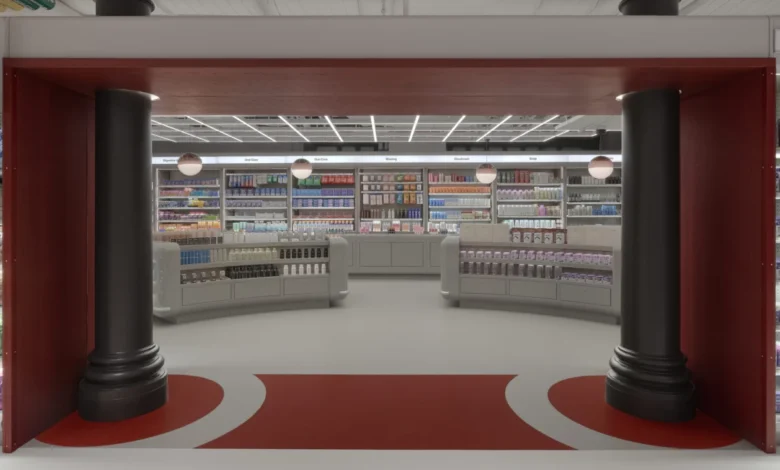
New York shoppers hunting for the latest viral beauty sensations, trendy apparel, and niche wellness products no longer need to scour multiple specialty boutiques or navigate cluttered big-box aisles. Under the grand cast-iron facade of a historic building at the bustling corner of Houston Street and Broadway in Manhattan, Target has officially completed the ambitious transformation of its Soho outpost. Unveiled on a Thursday, the revamped two-story destination is a one-of-a-kind, design-led curation space explicitly engineered to test the limits of modern visual merchandising, experiential retail, and social media engagement.
From Kourtney Kardashian’s Lemme gummy vitamins and the latest Nyx lip oil formulations to trendy everyday leggings and Jake Shane’s popular vegan gummies, the location unites diverse consumer categories under a single, highly aesthetic roof. Spanning apparel, beauty, wellness, home decor, food, beverage, toys, and collectibles, the store represents a radical departure from the traditional, utilitarian layout historically associated with mass-market retail giants. Behind this sweeping physical makeover lies a calculated corporate strategy. As the Minneapolis-headquartered retailer navigates a fiercely competitive landscape, shifting consumer habits, and external pressures, the Soho experiential hub has been tasked with repositioning Target not merely as a place for routine household replenishment, but as a premier destination for lifestyle discovery.
A Chronology of Transformation: From Hollister to Target’s Creative Laboratory
The evolution of the Soho retail space is rooted in a real estate play that began several years ago. Target originally took over the classic cast-iron building—which formerly housed a sprawling Hollister & Co. store—back in 2022. For the initial phase of its tenure, the location operated as a standard urban Target, serving local residents and tourists navigating the high-foot-traffic neighborhood. However, corporate leadership soon recognized the unique potential of the space to act as an experimental incubator.
In November 2025, Target officially shuttered portions of the Soho branch to begin a comprehensive redesign centered heavily on curation, experiential events, and sophisticated visual storytelling. Working in close collaboration with the renowned creative design agency Something Special Studios, the retailer spent nearly a year completely reimagining the two-story interior. The finished product, unveiled in late 2026, showcases a refined brand identity that subtly dials back the ubiquitous, high-contrast bright red of traditional Target branding in favor of a more subdued cherry shade designed to complement the building’s historic architectural character.
The physical environment now boasts interactive elements tailored for the digital age, including a dedicated on-site photo station where shoppers can capture, customize, and physically print high-quality selfies. According to company executives, roughly 70,000 pedestrians pass through the immediate intersection of Houston Street and Broadway each day, providing a steady, high-volume stream of potential customers that is evenly split between local New Yorkers and international or domestic tourists.
Merging Retail and Content Creation: The Experiential Strategy
The reimagined Soho location is built around the modern reality that physical retail must offer something that e-commerce cannot: community, atmosphere, and shareable experiences. Gigi Guerra, Vice President of Marketing and Creative Curation at Target, describes the space as a deliberate sandbox for the company.
"This is a chance for us to test and play," Guerra explained during the store’s unveiling. "It’s a style and design playground for us, and we can take pieces from it and apply them to broader change."
The architecture and interior merchandising of the store reflect this philosophy. The beauty and wellness department, for instance, was intentionally engineered with content creators in mind, featuring optimized lighting, clean minimalist sightlines, and visually engaging product displays that encourage visitors to record and broadcast content on-site. The space has already proven its drawing power as an event venue, successfully hosting high-profile consumer activations and public events featuring notable figures such as professional athlete Karl-Anthony Towns and entrepreneur Jordyn Woods.
Crucially, corporate leadership is quick to clarify that the Soho store is not a standalone ecosystem operating on isolated inventory. Every physical item, apparel piece, and beauty product featured on the shelves of the Soho flagship is available across Target’s national network of stores. The differentiation lies entirely in the curation, the spatial design, and the intentionality of the merchandising.
"Everything you see in the store is at any Target," Guerra noted. "It’s just the way we’ve curated and merchandised it. It actually shows how style-forward Target is."
Matthew Arrington, Target’s Director of Curation, echoed this sentiment, pointing to the psychological reality of modern consumerism. "We’re just inundated with things," Arrington said, addressing the macro-trend toward heavily edited retail environments. "There’s so much choice, there’s so much for anyone to take in. In a retail space like ours, even in one store, we’re just trying to make that even easier. We’ve kind of already done that edit for you."
Broader Industry Context: The War for the Brick-and-Mortar Consumer
Target’s strategic pivot in Soho does not happen in a vacuum. Major national retailers and department store chains across the United States are increasingly rethinking their brick-and-mortar footprints to combat the convenience of online shopping and revitalize flagging foot traffic.
In New York City alone, major brands have poured millions into flagship transformations. Banana Republic famously revamped its massive Soho flagship in 2024, introducing on-site tailoring services, a dedicated concierge, and flexible event spaces to attract lifestyle-oriented consumers. Simultaneously, legacy department store heavyweights like Macy’s and Nordstrom have systematically overhauled their beauty and cosmetics floors, embedding personalized skin-consultation services and luxury branding to create experiential shopping journeys. Beyond apparel and retail, even the wellness sector has embraced the trend; fitness giant Life Time converted its Midtown Manhattan location into a hybrid community hub complete with an on-site podcasting studio operating alongside traditional cardio and fitness facilities.
Outside of the five boroughs, the competitive landscape in big-box retail is intensifying rapidly. Walmart, which maintains a massive national footprint but famously lacks physical store locations within New York City’s municipal boundaries, has aggressively rolled out dedicated "Beauty Bars" staffed by specialized beauty advisors. Furthermore, Walmart has upgraded its product curation to feature more prestige and premium beauty brands across dozens of stores nationwide, directly challenging the market share traditionally captured by Target and traditional pharmacies.
Navigating Internal Challenges and Consumer Sentiment
While the debut of the Soho design hub represents a triumph of modern visual merchandising, Target has navigated a complex series of internal and external challenges over recent months. As a corporate entity based in Minneapolis, the retailer has faced organized scrutiny and ongoing calls for public boycotts. These friction points stem primarily from corporate policy adjustments, including the recent rollback of certain diversity, equity, and inclusion (DEI) initiatives, alongside public dissatisfaction regarding the company’s handling of external social issues, such as Immigration and Customs Enforcement (ICE) activity near store properties in both the New York metropolitan area and the Twin Cities.
Compounding these socio-political headwinds, Target has also grappled with operational friction within its traditional retail stores. In recent years, shoppers and retail analysts have frequently noted instances of disorganized, cluttered, and understocked shelves, a consequence of supply chain adjustments and labor shifts that critics argue degraded the in-store customer experience.
Despite these hurdles, the company’s financial fundamentals remain resilient. In its quarterly earnings report released in August, Target posted a solid 5.3% increase in net sales, bringing total revenue for the second quarter to $26.5 billion. However, leadership recognizes that sustained long-term growth requires continuous reinvention of consumer perception, particularly in high-density, trend-setting urban markets like New York City.
Early Indicators of Success and Future Implications
The gamble on the Soho design lab appears to be yielding tangible reputational dividends. According to proprietary national awareness studies conducted by Target, consumer perception of the brand shifts dramatically among those exposed to the Soho initiative. Data shows that of the consumers surveyed who were aware of the transformed Soho location, an impressive 60% reported an improved overall perception of the Target brand.
By treating the Soho branch as a live learning ground, Target’s internal teams can monitor real-time consumer data, assessing precisely which visual trends, brand collaborations, and merchandising layouts resonate most profoundly with shoppers. The insights harvested on Houston Street are designed not to remain confined to Manhattan, but to serve as a testing blueprint for future store renovations, layout optimizations, and visual branding strategies rolled out across the retailer’s nationwide fleet.
As big-box retail continues to evolve past traditional aisles and towering shelves, Target’s Soho experiment offers a compelling glimpse into the future of mass-market commerce—proving that even the largest corporate retailers can adapt, curate, and play on the cutting edge of style.
Related posts: