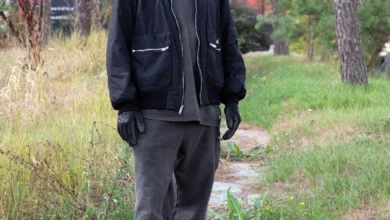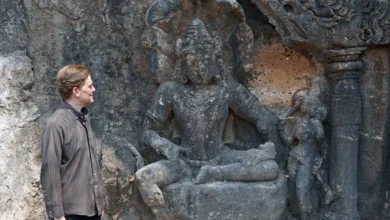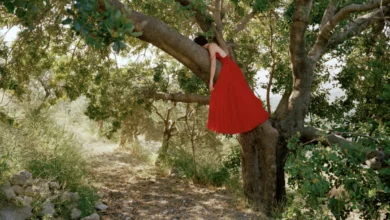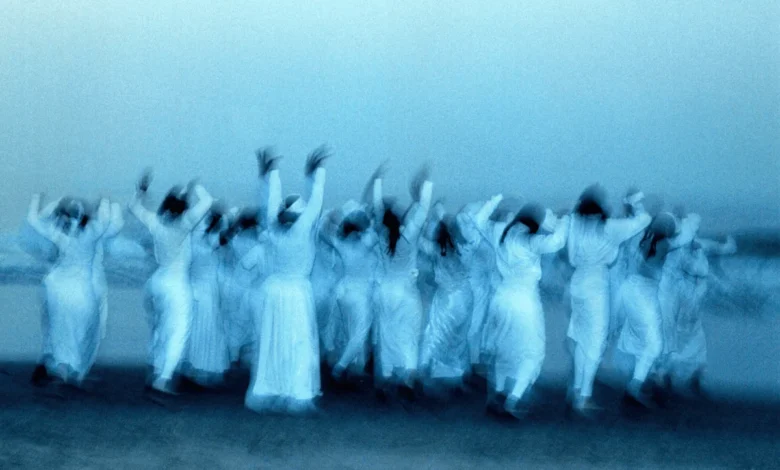
The landscape of American visual history is defined not only by the events that make the front page, but by the perspective of the individuals behind the camera. For more than six decades, acclaimed photographer Chester Higgins has dedicated his career to capturing the profound presence, rich history, and enduring achievements of people of African descent. Currently on view at the Bruce Silverstein Gallery in New York City through June 20, 2026, the comprehensive retrospective exhibition titled Chester Higgins: Shared Memories invites audiences to examine a monumental body of work that spans the entirety of the artist’s professional life. Through striking portraiture, deeply humanistic documentary photography, and a steadfast commitment to dignity, Higgins’s photographs challenge conventional media narratives and offer a vital counterweight to historical misrepresentation.
Main Facts and Exhibition Overview
Chester Higgins: Shared Memories brings together decades of archival and contemporary prints, charting the evolution of a visual storyteller who spent nearly forty years shaping the pictorial standards of The New York Times. The exhibition serves as both a retrospective of Higgins’s artistic output and an examination of the socio-political movements that have shaped Black identity globally since the mid-20th century.
The works featured in the gallery range from Higgins’s early documentation of civil rights activities in the American South to his extensive travels throughout the African diaspora, capturing communities in the United States, Africa, and the Caribbean. By presenting subjects across varying economic, social, and geographic spectrums, the exhibition avoids flattening the Black experience into singular tropes of struggle or triumph, instead presenting a multifaceted mosaic of human life. Art critics and historians note that the timing of the exhibition is particularly poignant, arriving amid contemporary cultural debates regarding representation, media literacy, and the historical framing of marginalized communities.
Chronology and Formative Years

Higgins’s journey behind the lens began far from the elite newsrooms of Manhattan. Raised in rural southern Alabama during the height of the mid-century Civil Rights movement, Higgins witnessed firsthand the systemic inequities and racial tensions that defined the Jim Crow South. These early experiences forged a deep social consciousness that would inform every aspect of his artistic trajectory.
While studying at Tuskegee University—a historically Black institution founded by Booker T. Washington—Higgins first discovered photography. The medium quickly transitioned from a personal interest to a tool for social documentation and political resistance. A defining moment in his early development occurred the day after he participated in a student-led political protest at the Alabama State Capitol in Montgomery to challenge the segregationist policies of Governor George Wallace.
When Higgins examined local and national newspapers the following morning, he confronted a stark discrepancy between reality and media output. Rather than depicting the student demonstrators as American citizens exercising their constitutional right to petition the government, mainstream press imagery often framed them through hostile stereotypes, portraying young activists as agitators or threats. This formative dissonance left a lasting impression on the young photographer, cementing his conviction that "the photograph never lies about the photographer." He recognized that a camera operator’s internal biases, societal conditioning, and underlying sentiments invariably project onto the subjects they choose to capture.

The New York Times Era and Institutional Impact
In 1975, Higgins joined the staff of The New York Times, marking the beginning of a nearly four-decade tenure as a staff photographer. Entering a major mainstream publication during an era when newsrooms lacked significant racial diversity, Higgins understood his presence and output as a deliberate intervention in the visual diet of the American public.
For decades, mainstream media outlets predominantly relied on deficit-based framing when covering Black communities, frequently associating Black subjects with poverty, criminality, or social dysfunction. Higgins sought to systematically dismantle this visual monopoly. Rather than photographing poverty through an exploitative lens of pity or class exclusion, he focused on the inherent humanity, dignity, and agency of his subjects.

His approach bridged the gap between daily photojournalism and anthropological art. Whether documenting urban neighborhoods in New York, religious and cultural ceremonies, family gatherings, or aging individuals, Higgins emphasized universal human desires. He frequently noted that regardless of socio-economic status, people share fundamental emotional needs, vulnerabilities, and aspirations.
Upon his retirement from The New York Times, the publication’s managing editor acknowledged the profound impact of Higgins’s work, noting that his daily contributions had fundamentally shifted how predominantly white newsrooms and readers perceived Black individuals, effectively expanding the cultural horizons of the newspaper’s audience. By placing nuanced, empathetic imagery within the nation’s paper of record, Higgins provided influential decision-makers with data and visual narratives that challenged prevailing societal biases.
Philosophical Foundations and the Signature of the Spirit

Beyond his journalistic contributions, Higgins’s artistic philosophy is deeply rooted in a spiritual and philosophical understanding of reality. Influenced by an out-of-body experience during his youth, Higgins views reality as multi-layered and operating in parallel dimensions, supported by natural and invisible forces that transcend everyday sensory perception.
This worldview influences his methodology of "looking." Rather than imposing a rigid narrative onto a scene, Higgins describes his process as an exercise in humility—harnessing his ego to allow the underlying spirit of a subject to reveal itself. He frequently speaks of capturing the "Signature of the Spirit," a visual intersection where nature, culture, and human behavior meet. This transcendent framework explains why his portraits possess an intimate, timeless quality, bypassing the transactional nature of traditional commercial photography to establish a profound connection between the viewer and the subject.
Broader Impact and Implications

The legacy of Chester Higgins, as highlighted by the Shared Memories exhibition, extends far beyond the technical mastery of his darkroom prints or his extensive publication record. His career offers a foundational case study in media accountability and visual ethics.
In an era defined by hyper-accelerated digital media, algorithmic feeds, and persistent visual polarization, Higgins’s body of work serves as a reminder of the ethical responsibility inherent in image-making. The exhibition prompts contemporary photographers, journalists, and cultural institutions to re-evaluate how visual storytelling can either perpetuate systemic miseducation or act as a restorative balm against societal confusion.
By chronicling the dignity of African descendants across six decades, Higgins has not only reclaimed a vital historical archive but has also redefined the boundaries of empathy in American photography. Chester Higgins: Shared Memories stands as a testament to the power of art to alter collective perception, proving that when a subject is viewed through a lens of respect and genuine understanding, the resulting image transcends documentation to become a universal reflection of the human spirit.