The death of the clean girl aesthetic and the rise of the maximalist fashion movement

If you have spent any significant time scrolling through fashion TikTok over the past month, you are likely already familiar with the prevailing mantra: the coat is the outfit. Following a prolonged and stifling summer that severely hindered apparel sales across major retail sectors, the arrival of autumn has served as a catalyst for a seismic shift in consumer behavior. Creators across social media platforms are shedding the constraints of minimalism, opting instead to showcase outerwear that serves as the centerpiece of their aesthetic. This is not merely a seasonal trend; it is the manifestation of a broader, long-term cultural pivot toward maximalism that is currently dismantling the dominance of the understated, neutral-toned looks that have defined the early 2020s.
The Evolution of the Statement Piece
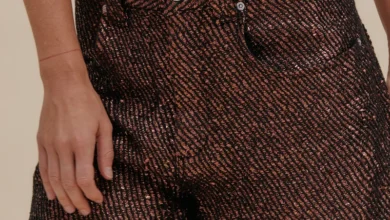
The current sartorial landscape marks a departure from the "quiet luxury" and "clean girl" trends that prioritized beige palettes, capsule wardrobes, and minimal-effort styling. In contrast, the current movement celebrates the "more is more" philosophy. Outerwear is no longer a functional afterthought but the primary expression of identity. The trend is defined by high-impact textures and materials: faux fur, intricate beading, Western-inspired fringe, heavy embroidery, and vibrant, saturated rainbow colorways.
Perhaps the most visible symbol of this resurgence is the Afghan coat. Often referred to as the "Penny Lane coat"—a direct homage to Kate Hudson’s iconic, bohemian wardrobe in the 2000 film Almost Famous—these shearling-lined, patchworked garments have flooded digital feeds. This fascination with the early 2000s, or Y2K-era fashion, reflects a cyclical pattern in the industry where nostalgia acts as a gateway for modern reinterpretation. Unlike the peacoats and trench coats that anchored retail sales for the past decade, these pieces are designed to be noticed, marking a psychological shift in how consumers utilize fashion to navigate a volatile economic and social landscape.
Chronology of a Style Pivot
The transition from minimalism to maximalism did not happen overnight. The industry began to see the first signs of fatigue regarding the "clean girl" aesthetic in late 2023, as consumers began to express burnout from the high-maintenance upkeep and restrictive rules of minimalist style.
- Early 2024: Initial signs of "dopamine dressing" emerge, with consumers beginning to experiment with color as a mood-boosting mechanism.
- Mid-2024: A notable dip in apparel sales during the summer prompted retailers to look for new drivers of engagement. Consumers signaled a desire for high-impact, individualistic fashion.
- Late 2024 (Current): The official "coat as the outfit" trend takes hold, aligning with the autumn/winter retail cycle.
- 2026 Projections: Market analysts at Spate indicate that this maximalist trajectory will continue to gain momentum, likely peaking between 2026 and 2027 as consumers further integrate eclectic influences into their daily wardrobes.
Market Data and Behavioral Shifts
Market research platform Spate, which monitors over 1 trillion search signals, 515 million TikTok posts, and millions of comments across Reddit and Instagram, has provided empirical evidence for this shift. The data suggests that the move toward maximalism is supported by a significant increase in search volume for specific, high-interest descriptors.
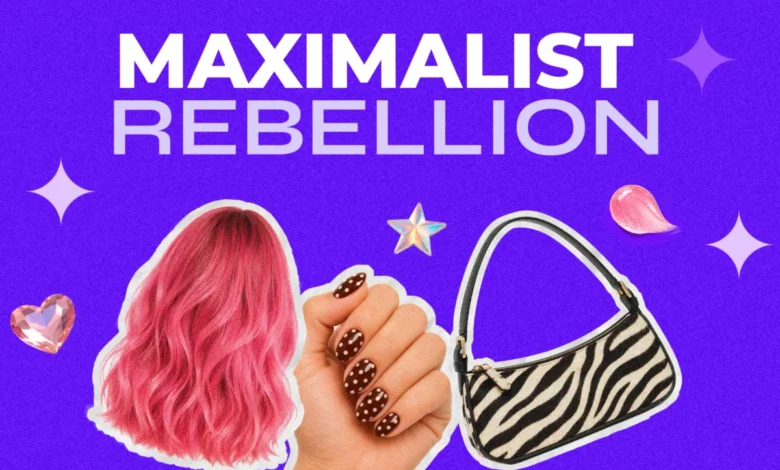
For instance, search queries for "bedazzled" items surged by 210% over the recent reporting period, while "zebra print" saw a massive 467% increase in search interest. Beauty trends are following suit; "pink hair" searches grew by 56%, and "polka dot nails" saw a 195% jump. These figures are not isolated anomalies but part of a larger trend toward what analysts are calling the "whimsical aesthetic" (up 77%) and the "messy girl aesthetic" (up 18%).
The Spate 2026 U.S. Culture Report highlights that these metrics represent a conscious rejection of the "polished" look. According to the report, consumers are utilizing bold colors and embellishments as a psychological tool to lift their spirits amidst ongoing economic and social uncertainty. The fashion industry is pivoting to accommodate this, moving away from uniform, mass-produced staples toward items that allow for personal storytelling.
Accessibility and the Democratization of Maximalism
One of the defining features of this maximalist wave is its accessibility. Unlike high-fashion trends that require significant capital investment, maximalism is uniquely suited to the circular economy. The surge in zebra print, for example, is heavily supported by the secondhand market. Apps like Depop, Poshmark, and Vinted have seen a resurgence in 2000s-era inventory, allowing consumers to participate in the trend at a fraction of the cost of modern luxury iterations.
In the beauty sector, the barrier to entry is similarly low. Heritage brands like Manic Panic, which offer vibrant, unconventional hair colors, have seen increased relevance. The trend has also adapted to lower-commitment lifestyles; rather than full-head dye jobs, many consumers are opting for "fox tips"—dyeing only the ends of the hair—or "peekaboo" sections that can be hidden or revealed depending on the occasion. This demonstrates a savvy consumer base that is eager to adopt new aesthetics without the permanence or financial commitment often associated with high-fashion cycles.
Broader Impact and Industry Implications
The shift toward maximalism has significant implications for retailers and fashion houses. For years, the industry thrived on the concept of the "capsule wardrobe"—a model that encouraged buying fewer, high-quality, neutral pieces. The current trend toward maximalism, however, encourages a more eclectic approach, where consumers mix eras, prints, and references. This model is inherently more conducive to frequent, varied shopping, which may provide a much-needed boost to retail apparel sales as we head into 2025 and 2026.
Retailers who have remained anchored in the minimalist "clean" aesthetic may find themselves struggling to maintain market share if they fail to adapt to this demand for individual expression. The data suggests that the "whimsical" and "maximalist" consumers are prioritizing personalization over uniformity. Brands that can offer modularity, bold prints, and customizable embellishments are positioned to capture the interest of a demographic that is actively seeking to distance itself from the homogenous look of the early 2020s.
Furthermore, the rise of maximalism is not limited to clothing. The 2026 U.S. Culture Report indicates that the zebra print obsession is manifesting in interior design—specifically through statement furniture—and in home accessories, makeup bags, and tech peripherals. This suggests that the trend is a holistic lifestyle shift rather than a singular fashion moment.
Future Outlook: Toward 2027
As the industry looks toward 2027, the trajectory for maximalism appears stable. The report suggests that consumers will continue to refine their approach by mixing disparate references, such as blending vintage Victorian-era lace with modern Y2K-inspired prints or combining high-end luxury pieces with thrifted, unconventional items.
The movement is ultimately a reflection of a consumer base that feels empowered to use their environment and their appearance to signal their internal state. While minimalism was a response to the chaos of the early pandemic era—a desire for control and calm—the current appetite for maximalism is a sign of a society emerging from that period, seeking to reclaim individuality and joy through aesthetics. As creators continue to push the boundaries of what is "in," the fashion industry will likely see a continued de-emphasis on the "uniform" and a heightened celebration of the unique, the bold, and the unapologetically expressive. For the foreseeable future, the coat will continue to be the primary vessel for this expression, but the underlying drive for maximalism is set to permeate every facet of the consumer goods market.
Related posts: