Capturing the Sacred: Lev L. Spiro on Photography, Wilderness, and the Celtic Tradition of Thin Places

The contemporary landscape of fine art photography is increasingly turning inward, seeking not merely to document physical topography, but to capture the psychological and spiritual resonance of the natural world. Among the practitioners leading this exploration is accomplished film and television director turned photographer Lev L. Spiro, whose work investigates what Celtic spiritual traditions define as "thin places"—locations where the boundary between the ordinary world and the sacred or otherworldly dissolves. Spiro’s evocative imagery, showcased in acclaimed series such as Thin Places and Elemental, bridges the gap between documentary outdoor observation and deep emotional expression. Through his mentorship, including his heavily waitlisted workshops with the Santa Fe Workshops titled "Thin Places: Photography and the Sacred in Nature," Spiro is redefining how modern photographers approach the intersection of wilderness, perception, and art.
Roots in the Wilderness: The Evolution of a Visual Language
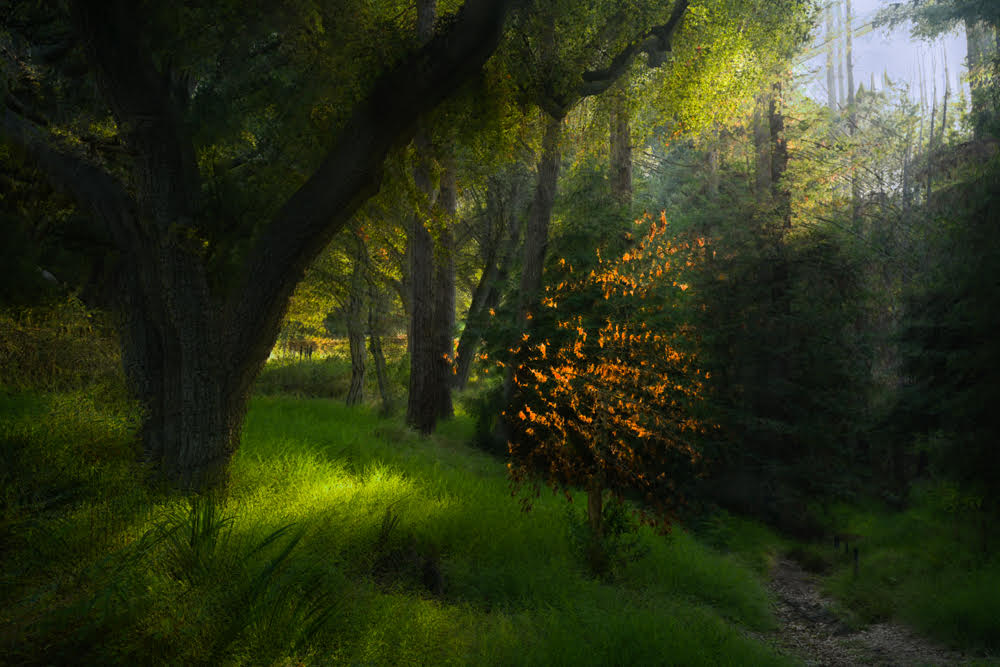
The intellectual and spiritual foundation of Spiro’s photographic philosophy traces back to his formative experiences during adolescence. Spending his eleventh through thirteenth summers at an Outward Bound-type wilderness camp in Vermont, Spiro experienced early encounters with profound natural environments. Far removed from the urban and suburban landscapes of everyday life, these prolonged immersions in dense forests and mountainous terrain instilled an early sense of awe. Though he lacked the formal terminology at the time, these immersive summers planted the seeds for what he would later recognize as thin places—geographies that demand a shift from passive observation to active, heightened consciousness.
Years later, while engaging with foundational literature such as The Story of King Arthur and His Knights, in which literary figures repeatedly step away from the comforts of Camelot to traverse transformative woods, Spiro found a narrative parallel to his own visual pursuits. The woods in Arthurian lore function much like photographic thin places: zones where time warps, the atmosphere shifts, and the ordinary gives way to the mysterious. This intersection of folklore, environmental immersion, and visual storytelling ultimately guided Spiro’s transition from directing moving images for film and television to framing stills that capture transcendent stillness.
Methodology and Practice: Moving from Description to Feeling

In professional fine art photography, distinguishing between a descriptive travel photograph and an evocative emotional statement is a critical hurdle. Spiro addresses this challenge by instructing students to move beyond ordinary seeing, drawing heavily on the foundational teachings of mid-century photographic masters Minor White and Paul Caponigro. White and Caponigro famously emphasized receptivity—allowing the subject to reveal itself rather than forcing a preconceived composition onto the landscape.
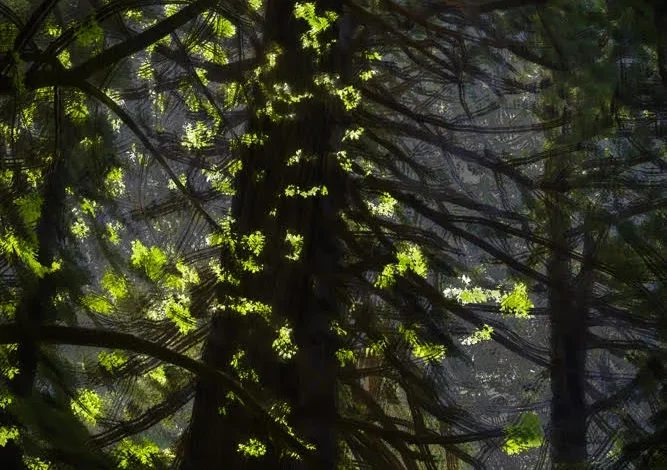
Spiro’s methodology encourages practitioners to slow down and synchronize their senses with the environment, taking into account not only shifting light but also movement, form, time, color, texture, and spatial relationships. Rather than meticulously plotting every excursion, Spiro notes that the most profound thin places are frequently happened upon. He adopts Sam Abell’s philosophy of allowing oneself to be "stopped" by the environment. This perceptual arrest—where a photographer is halted by a fleeting convergence of a waterfall glimpsed through dense timber or sudden shafts of filtered light—demands instant adaptability. Often, by the time the creator fully comprehends the arresting stimulus, the environmental conditions have already shifted, making the discipline an exercise in mindfulness and immediate response.
Technical Approaches Across Series: Thin Places and Elemental

Spiro’s portfolio demonstrates a deliberate evolution in how technical execution serves conceptual depth. His prior series, Thin Places, relied heavily on the dramatic lighting conditions found during the golden hours—the two hours immediately following sunrise and the two hours preceding sunset. During these windows, low-angle light accentuates textures and casts long, atmospheric shadows, underscoring the spiritual weight of the forests and rural vistas he captures.
In contrast, his subsequent project, Elemental, shifts its technical parameters to focus on the temporal passage of natural forces. Utilizing long-exposure techniques, Spiro actively seeks out moving water and dynamic cloudscapes. This approach requires specific field configurations, including the deployment of heavy tripods, specialized lenses, and multi-stop neutral density (ND) filters ranging from six to ten stops. The resulting images do not merely freeze a landscape in time; instead, they visualize the continuous, fluid motion of nature, reinforcing the thematic dissolution of boundaries between the viewer and the environment.
Pedagogical Impact: The Santa Fe Workshops Phenomenon

The growing cultural appetite for contemplative, process-driven photography is underscored by the unprecedented demand for Spiro’s educational offerings. His specialized curriculum, "Thin Places: Photography and the Sacred in Nature," hosted by the prestigious Santa Fe Workshops, has sold out multiple consecutive iterations, maintaining an extensive waitlist.
Industry analysts and workshop organizers attribute this popularity to a distinct shift within the demographic of modern photographers. Many participants arrive with advanced technical competence in landscape mechanics—knowing how to manage dynamic range, sharp focus, and exposure triangles—yet feel a creative stagnation. Spiro’s instruction directly addresses this plateau by teaching artists how to bypass mere documentation in favor of forging a profound emotional connection with the audience.
The core takeaway of the curriculum is egalitarian: thin places and the sacred are not exclusive to exotic, remote vistas or specific historical monuments. Instead, they emerge organically through sustained attention, curiosity, presence, and an internal openness that permits the external world to leave an imprint on the creator.

Ethical Dimensions of Photographing Sacred Geographies
As interest in thin places expands, practitioners face important ethical considerations regarding environmental stewardship and cultural respect. Because these locations often overlap with wilderness preserves, fragile ecosystems, or ancestral lands with deep spiritual significance to Indigenous communities, professional codes of conduct are paramount.
Spiro advocates for a strict "leave no trace" ethos within the natural world. He emphasizes that the relationship with a thin place is reciprocal, existing between the observer and the immediate ecosystem. Photographers are urged to minimize physical disruption, ensuring that the only element removed from the site is digital or analog imagery. Furthermore, when operating in areas of cultural or historical importance, respectful acknowledgment of local and Indigenous heritage remains an essential component of ethical field practice.

Broader Implications for Contemporary Fine Art Photography
The resonance of Spiro’s work and teachings speaks to a broader cultural movement within contemporary visual arts. In an era dominated by hyper-fast digital consumption, algorithmic content saturation, and constant connectivity, slow photography grounded in mindfulness has emerged as a vital counterweight.
By treating the camera as an instrument of psychological inquiry rather than an apparatus for mere record-keeping, photographers like Spiro challenge viewers to reconsider their relationship with the natural world. The widespread enthusiasm for his workshops and exhibitions suggests a collective yearning for spaces of quiet reflection. Ultimately, Spiro’s exploration of thin places demonstrates that the most compelling photography occurs not when the artist dominates the landscape, but when the landscape is allowed to transform the artist.