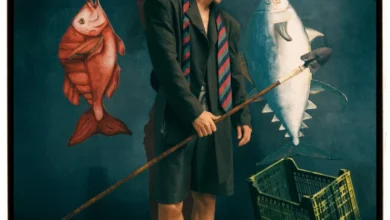
Deciding to photograph herself every day for a year, Marie Tomanova embarked on a journey that became a revelation

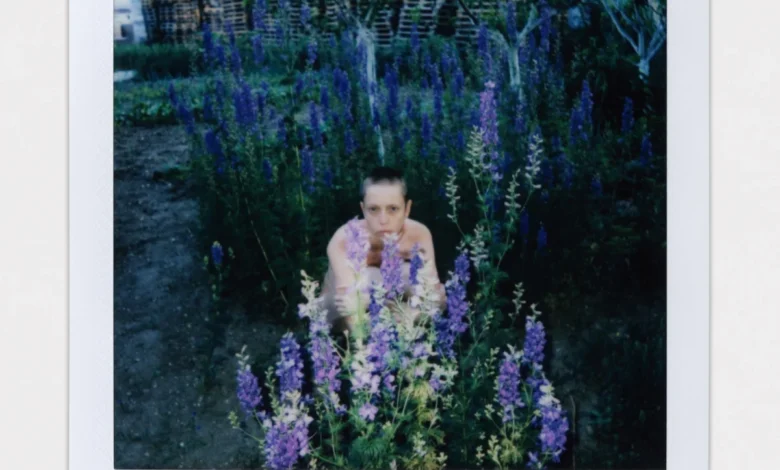
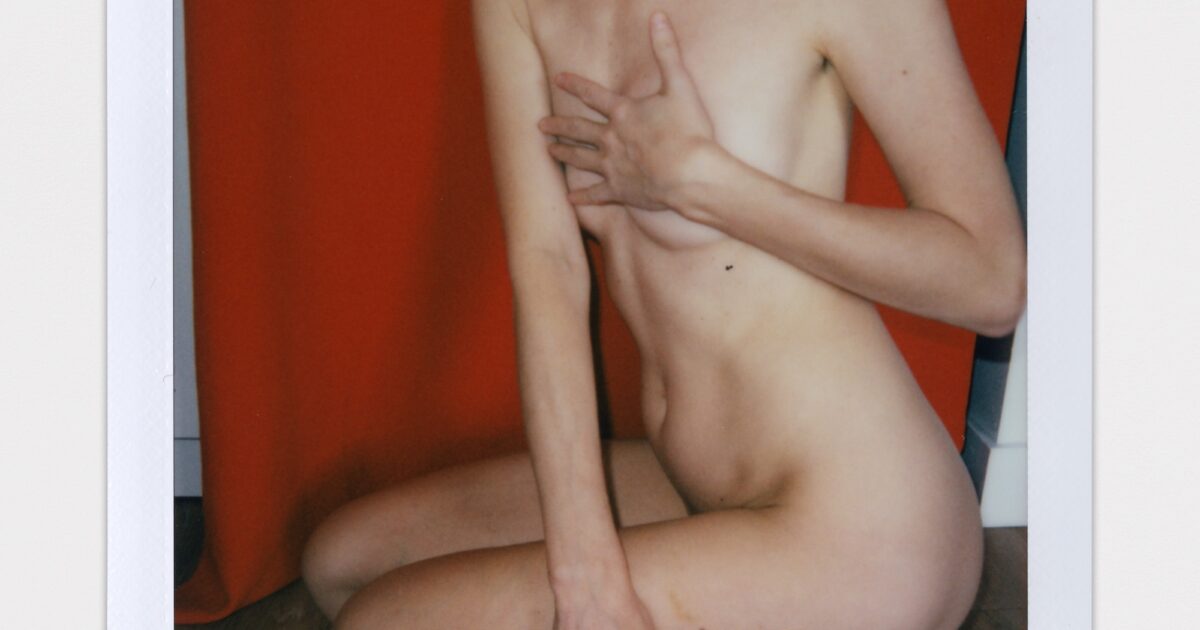
Within the stark white walls of Harkawik gallery in New York, an intimate and expansive visual narrative unfolds through 344 Polaroids. These are not mere snapshots, but deliberate explorations of self by Czech photographer Marie Tomanova, chronicling her existence throughout the entirety of 2022. The exhibition, titled Three Empty Weeks in July, presents a profound self-portrait project, a testament to Tomanova’s commitment to introspection and artistic resilience. The collection captures her in a myriad of forms and poses: direct gazes into the camera, languid stretches, assertive stances mimicking a bodybuilder, and moments of unadorned vulnerability. Many of these images feature Tomanova naked, her body a fluid and flexible canvas, exuding a palpable comfort in her own skin as she twists and contorts with inherent grace.
This ambitious undertaking was conceived as a response to a period of intense professional demand and subsequent burnout. In 2021, Tomanova experienced a whirlwind of activity, marked by the publication of two monographs, participation in multiple exhibitions including the prestigious Rencontres d’Arles, and the demanding logistical and administrative tasks that accompany such a career. The sheer volume of emails and the constant pressure to produce led to a feeling of being "programmed to work instead of being free and creative." This realization spurred a desire to reclaim her explorative and playful artistic spirit. The "romantic idea," as she describes it, was to dedicate the subsequent year to photographing herself daily, using instant film, irrespective of her location or activities.
The project commenced at the start of 2022. In January, Tomanova transformed her one-bedroom apartment and kitchen into a makeshift studio, experimenting with classic portraiture and double exposures. However, as the months progressed, the confinement of her living space began to feel restrictive. "February was nice, then March started to feel a little stickier," she recalls. "I thought, what am I going to do in the same place again, the same one-bedroom flat?" This contemplation prompted a shift in her approach, leading her to embrace travel. "So she started travelling, and it picked up nicely in April, May, and June." The logistics of daily self-portraiture on the move necessitated ingenuity. Tomanova employed a variety of methods to position her camera, utilizing tripods, tables, chairs, windows, or any available surface to achieve her desired framing.
The visual language of the Polaroids evolves throughout the year. For the first half, many images are intimate, lighthearted, and somewhat reserved, with Tomanova often folding her body, subtly concealing her nudity from the lens. Flowers recur as a recurring motif, symbolizing her blossoming femininity and perhaps a gentle introspection on her own growth. As spring transitioned into summer, her journey took her across Europe. Between May and June, her Polaroids transport viewers to Italy and France, capturing her against the backdrop of opulent palazzos, serene lavender fields, shuttered shopfronts, ancient bridges, and classical marble statues. These settings serve as more than just backdrops; they become integral elements of the self-portraits, contextualizing her presence within diverse environments and imbues the images with a sense of lived experience.
The Genesis of Three Empty Weeks in July
The project’s title, Three Empty Weeks in July, alludes to a specific period within the year, a "tumultuous, incomprehensible period" that caused a hiatus in her daily photographic practice. While the exact nature of this interruption remains personal, its impact is evident in the exhibition’s narrative. The absence of photographs for a few weeks in July creates a tangible void within the year-long chronology, prompting viewers to contemplate the human experience of disruption and its aftermath. This pause, though perhaps involuntary, contributed to the project’s depth, highlighting the inherent unpredictability of life and its influence on creative output.
Tomanova’s self-portraiture places her within a lineage of artists who have utilized their own image for profound self-exploration. Her work resonates with the raw honesty of Nan Goldin, the rigorous, long-term self-documentation of Melissa Shook and Friedl Kubelka, and the introspective vulnerability found in Yurie Nagashima’s practice. However, Tomanova distinguishes her project from mere documentation. "It’s about coming to terms with the fact that I don’t really know who I am," she reveals to BJP. This profound admission underscores the project’s philosophical underpinnings. For Tomanova, the uncertainty of identity is not a source of anxiety but rather a fertile ground for discovery. "I think that’s beautiful because it opens up so much more to explore, experiment, and shift." This perspective frames the project not as a definitive statement of self, but as an ongoing dialogue with her evolving identity.
The Impact of Instant Film and Digital Age
The choice of Polaroid film is a deliberate artistic decision that imbues the project with a unique aesthetic and conceptual weight. In an era dominated by digital immediacy, the tangible nature of Polaroids offers a counterpoint. Each photograph is a singular artifact, imbued with the imperfections and warmth of the medium. The developing image, appearing slowly on the film, mirrors the gradual unfolding of Tomanova’s self-discovery. The limited number of shots per pack and the inherent unpredictability of instant film also contribute to a sense of preciousness and deliberate execution. This contrasts sharply with the often disposable nature of digital photography, where countless images can be captured and discarded with ease.
The exhibition at Harkawik gallery, featuring 344 Polaroids, represents a significant commitment to this analog medium. The sheer volume of physical objects creates an immersive experience for the viewer, allowing for a detailed observation of Tomanova’s subtle shifts in expression, posture, and environment. The gallery space itself becomes a witness to her year-long journey, transforming the intimate act of self-photography into a public display of vulnerability and artistic exploration.
Broader Context and Artistic Precedents
Tomanova’s project can be situated within the broader context of contemporary self-portraiture, a genre that has seen a resurgence and diversification in recent decades. Artists are increasingly using their own image to address issues of identity, gender, sexuality, mental health, and societal pressures. The rise of social media has also blurred the lines between private and public self-representation, making the act of curating one’s image a pervasive cultural phenomenon.
Within this landscape, Tomanova’s approach stands out for its sustained, analog commitment and its focus on the internal landscape rather than external validation. While artists like Cindy Sherman have famously used self-portraiture to deconstruct archetypes and explore performativity, Tomanova’s work is more directly autobiographical, even as she grapples with the elusive nature of self. Her references to artists like Nan Goldin are particularly relevant, as Goldin’s groundbreaking work documented her own life and the lives of her friends with unflinching honesty, often challenging societal norms and exposing the complexities of human relationships. Similarly, Friedl Kubelka’s decades-long self-portrait project, "24 Stunden," presents a meticulous and often stark record of her daily existence, demonstrating a profound dedication to self-observation.
The implications of Tomanova’s project extend beyond the art world. In a society that often encourages outward projection and the performance of success, her willingness to embrace uncertainty and vulnerability offers a powerful counter-narrative. The project suggests that true self-discovery often lies not in definitive answers, but in the courage to ask questions and to remain open to the process of becoming. The "empty weeks" in July, far from being a failure, become a poignant reminder that life is not a linear progression and that moments of pause and reflection are essential components of growth.
The Future of Self-Portraiture
Marie Tomanova’s Three Empty Weeks in July is more than just an exhibition; it is a testament to the enduring power of self-inquiry and the transformative potential of artistic practice. By meticulously documenting her year, she invites viewers to consider their own journeys of self-discovery. The project’s success lies in its ability to resonate on a deeply personal level, offering a poignant and beautifully rendered exploration of what it means to be human in a complex and ever-changing world. The Polaroids, with their inherent materiality and intimate scale, serve as tangible anchors in this exploration, reminding us of the power of physical presence and the slow, deliberate unfolding of identity. As the exhibition concludes, Tomanova’s journey continues, a perpetual exploration of the self, captured one frame at a time. The project’s success has garnered critical attention, with institutions and collectors alike recognizing the significance of this extensive and deeply personal body of work. This recognition further solidifies Tomanova’s position as a vital voice in contemporary photography, pushing the boundaries of self-portraiture and offering a profound meditation on the nature of identity.