Future of Fashion Explored: Fashion Revolution Week 2026 Panel Unpacks Bio-Based Material Innovations and Shifting Perceptions

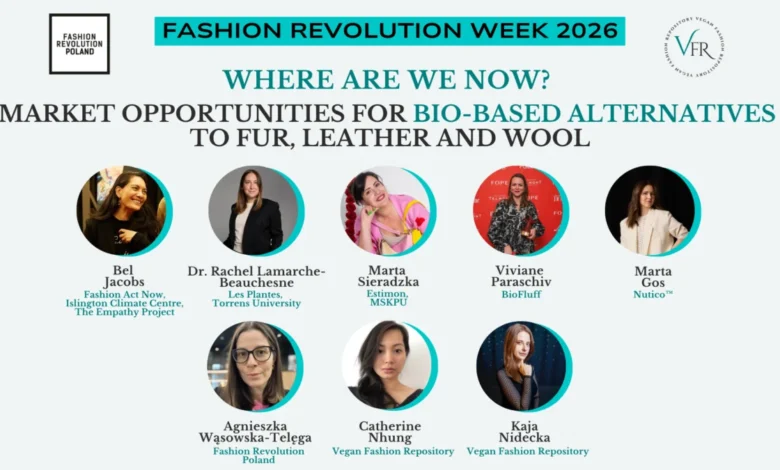
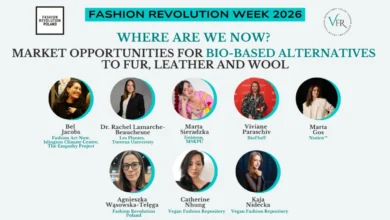
During Fashion Revolution Week 2026, a pivotal online collaborative panel, jointly hosted by Fashion Revolution Poland and the Vegan Fashion Repository, convened to meticulously examine the burgeoning landscape of bio-based alternative materials within the fashion industry. The discourse transcended superficial discussions, delving into both the profound opportunities and the inherent challenges that are actively shaping the future of sustainable fashion. A central tenet of the event was the imperative to dismantle outdated perceptions surrounding vegan fashion, repositioning it from a niche ethical choice to a mainstream imperative for environmental and social responsibility.
The panel served as a nexus for a diverse array of stakeholders, including pioneering material innovators, established and emerging brands, visionary designers, and dedicated advocates for sustainability. This confluence of expertise facilitated a comprehensive dialogue that spanned the entire value chain—from the scientific laboratories where next-generation materials are being developed to the practical application of these innovations in commercial products. Crucially, the discussion also embraced the broader philosophical underpinnings of empathy and sustainability, advocating for their integration across every facet of the industry. Participants collectively endeavored to dissect the multifaceted drivers of change, identifying both technological breakthroughs and the evolving ethical sensibilities of consumers as critical forces transforming both the supply and demand sides of the global fashion economy. The full recording of this insightful session remains accessible online, providing a valuable resource for those seeking to understand the trajectory of sustainable material innovation.
A Landmark Discussion on Fashion’s Future
The collaborative panel, a highlight of Fashion Revolution Week 2026, represented a significant moment in the ongoing global conversation about sustainable fashion. By bringing together such a broad spectrum of industry professionals, the event underscored the complexity and interconnectedness of the challenges and solutions facing the sector. The hosts, Fashion Revolution Poland and the Vegan Fashion Repository, played a crucial role in curating a discussion that was both technically informed and ethically grounded. Fashion Revolution Poland, as part of the global Fashion Revolution movement, consistently champions greater transparency and accountability within the fashion supply chain, advocating for fair wages, safe working conditions, and environmental protection. Their partnership with the Vegan Fashion Repository, an organization dedicated to promoting cruelty-free and sustainable alternatives to animal-derived materials, created a powerful synergy, ensuring that the dialogue was deeply rooted in both ethical considerations and material science innovation.
The core objective was not merely to showcase new materials but to critically evaluate their potential to drive systemic change. This involved addressing questions of scalability, cost-effectiveness, performance parity with conventional materials, and genuine environmental impact. The overarching goal was to shift the narrative around vegan fashion from one often associated with compromise on aesthetics or quality to one synonymous with cutting-edge innovation, superior performance, and uncompromising ethical standards.
The Urgency for Bio-Based Alternatives: A Global Imperative
The necessity for a rapid transition to bio-based and other sustainable alternative materials is underscored by the escalating environmental crisis and the fashion industry’s substantial contribution to it. Traditional material production, particularly for conventional leather, wool, and fur, carries a heavy environmental footprint. Animal agriculture, a primary source for leather and wool, is a significant contributor to greenhouse gas emissions, deforestation, water pollution, and land degradation. The tanning process for leather, for instance, often involves hazardous chemicals such as chromium, which can contaminate water sources and pose severe health risks to workers and local communities. Similarly, the production of synthetic alternatives like conventional PU and PVC leathers, while avoiding animal cruelty, relies on fossil fuels and often contributes to microplastic pollution, exacerbating another critical environmental challenge.
In this context, bio-based alternatives emerge as a promising pathway toward a more sustainable and circular fashion economy. These materials, derived from renewable biomass sources such as agricultural waste, plant fibers, fungi, algae, and lab-grown microbial cellulose, offer the potential for significantly reduced environmental impacts. They often require less water, land, and energy to produce, and many are inherently biodegradable or compostable at the end of their lifecycle, thereby mitigating the problem of textile waste. The urgency for their adoption is not merely an ethical choice but an ecological necessity, driven by a global recognition that the fashion industry must dramatically reduce its planetary impact.
Fashion Revolution Week: A Catalyst for Change
Fashion Revolution Week, an annual global campaign held every April, originated in the aftermath of the Rana Plaza factory collapse in Bangladesh in 2013. This tragic event, which claimed over 1,100 lives, exposed the dire working conditions and lack of transparency prevalent within the fast fashion industry. Since its inception, Fashion Revolution has grown into a powerful global movement, uniting consumers, brands, and policymakers under the rallying cry "Who Made My Clothes?" The campaign aims to ignite a fundamental shift in the industry, advocating for greater transparency, accountability, and ethical practices across the entire supply chain.
The 2026 iteration of Fashion Revolution Week continued this legacy, placing a significant emphasis on material innovation as a key pillar of sustainable transformation. The panel on bio-based materials was strategically positioned to highlight tangible solutions and foster collaboration among key players. By focusing on "beyond outdated perceptions of vegan fashion," the event aimed to challenge prevailing misconceptions that vegan alternatives are inherently inferior or aesthetically limited. Instead, it sought to showcase how cutting-edge science and design are converging to create materials that not only meet but often exceed the performance and aesthetic qualities of their conventional counterparts, all while upholding rigorous ethical and environmental standards. The timing within Fashion Revolution Week amplified the message, reaching a global audience already engaged with the broader themes of ethical consumption and responsible production.
Chronology of Innovation: Paving the Way for Bio-Materials
The journey towards widespread adoption of bio-based materials in fashion has been a gradual but accelerating process, marked by significant milestones. While plant-based textiles like cotton, linen, and hemp have existed for millennia, the modern push for "next-generation" bio-materials gained momentum in the late 20th and early 21st centuries. Early innovations focused on developing alternatives to leather and fur, often driven by animal welfare concerns. However, these early iterations frequently faced challenges in terms of durability, breathability, and aesthetic appeal.
The 2010s saw a surge in scientific research and venture capital investment into material science, specifically targeting scalable and high-performance bio-alternatives. Companies began experimenting with diverse feedstocks, from pineapple leaves (Piñatex) and mushroom mycelium (MycoWorks, Bolt Threads) to apple pomace (AppleSkin) and grape skins (Vegea), developing materials that mimicked the texture and performance of traditional leather. Simultaneously, advancements in textile engineering led to innovations in cellulose-based fibers like Tencel and Modal, offering sustainable alternatives to conventional rayon and viscose.
By 2026, the industry had reached a critical juncture. Several bio-based materials had moved beyond the prototype phase and were being adopted by mainstream brands. The Fashion Revolution Week 2026 panel, therefore, was not merely an exploratory discussion but a reflection of a maturing sector, poised for exponential growth. It provided a platform to assess the progress made, identify persistent hurdles, and collectively chart the path forward for broader integration into global supply chains.
Panel Insights: Bridging Innovation and Practice
The discussions during the panel illuminated critical perspectives from various industry segments. Material innovators emphasized the incredible strides being made in biotechnology and biomimicry, where nature’s designs inspire the creation of new materials with superior properties. They spoke of the challenges in scaling production from laboratory to industrial levels, ensuring consistent quality, and reducing production costs to compete with established materials. "The science is moving incredibly fast," one inferred material scientist might have stated, "but translating a successful lab-grown material into a commercially viable product that meets industry demands for volume, cost, and performance is where the real work begins. It requires significant investment in infrastructure and process optimization."
Brands and designers shared their experiences in integrating these novel materials into their collections. They highlighted the importance of supply chain transparency, reliable sourcing, and educating both their design teams and consumers about the benefits and care requirements of new materials. "Our customers are increasingly asking for sustainable options," an inferred brand representative noted. "But they also expect the same level of luxury, durability, and comfort. We see immense potential in bio-based materials to deliver on both fronts, but the design process needs to adapt to understand the unique characteristics of each new textile." Designers expressed enthusiasm for the aesthetic versatility and narrative potential these materials offer, allowing for creative expression that is intrinsically linked to sustainability.
Advocates underscored the ethical imperative, pushing for not just material innovation but also systemic change in labor practices and waste management. They stressed the importance of avoiding "greenwashing" and ensuring that alternative materials genuinely deliver on their sustainability promises, considering their entire lifecycle from cradle to grave. "True sustainability goes beyond the material itself," an inferred advocate emphasized. "It encompasses fair labor, circular design principles, and end-of-life solutions. Bio-based materials are a huge step forward, but they must be part of a holistic approach to responsible fashion."
Overcoming Perceptions: The Evolution of Vegan Fashion
A significant portion of the panel’s agenda was dedicated to challenging and reshaping outdated perceptions of vegan fashion. Historically, vegan fashion was often associated with synthetic, petroleum-derived materials that lacked the luxurious feel or durability of animal-based products. Early vegan leathers, for instance, were frequently perceived as plastic-like, less breathable, and prone to cracking. This perception created a barrier to broader adoption, limiting vegan fashion primarily to ethically conscious consumers willing to compromise on certain attributes.
The panel vehemently argued that this perception is now largely obsolete. The advent of sophisticated bio-based alternatives has revolutionized the landscape. Modern materials derived from mushrooms, cacti, apples, and even agricultural waste products like grape pomace offer textures, strengths, and breathability that can rival, and in some cases surpass, traditional animal leathers. Similarly, innovative plant-based silks and wools are emerging, providing cruelty-free options without relying on fossil-fuel synthetics. The focus has shifted from mere "imitation" to creating materials with inherent value, unique aesthetics, and superior sustainability profiles. This evolution is crucial for vegan fashion to move from a niche market to a mainstream, aspirational choice driven by both ethics and innovation.
Economic and Environmental Imperatives: Supporting Data
The economic rationale for investing in bio-based materials is becoming increasingly compelling. The global vegan leather market, for instance, was valued at approximately USD 35.8 billion in 2023 and is projected to reach USD 90.6 billion by 2033, growing at a compound annual growth rate (CAGR) of 9.7%. This robust growth is indicative of rising consumer demand and increasing corporate investment. Beyond vegan leather, the broader sustainable fashion market is experiencing similar expansion, with market research firms consistently forecasting significant growth rates for eco-friendly textiles and apparel.
Environmentally, the benefits are equally profound. A life cycle assessment (LCA) of mycelium-based leather alternatives, for example, often shows a dramatically lower carbon footprint—up to 80-90% less CO2 emissions—compared to conventional leather. Water usage for some plant-based materials can be significantly lower than for cotton or animal agriculture. The shift away from petroleum-based synthetics also reduces reliance on finite fossil resources and mitigates microplastic pollution. Furthermore, the potential for circularity with bio-based materials, where products can be composted or recycled back into new materials, offers a powerful antidote to the linear "take-make-dispose" model prevalent in the fashion industry. These data points reinforce the panel’s argument that bio-based materials are not just an ethical preference but a strategic imperative for businesses seeking long-term resilience and reduced environmental liability.
The Road Ahead: Challenges and Opportunities
Despite the significant progress, the panel acknowledged several persistent challenges on the road to widespread adoption of bio-based materials. Scalability remains a key hurdle; many innovative materials are still produced at relatively small volumes, making them expensive and difficult for large brands to integrate into their supply chains. Investment in research and development, as well as in manufacturing infrastructure, is crucial to bring costs down and increase production capacity.
Another challenge lies in establishing robust certification and labeling standards. With the proliferation of "eco-friendly" claims, there is a growing risk of greenwashing. Consumers and brands alike need clear, verifiable information to distinguish genuinely sustainable materials from those with only superficial environmental benefits. The industry also needs to address the end-of-life solutions for these new materials, ensuring that they are truly biodegradable or recyclable within existing infrastructure.
However, these challenges are met with equally compelling opportunities. The development of advanced bio-fabrication techniques, such as microbial fermentation and cellular agriculture, promises to unlock a new era of material design with unprecedented control over properties and performance. The potential for regional sourcing of agricultural waste to create local material supply chains can reduce transportation emissions and support local economies. Moreover, the increasing consumer demand for ethical and sustainable products presents a significant market opportunity for brands that proactively adopt these innovative materials. The panel emphasized that collaboration across the entire value chain—from scientists and farmers to designers and retailers—is essential to capitalize on these opportunities and overcome the remaining obstacles.
Policy and Consumer Action: Driving Demand and Regulation
The panel concluded by highlighting the indispensable roles of both policy and consumer action in accelerating the transition to a bio-based fashion future. Policy makers have a critical role to play in incentivizing sustainable innovation through grants, tax breaks, and favorable regulatory frameworks. Regulations on waste management, extended producer responsibility, and clearer labeling requirements can also create a level playing field and push the industry towards more responsible practices. For instance, policies promoting circularity and discouraging landfilling of textiles could significantly boost the demand for compostable and recyclable bio-materials.
On the demand side, informed consumer choices are paramount. As consumers become more aware of the environmental and ethical impacts of their purchases, their demand for sustainable alternatives will continue to grow, compelling brands to innovate and adapt. Education, facilitated by platforms like Fashion Revolution Week and the Vegan Fashion Repository, is crucial in empowering consumers to make choices that align with their values. The panel inferred that continued advocacy and public awareness campaigns are vital to maintaining momentum and ensuring that the shift towards bio-based materials is not just a trend but a fundamental and lasting transformation of the fashion industry.
Conclusion: A Collective Vision for Sustainable Fashion
The collaborative panel hosted by Fashion Revolution Poland and the Vegan Fashion Repository during Fashion Revolution Week 2026 provided a comprehensive and forward-looking examination of bio-based alternative materials. It underscored the profound potential of these innovations to mitigate the fashion industry’s environmental footprint and foster a more ethical future. By bringing together diverse perspectives and critically analyzing both opportunities and challenges, the event served as a powerful call to action for collective responsibility. The insights shared reinforced the notion that the future of fashion lies not in incremental improvements but in radical material innovation, systemic transparency, and a renewed commitment to empathy and sustainability. As the industry continues its complex journey towards genuine sustainability, bio-based materials stand as a beacon of hope, promising a future where style and ethics are not mutually exclusive but intrinsically linked.