Gen Z Campus Style and Shopping Habits: Inside the Zoom Roundtable with Students from UC Santa Barbara, Duke, Spelman, and Harvard

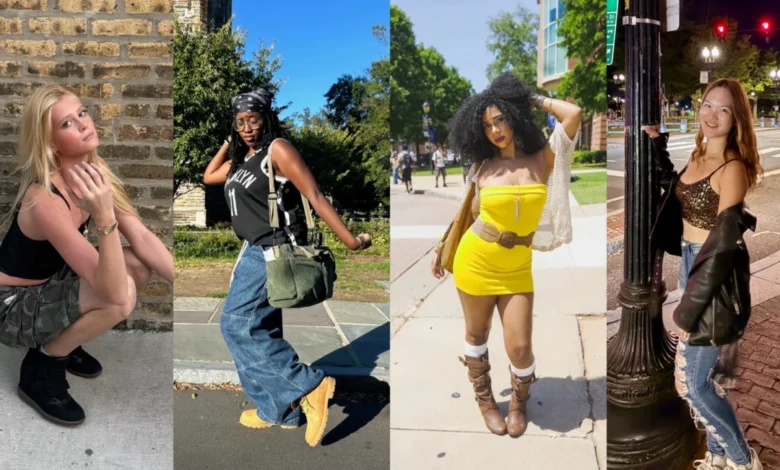
The modern college campus serves as an evolving runway where regional cultures, sustainability mindsets, and digital shopping behaviors intersect. In mid-August, just weeks before the commencement of the fall semester, Footwear News convened a virtual round-table discussion featuring four undergraduate students from diverse geographic and institutional backgrounds. Representing the University of California, Santa Barbara (UCSB), Duke University, Spelman College, and Harvard College, these young women had never met prior to the interview. Yet, their conversation quickly revealed a shared generational consensus regarding contemporary fashion, a strong affinity for resale platforms like Depop, and a collective fatigue with the relentless athleisure boom.
This comprehensive look at Gen Z collegiate style examines how today’s university students navigate retail markets, balance comfort with self-expression, and challenge the assumptions made by major apparel brands and traditional department stores.
The Evolution of Collegiate Campus Culture and Regional Aesthetics

Fashion on American college campuses has long mirrored the lifestyle, climate, and demographic makeup of the surrounding region. However, the modern undergraduate approach to daily attire incorporates a hybrid of comfort, utilitarian footwear, and curated vintage pieces that diverge significantly from the traditional collegiate uniforms of past decades.
At the University of California, Santa Barbara, sophomore environmental studies major Luna Clancy describes a coastal environment defined by relaxed self-expression. “The general vibe is very casual and coastal—lots of sandals, lots of layers. You see a lot of swimsuits underneath clothes,” Clancy explains, noting that the perpetual warm-weather climate of Southern California dictates a footwear culture centered heavily around leather flip-flops and slip-on sandals.
Conversely, across the country in Durham, North Carolina, Duke University senior Kelly Gaussaint observes a campus dominated by activewear. Studying computer science and visual media studies, Gaussaint expresses a desire for a return to traditional fabrics. “Athleisure has taken over—the Alo sets and the Aerie and the leggings. Are we doing yoga all the time? Let me see denim!” she notes, highlighting a growing sub-segment of students who feel oversaturated by workout-inspired garments in academic settings.
Further south at Spelman College in Atlanta, Georgia, junior literature, media, and writing major Makayla Rivera points out how institutional heritage and regional identity shape daily wardrobes. As an all-Black women’s institution, Spelman exhibits distinct sartorial signaling. “Because it’s an all-Black women’s school, a lot of people fall into patterns of signaling with their clothing, whether that’s athleisure wear because Divine Nine and Greek stuff is so big, you will see so many people wearing their Greek paraphernalia every day. You see a lot of business wear on my campus,” Rivera says.

At Harvard College in Cambridge, Massachusetts, junior environmental science and public policy major Joy Shen highlights the fast-paced, high-pressure lifestyle of an Ivy League student body. The student fashion reflects a necessity for rapid transitions between academic rigor and extracurricular commitments. “You could be wearing a three-piece suit to class one day, or leather boots. The next day you could show up in a sweatshirt and sweatpants, you’re locked in for a test. People are so busy, they’re running from event to event, so outfits need to change—something that’s versatile and works across different settings,” Shen observes.
The Shift Away from Traditional Malls and the Rise of Secondhand Retail
One of the most notable insights emerging from the roundtable is the near-total detachment of Gen Z college students from traditional department stores and suburban shopping malls. While previous generations relied heavily on physical department store anchors for back-to-school shopping, today’s undergraduates have largely pivoted toward digital resale ecosystems, local thrift stores, and hyper-targeted discount chains.
Depop has emerged as a dominant force among the cohort. Makayla Rivera refers to herself as a “Depop warrior,” noting that the majority of her wardrobe originates from the resale application. Recognizing that online resale prices can occasionally run high, Rivera supplements her digital shopping with physical excursions to Goodwill, Second Street, Atlanta-based Y2K-themed boutiques, and local pop-up flea markets such as Girl World Flea. When seeking brand-new apparel, she looks to Urban Outfitters and Free People.

Similarly, Luna Clancy points to a thriving campus thrift culture at UCSB, where pop-up thrift markets operate almost daily on campus or in neighboring towns. Alongside secondhand finds on Depop, Clancy and her peers frequent youth-oriented brands like Brandy Melville, Free People, and Frankies Bikinis.
For Kelly Gaussaint, basic garments are sourced as economically as possible. Beyond utilizing Depop, Gaussaint turns to Walmart, TJ Maxx, and Ross for everyday essentials, expressing frustration with the shifting direction of traditional mall retailers. “Malls have been failing me recently. Garage has completely changed. I don’t know what’s going on in the executive office over there,” she remarks, a sentiment echoed by Clancy, who notes that stores once known for distinctive going-out tops have pivoted too heavily into generic athleisure.
Balancing E-Commerce Convenience with Sizing Innovations
Digital channels capture the lion’s share of these students’ purchasing power, though physical retail maintains a role driven largely by experiential desires rather than transaction volume. Joy Shen estimates her purchasing habits at 80 percent online and 20 percent in-person, noting that physical malls are visited primarily “for the vibes” rather than successful merchandise acquisition. Luna Clancy and Makayla Rivera both report a 60-40 split favoring online shopping, citing the vast breadth of inventory available digitally compared to brick-and-mortar storefronts.

Sizing inconsistencies remain a primary friction point in online apparel acquisition. To counter this, Joy Shen participates in an internship with Verifyt, an emerging startup utilizing an online application to generate virtual wardrobes and assist consumers in identifying precise sizing fits. This technological integration points toward a broader industry trend of utilizing artificial intelligence to reduce return rates and enhance consumer confidence in e-commerce.
Critiques of Retailers: Misunderstandings of Gen Z Consumer Behavior
When asked what brands and retailers consistently misunderstand about Generation Z, the students offered sharp critiques of current marketing strategies and pop-culture trend forecasting.
Luna Clancy argues that retailers frequently over-index on short-lived micro-trends, leading to a homogenized retail landscape where every store offers identical merchandise. She points to recent cycles involving ubiquitous aesthetic elements—such as decorative bows, electric blue, and specific teal shades—as factors that dilute brand differentiation.

Makayla Rivera expands on this critique by examining how contemporary media and television portray Gen Z characters. Costume designers in film and television often rely on exaggerated micro-trends derived from viral social media engagement rather than authentic youth culture. “Now, the way that you see characters that are supposed to be Gen Z is so off to me. They’re going too much based on micro-trends, based on what they see is getting numbers. But half the time, the people that are interacting with different things online are children, not even people our age,” Rivera states. She emphasizes that consumers of college age often seek genuine vintage garments rather than manufactured, lower-quality replicas of past decades.
Joy Shen emphasizes that retailers often pigeonhole Gen Z as a demographic driven solely by discounts, viral trends, and micro-influencer endorsements, overlooking the cohort’s deep-seated commitment to sustainability and eco-conscious decision-making.
Footwear Preferences: Comfort, Durability, and the Death of the High Heel
Footwear serves as both a practical necessity for navigating large campuses and a core expression of personal style. Across all four students, comfort and durability rank as primary purchase drivers, while traditional high heels have been largely relegated to photographic purposes or abandoned entirely in favor of robust boots and athletic sneakers.

When discussing expenditure, footwear represents significant investment. Joy Shen, an avid runner managing foot structure challenges, relies almost exclusively on On Running sneakers, wearing them to formal events and proms alike. Luna Clancy cites durable investments in Ugg boots and high-performance athletic footwear required for competitive cheerleading. Kelly Gaussaint allocates up to $200 for specific artist collaborations, such as Tyler, the Creator’s Golf Wang collection with Converse. Makayla Rivera points to Uggs and bright yellow Hunter rain boots, both approaching the $200 threshold, as her highest footwear investments.
When evaluating campus footwear trends, the consensus points to a few standout categories:
- Sandals and Slides: Leather flip-flops by Rainbow dominate the UCSB campus, worn year-round in alignment with the Southern California climate.
- Boots: Across Spelman, Duke, and Harvard, boots remain a staple. Students favor leather boots, brown utility styles, fringe designs, and regional adaptations such as cowboy boots worn for weekly line-dancing events in North Carolina.
- Sneakers: On Running, New Balance, Adidas Sambas, Onitsuka Tiger, and classic Converse shoes maintain high visibility across multiple campuses. Club-specific customizations, such as custom-engraved Converse collaborations, highlight a desire for personalized footwear.
High heels, conversely, occupy a marginal space in daily academic life. While Luna Clancy occasionally embraces high-heeled boots for aesthetic impact despite physical discomfort, Joy Shen and Makayla Rivera admit to wearing heels strictly for photographic documentation before quickly transitioning back to comfortable sneakers or boots.
Regional Shifts and the Psychology of University Migration

Relocating for higher education frequently triggers a recalibration of personal style to match local climates and cultural expectations. The students noted distinct regional transitions that altered their dressing habits:
- From Midwest to West Coast: Moving from Chicago to Santa Barbara required Luna Clancy to abandon her hometown aversion to open-toed shoes without socks. Encountering a culture where barefoot sandals and permanent summer attire prevail, she fully embraced the "no-sock life."
- From Northeast to South: Kelly Gaussaint transitioned from New York streetwear—characterized by Timberlands, jorts, and baggy silhouettes—to incorporating cowboy boots necessary for campus social events in North Carolina. Similarly, Makayla Rivera’s time in Atlanta deepened her appreciation for Southern fashion aesthetics, blending Daisy Dukes and flannels with an expanding collection of boots.
- Urban Commuting: Joy Shen’s move to Boston and Harvard highlighted the necessity of functional layering and supportive footwear designed for extensive pedestrian commuting in an urban environment.
Priorities in Student Life: Fashion, Decor, and Sustainability
As undergraduates balance tight budgets, academic schedules, and living spaces, their spending priorities reflect a maturation in consumer psychology. While high school wardrobes often centered on rapid trend acquisition, college life has encouraged many students to pivot toward experiential investments, sustainability, and intentional wardrobing.
Kelly Gaussaint and Joy Shen both note a conscious shift toward prioritizing life experiences and travel over excessive apparel accumulation, influenced by the friction of moving seasonal wardrobes into storage units and an increased awareness of textile waste in landfills. Joy Shen adheres strictly to a "one-in, one-out" rule for clothing acquisition.

Conversely, Makayla Rivera and Luna Clancy continue to place high value on fashion and personal expression, viewing clothing and curated dorm decor as essential anchors that provide comfort and a sense of home when relocating to a new environment.
Ultimately, the insights gathered from these four university students offer the retail and footwear industries a clear directive: Gen Z collegiate consumers value authenticity, functional versatility, durability, and genuine sustainability over homogenized trends and mass-market athleisure saturation. Brands seeking to capture this influential demographic must look beyond short-lived social media metrics and align with the real-world utility and ethical values guiding today’s undergraduate population.