JD.com’s Vision for Fully Automated Logistics Sparks "Nirvana Project" to Retrain 700,000 Delivery Workers

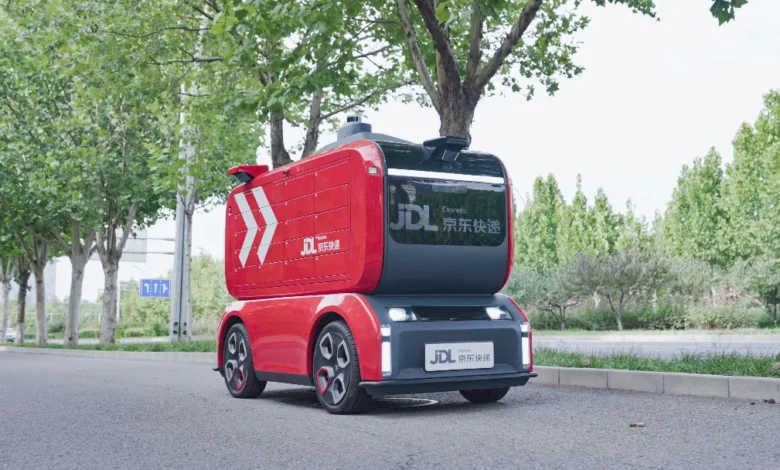
Richard Liu Qiangong, the visionary founder and chairman of Chinese e-commerce giant JD.com, has articulated a future where the company’s vast network of 700,000 delivery workers could eventually be entirely superseded by autonomous robotic systems. This ambitious technological transformation, however, is not envisioned as a path to mass unemployment but rather as a catalyst for a comprehensive workforce evolution, spearheaded by the company’s "Nirvana Project," a massive retraining initiative aimed at equipping its human couriers with new skills for the age of automation.
The declaration by Liu, made at the Asia-Pacific Economic Cooperation (APEC) CEO Forum in Beijing, underscores a pivotal moment in the global discourse on automation and its impact on labor markets. While acknowledging the inevitability of robots taking over parcel delivery, Liu emphatically stated, "In the future, when robots are delivering parcels, sooner or later, there will be a day when couriers are basically no longer needed. It will definitely be robots delivering parcels. But I really do not want our 700,000 brothers to go without meals, without jobs." This sentiment forms the philosophical bedrock of the "Nirvana Project," an initiative designed to transition the existing workforce into roles that complement and manage the burgeoning robot fleet.
The Automation Imperative: JD’s Vision and Strategic Investments
JD.com, a formidable player in China’s fiercely competitive e-commerce and logistics sectors, has long been at the forefront of integrating advanced automation into its operations. The company’s strategic pivot towards a fully robotic delivery ecosystem is driven by multiple factors, including the pursuit of unparalleled efficiency, cost optimization, scalability, and technological leadership in a rapidly evolving global supply chain landscape. The sheer scale of JD.com’s current human workforce, numbering 700,000 delivery personnel, highlights both the company’s operational footprint and the magnitude of the impending transformation.
To realize this ambitious future, JD Logistics, the company’s dedicated supply chain and logistics arm, has laid out aggressive investment plans. Late last year, the subsidiary announced its intention to acquire and deploy an astounding 3 million robots, 1 million autonomous vehicles, and 100,000 drones by the year 2030. This massive infusion of automated technology is expected to revolutionize every facet of its logistics network, from warehousing and sorting to last-mile delivery.
The groundwork for this future is already well underway. As of last August, JD Logistics had hundreds of autonomous vehicles operational across more than 10 provinces and 30 cities nationwide. By November, these delivery vehicles had accumulated several million kilometers of testing, demonstrating their increasing reliability and operational capacity. Furthermore, unmanned trucks within JD’s internal network had independently logged over 700,000 kilometers, pushing the boundaries of autonomous long-haul logistics. The company also hinted at the launch of its first completely unmanned delivery station in April, designed to integrate autonomous delivery vehicles and drones, though confirmation of its opening was not publicly released. These deployments are critical steps in building the infrastructure necessary for a predominantly automated logistics system.
Addressing the Human Element: The "Nirvana Project"
Central to Liu’s vision and JD.com’s responsible approach to automation is the "Nirvana Project." This mass retraining initiative is not merely a corporate social responsibility endeavor but a strategic investment in human capital, aiming to harness the existing workforce’s experience and loyalty while preparing them for new, higher-skilled roles. According to Liu, JD.com has forged partnerships with approximately 120 schools across China. These collaborations are designed to provide comprehensive training programs for its couriers, equipping them with the technical expertise required to maintain, repair, and manage the sophisticated robotic fleet.
The new roles envisioned for these retrained workers include robot repair and maintenance technicians, crucial positions given Liu’s pragmatic observation that "robots are machinery…they will always, at some point, have faults." Beyond this, the initiative is expected to create opportunities in areas such as AI trainers, drone pilots, and data analysts—professions that emerge from the very technologies displacing traditional delivery roles. Liu’s commitment to his employees is not new; he had previously stated in May that JD.com would not dismiss any employee whose job was impacted by automation, instead committing to retraining and reassignment within the company. This commitment underscores a proactive approach to managing the societal implications of technological advancement, positioning JD.com as a leader in fostering a "just transition" for its workforce. Liu emphasized that as a corporation, the development of new technologies "should be used to make human lives better and work more engaging, rather than depriving people of their right to work."
A Broader Industry Shift: Competitors and Market Trends
JD.com is not alone in its pursuit of an automated logistics future. Its primary competitor, Alibaba, through its logistics arm Cainiao, is also making substantial investments in autonomous technology. Cainiao anticipates deploying over 200,000 unmanned vehicles across the Chinese logistics industry by 2030. The company has already made significant strides, reporting that as of April 2025, its autonomous vehicles had delivered over 40 million parcels, accumulated more than 5 million kilometers of self-driving experience, and were operational in over 30 counties and municipal-level regions in China. This competitive drive among logistics giants signals an industry-wide acceleration towards automation, driven by the sheer volume of e-commerce transactions and the desire for faster, more reliable, and cost-effective delivery solutions.
These developments occur against the backdrop of a rapidly expanding "gig worker" economy in China. In 2021, an estimated 200 million individuals were engaged in gig work, a figure projected to surge to 320 million by 2026, representing a 60% increase, according to the China New Employment Forms Research Center. This segment of the workforce, often engaged in delivery and ride-hailing services, is particularly vulnerable to automation. The increasing adoption of robotics technologies across various sectors in China thus presents both immense opportunities for economic growth and significant challenges for labor market stability.
Governmental Oversight and National Strategy
The profound shifts brought about by automation and the expansion of the gig economy have not escaped the attention of Chinese policymakers. The government is actively seeking to mitigate potential negative impacts on workers and ensure a smooth transition. In March, Wang Xiaoping, China’s Human Resources and Social Security Minister, outlined ongoing efforts to expand social insurance coverage for gig workers. The ministry is exploring effective mechanisms to extend this coverage to 25 million workers across 17 provinces, with an ultimate goal of implementing the program nationwide. This initiative aims to provide a social safety net for a workforce that often lacks traditional employee benefits.
Furthermore, the government is committed to establishing standards for newly emerging professions that arise from technological advancements. Wang noted that China would continue to roll out regulations to better define and evaluate roles such as artificial intelligence (AI) trainers and drone pilots, ensuring proper professional development and performance assessment. This proactive approach underscores Beijing’s understanding that technological progress necessitates parallel policy adjustments to manage its societal ramifications.
Indeed, China has made a concerted national push into robotics and AI, identifying these technologies as strategic pillars for future economic growth and industrial modernization. Robotics and AI prominently feature in China’s 2026-to-2030 "five-year plan" policy strategy, which was approved and released in March. This long-term strategic blueprint aims to position robotics at the core of China’s modern industrial system, pivoting its AI research towards practical, physical applications, with robots serving as "the main drivers for economic growth," as highlighted by the International Federation of Robotics. This national strategy provides a powerful impetus for companies like JD.com to accelerate their automation initiatives, aligning corporate objectives with national development goals. China’s concerted effort mirrors, in some ways, the strategic pushes seen in other major economies, including the United States, which also recognize the critical importance of AI and robotics in global competitiveness.
The Future of Work in China: Challenges and Opportunities
The automation ambitions of JD.com and Alibaba, coupled with the Chinese government’s supportive policies, paint a complex picture for the future of work in China. On one hand, the widespread deployment of robots and autonomous systems promises unprecedented levels of efficiency, reduced operational costs, and enhanced supply chain resilience. This can contribute significantly to China’s economic competitiveness and its status as a global manufacturing and logistics powerhouse. The creation of new, technologically advanced roles for robot maintenance, AI management, and drone operation represents an opportunity for a workforce to upskill and engage in more stimulating and higher-value activities.
However, the transition is not without its challenges. Retraining hundreds of thousands of workers at scale, ensuring the quality and relevance of new skills, and managing the psychological impact of job displacement are monumental tasks. While JD.com’s "Nirvana Project" offers a proactive model, its successful execution will be a critical test case for how large corporations can navigate the ethical and social dimensions of widespread automation. The success of such initiatives will depend on sustained investment, effective educational partnerships, and the adaptability of the workforce itself.
The growth of the gig economy further complicates the picture. While it offers flexibility, it also raises concerns about job security, benefits, and the potential for a widening gap between those with in-demand technical skills and those without. The government’s efforts to expand social insurance for gig workers are a crucial step towards creating a more equitable and secure environment for this rapidly growing segment of the labor force.
Global Implications and the Path Forward
The developments unfolding in China offer valuable insights for nations worldwide grappling with the implications of advanced automation. JD.com’s "Nirvana Project" provides a compelling example of a private enterprise taking direct responsibility for the workforce transition, rather than leaving it solely to government intervention. This proactive approach to retraining and redeployment could become a benchmark for other industries and countries facing similar technological disruptions.
The comprehensive strategy, encompassing both massive corporate investment in automation and government-led initiatives for worker welfare and new profession development, positions China as a leading laboratory for the future of work. The speed and scale at which China is embracing AI and robotics, coupled with its unique socio-economic context, will undoubtedly yield lessons—both successes and challenges—that will resonate globally. As Richard Liu Qiangong’s vision takes shape, the world will be watching to see how China balances the relentless march of technological progress with the fundamental human need for meaningful employment and economic security. The journey towards a fully automated logistics system, while promising immense benefits, simultaneously demands a profound re-evaluation of the social contract between technology, labor, and society.