How Netflix Transformed the Dallas Cowboys Cheerleaders Into Retail and Beauty Powerhouses

The cultural footprint of the Dallas Cowboys Cheerleaders (DCC) has undergone a profound structural shift, moving from traditional NFL sideline entertainment to a formidable force in the global fashion and beauty economies. According to former DCC group leader Megan McElaney, the single most transformative catalyst for this evolution has been the release of the Netflix docuseries America’s Sweethearts. Before the show beamed the rigorous realities of the squad into living rooms worldwide, the DCC was already an iconic American institution with deep-seated institutional recognition. However, the streaming platform vaulted the organization onto an international stage, forging a deeper, more intimate connection between the public and the athletes who wear the iconic white-and-blue uniform.
Today, the perception of these women has transcended outdated stereotypes. Instead of being viewed purely through a lens of visual performance, they are increasingly recognized as elite athletes, formidable dancers, and influential lifestyle curators. This perceptual pivot has not gone unnoticed by global brands. Fashion houses, beauty conglomerates, and lifestyle retailers are aggressively seeking out partnerships, recognizing that the squad offers a unique gateway to demographics that standard sports marketing rarely reaches.
The Numbers Behind the Phenomenon: Audience and Media Growth
The measurable growth in audience engagement following the debut of America’s Sweethearts provides hard data to support this cultural shift. The streaming figures for the series underscore its broad, multi-demographic appeal. During its initial rollout, the first season of the show pulled in 2.3 million global views within its first four days of release, accelerating to 3.7 million views the subsequent week. The momentum continued into subsequent installments; season three opened strongly at No. 4 on Netflix’s global English-language TV chart in June, securing 3.2 million views in its first six days online.
This massive viewership has translated directly into unprecedented commercial gravity. According to data compiled by SponsorUnited, fashion and beauty sponsorship spending across the entire National Football League surged by 16.9% year-over-year, reaching $58 million during the 2025–2026 season. Concurrently, the total volume of sponsorship deals within this sector expanded by 11.7%, totaling 105 agreements.
Within this lucrative landscape, the Dallas Cowboys organization dominates the market. Excluding venue naming-rights agreements, the Cowboys led all NFL franchises in both fashion and beauty deal volume and total revenue, pulling in more than $8 million in category-specific sponsorship spending during the 2025 season. To put their digital and cultural footprint into perspective, the official DCC social media channels command a following on Instagram that eclipses the follower counts of 12 full NFL teams.
Bridging Sports, Fashion, and Beauty Retail
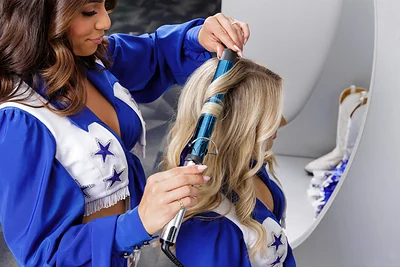
Capitalizing on this momentum, major retail and beauty brands are forging multi-layered alliances with the Cowboys and the DCC. This week, Sally Beauty announced a historic partnership, stepping into the professional football landscape for the first time as the official beauty retailer of both the Dallas Cowboys and the DCC. This collaboration is designed to leverage the cheerleaders’ routines, content, and public appearances to demonstrate game-day hair and nail styling to consumers, while simultaneously promoting Sally Beauty’s expanding men’s hair-care portfolio.
Chris Kobus, chief marketing officer of Sally Beauty, noted that the alliance is a cornerstone of the retailer’s broader brand transformation and customer-acquisition strategy. For years, Sally Beauty has fought against a legacy perception. Neil Saunders, managing director of GlobalData Retail, highlights the ongoing challenge: "There is a lingering general perception that Sally is more of a functional retailer that majors in hair care. That’s no longer true, but to capture new shoppers, Sally must work at creating the view that it’s a place for inspiration and a destination for many beauty categories." By aligning with the high-visibility aesthetic of the DCC, Sally Beauty aims to reintroduce itself as an inspirational lifestyle destination.
Meanwhile, Abercrombie & Fitch has significantly expanded its existing relationship with the Cowboys and the DCC. The lifestyle brand’s enhanced agreement now spans a broader product assortment, professional athlete styling, and year-round activations. In a move that cements the integration of the squad into contemporary fashion culture, Abercrombie has installed a branded clothing closet directly inside the DCC locker room at The Star in Frisco, Texas. This curated collection is refreshed monthly to outfit the squad for their off-field appearances and daily wardrobes. Furthermore, the wider Abercrombie x Cowboys collection has gained expanded distribution across NFLShop.com and AT&T Stadium via the brand’s strategic partnership with Fanatics.
The Academic and Strategic Perspective: Why the DCC Model Works
Sports management and industry experts point out that while the Dallas Cowboys franchise as a whole offers brands an enormous reach, the cheerleaders provide an entirely different strategic entry point.
Bob Heere, a professor specializing in sports management at the University of North Texas, explains that the DCC has historically served as a critical bridge connecting the football franchise to female consumers and the broader beauty and fashion industries. The Netflix series has effectively widened that bridge to global proportions. Peter Carton, executive director of sport industry engagement and partnerships at Southern Methodist University (SMU), echoes this sentiment. "The Cowboys give brands enormous reach, but the Dallas Cowboys Cheerleaders give them something different: an authentic bridge from sports into fashion, beauty, entertainment, and lifestyle," Carton observed.
This cross-industry mobility allows brands to capture consumers who are deeply invested in beauty, fashion, dance, and reality television, but who might not otherwise engage with traditional football broadcasts. Consequently, brands can coexist within the Cowboys’ marketing ecosystem without cannibalizing each other’s market share. For example, the franchise successfully houses high-end cosmetics giant Charlotte Tilbury as an official beauty partner alongside mass-market retailer Sally Beauty. According to industry analysts, these high-profile relationships can operate harmoniously provided that each brand is granted clearly defined product categories, distinct activation rights, and targeted consumer touchpoints.
The Commercial Evolution: From Impressions to Commerce
As sponsorship investments in the fashion and beauty categories scale to unprecedented heights, industry stakeholders note that the metric of success is shifting. The foundational era of measuring sponsorships purely through logo visibility, media impressions, and television airtime is rapidly giving way to performance-driven commerce.
"The real opportunity is moving from sponsorship to commerce," Carton noted regarding the evolving landscape. "The question is no longer simply how many people saw your logo; it’s how many consumers engaged with your brand, entered your retail ecosystem, or bought something because of the relationship."
This transition requires brands to design activations that invite direct consumer participation. For instance, Sally Beauty plans extensive digital content rollouts, consumer-facing product demonstrations, and interactive beauty tutorials. Similarly, Abercrombie’s integration of locker room closets and Fanatics-backed distribution channels bridges the gap between passive viewing and active, digital-first shopping behavior.
The Labor and Compensation Debate
Despite the soaring commercial valuation of the DCC brand, critical questions remain regarding how financial returns are distributed among the women who generate this cultural capital. While major corporate partnerships generate massive exposure and elevate the public profiles of the squad members, former group leader Megan McElaney points out that team-level sponsorships do not automatically translate into direct individual financial compensation for every cheerleader.
McElaney noted that while relationships—such as the squad’s ongoing association with Charlotte Tilbury—benefit the entire roster by supplying professional-grade products that offset the high costs of game-day beauty routines, the dynamics of individual labor vary. Charlotte Tilbury has selectively hired individual cheerleaders for specific game-day content creation initiatives. However, McElaney emphasizes that not every member of the squad desires to function as an influencer or build a commercial personal brand.
This tension highlights a growing ethical and strategic challenge for sports franchises and corporate partners alike. As brands extract immense value from the identity, aesthetic, and cultural credibility of the cheerleaders, ensuring equitable compensation and meaningful inclusion remains a central talking point.
Looking forward, McElaney argues that true commercial success must be evaluated through a holistic lens that includes the well-being and agency of the athletes themselves. "The most valuable partnerships would be ones where the women themselves are meaningfully included, not just used as part of the visual identity of the brand," she asserted.
As the intersection of professional sports, lifestyle entertainment, and retail continues to expand, the Dallas Cowboys Cheerleaders remain at the vanguard of this evolution. Whether corporate partners can successfully pivot from passive brand awareness to active commerce—while simultaneously ensuring fair recognition for the women behind the uniforms—will dictate the trajectory of sports marketing for the foreseeable future.
Related posts: