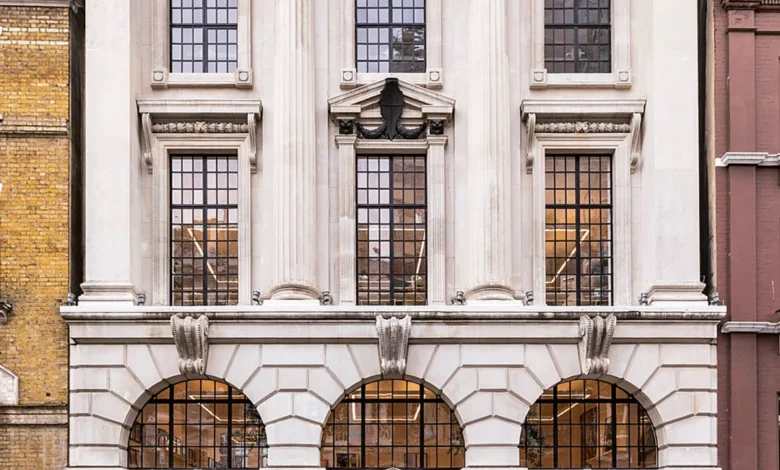
Ibraaz Centre Launches in London, Championing Dialogue and Cultural Exchange
London, UK – A new cultural hub, Ibraaz, has opened its doors in London, aiming to foster a dynamic environment for dialogue, artistic engagement, and critical discourse, particularly focusing on contemporary art and cultural production from the Middle East and North Africa. The centre, which officially launched in October, eschews the traditional museum model, emphasizing active participation and intellectual exchange over passive observation. This ambitious vision is spearheaded by Hammad Nasar, who articulated the ethos behind the space: "Our ambition is not a traditional ambition for people to come and quietly admire things in a hush and then walk out. We want noise. We want conversations."
The physical manifestation of this philosophy is evident throughout the Ibraaz centre. On the third floor, a dedicated space known as the Musalla, translating to "spiritual practice room," offers a sanctuary for reflection. During a recent visit, this area was home to Joe Namy’s "Cosmic Breath," an auditory installation featuring recordings of the adhan, the Islamic call to prayer, gathered from across the globe. Louise Oram, Head of Communications and Partnerships at Ibraaz, highlighted the multifaceted nature of the Musalla, explaining that it serves not only as a place for listening and contemplation but also as a designated area for prayer or respite from the urban bustle.
Complementing this contemplative space, the basement houses the Minassa, a term denoting a "platform, podium, dais, or stage." This versatile area is envisioned as a venue for a diverse range of activities, including film screenings, performances, and regular discussions, talks, and debates. The intention is to create a dynamic stage for cultural expression and intellectual engagement.
However, the spirit of conversation extends beyond these designated zones. Ibraaz encourages dialogue throughout its premises, from its meeting rooms to the welcoming Oula cafe. This inviting space is helmed by French-Tunisian chef Boutheina Ben Salem, offering a culinary dimension to the centre’s offerings. Situated on the ground floor, the cafe faces the Maktaba, or "bookshop," a vital component of Ibraaz, operated by Burley Fisher Books and curated in collaboration with the Palestine Festival of Literature. When the centre was visited, Ahmad Al-Bazz’s powerful photobook, "The Erasure of Palestine," was prominently displayed in the shop’s window. Nasar himself advocated for visitors to engage with the publication, sharing details of a recent event where Al-Bazz personally discussed his work within the bookshop, underscoring the centre’s commitment to artist-led engagement.
A Legacy of Digital Discourse and a Physical Manifestation
The genesis of Ibraaz can be traced back to 2011, a period marked by the Arab Spring uprisings. Nasar explained that Ibraaz originally began as an online publication, conceived "to create a platform where people could gather online." This foundational impulse to connect and facilitate discourse has remained a guiding principle, now finding a tangible expression in the London centre. "That impulse has stayed consistent," Nasar affirmed, emphasizing that the London centre, which opened its doors in October, aims to be "a discursive place of gathering."
The decision to establish a physical space was significantly influenced by the contemporary geopolitical landscape. Nasar elaborated on the pressing need for such a venue, stating, "As we see the ongoing genocidal violence in Gaza, now extending elsewhere, and as we see the spaces for gathering reducing, the spaces for free expression really under assault, these things made Lina keen to have a space where physical gatherings could take place." He further described the centre as "a vehicle or vessel to hold people." This sentiment underscores Ibraaz’s role as a sanctuary and a platform for support and expression during challenging times.
Photography as a Tool for Witnessing and Empowerment
Photography plays a pivotal role in Ibraaz’s programming and philosophy for several key reasons. Nasar articulated its importance in three distinct ways. Firstly, he recognized photography and lens-based imaging as fundamental elements of contemporary art, integral to current artistic practices. Secondly, he underscored photography’s profound ability to document and serve as evidence, a crucial function for individuals and communities whose realities are often marginalized or systematically destroyed. This capacity for bearing witness is particularly valued by those seeking to assert their narratives against dominant, often oppressive, discourses.
Thirdly, and intrinsically linked to the previous point, Nasar highlighted photography as a democratic medium. He emphasized its power to democratize the means of production and circulation, placing creative and documentary tools into the hands of a broad populace. "It’s the tool within the armament that virtually every single human being has in their pocket," Nasar remarked, referencing the ubiquity of smartphone cameras. This accessibility, he argued, empowers individuals to capture and share their experiences, thereby challenging established narratives and fostering alternative perspectives.
Nasar further elaborated on photography’s capacity for bearing witness, irrespective of the device used, stating, "Photography has the capacity to bear witness [whether a cell phone or camera]." He drew a direct parallel to Ahmad Al-Bazz’s photobook, "The Erasure of Palestine," describing it as a "visual mapping" that examines remnants of Palestinian villages within occupied territories, now referred to as Israel. This exemplifies how photographic works can serve as critical historical and political documents, offering a counter-narrative to official accounts and raising awareness about ongoing injustices.
A Programme Built on Connection and Exchange
The programming at Ibraaz is meticulously designed to embody Nasar’s vision of a vibrant, conversational space. The centre aims to transcend the conventional gallery experience, fostering a sense of community and shared exploration. This is achieved through a holistic approach that integrates various cultural elements, including art, food, literature, and intellectual exchange.
The Sofra, another area within the centre, serves as a testament to this integrated approach. Beneath framed images of Palestine by artists Adam Rouhana and Adam Broomberg, the Sofra provides a space for communal gathering and discussion. While many of the works exhibited at Ibraaz are sourced from the Kamel Lazaar Foundation, it is important to note that Ibraaz itself is not a collecting institution. Instead, it functions as a dynamic platform for showcasing and disseminating artistic and cultural expressions.
The programming calendar is a deliberate construction of events designed to stimulate engagement. This includes artist talks, panel discussions, film screenings, book launches, and workshops, all aimed at fostering interaction and critical dialogue. The Oula cafe, with its curated menu by Boutheina Ben Salem, plays a crucial role in this by providing a relaxed and informal setting for attendees to connect before, during, or after events. The Maktaba, with its specialized selection of books, acts as a further resource, offering deeper dives into the themes and artists featured at the centre.
Broader Implications and Context
The establishment of Ibraaz in London arrives at a critical juncture, both for the art world and for broader geopolitical discussions. In an era where spaces for free expression are increasingly under pressure globally, the centre’s commitment to providing a physical venue for critical dialogue and cultural exchange holds significant importance. The focus on contemporary art from the Middle East and North Africa is particularly relevant, offering a counter-narrative to often-simplistic or prejudiced representations prevalent in mainstream Western media.
The centre’s emphasis on photography as a tool for witnessing and empowerment resonates with broader movements advocating for social justice and human rights. By providing a platform for artists like Ahmad Al-Bazz, Ibraaz contributes to the vital work of documenting and challenging historical erasures and ongoing injustices. The accessibility of photography as a medium, as highlighted by Nasar, further empowers individuals to become active participants in shaping their own narratives and contributing to a more nuanced global understanding.
Furthermore, Ibraaz’s model, which blends artistic exhibition with intellectual discourse and community gathering, offers a potential blueprint for cultural institutions seeking to remain relevant and impactful in the 21st century. By prioritizing active engagement and "noise" over quiet contemplation, Ibraaz signals a departure from traditional models, embracing a more participatory and dynamic approach to cultural dissemination. This approach is not only timely but also essential for fostering a more informed and engaged global citizenry. The centre’s commitment to facilitating conversations around art, culture, and pressing socio-political issues positions it as a significant and valuable addition to London’s cultural landscape, with the potential to influence discourse and foster understanding on a wider scale.