Indonesia Reassures Global Shipping Community: No Tolls for Critical Strait of Malacca Passage

Indonesia has moved swiftly to assuage the international shipping community, unequivocally stating that it will not pursue the imposition of tolls on vessels transiting the strategically vital Strait of Malacca. This decisive clarification came after an initial suggestion by Indonesia’s Finance Minister, Purbaya Yudhi Sadewa, at a recent symposium in Jakarta sparked concerns among global maritime stakeholders about a potential "pay-to-pass" scenario akin to recent developments in the Strait of Hormuz. The prompt and firm denial by top Indonesian diplomats underscores the nation’s commitment to international maritime law and its role in maintaining freedom of navigation in one of the world’s most critical sea lanes.
The initial suggestion emerged on Wednesday during a symposium in Jakarta, where Finance Minister Purbaya Yudhi Sadewa light-heartedly questioned the status quo, remarking on the absence of tolls for ships passing through the Strait of Malacca. He mused whether it was "right or wrong" that Indonesia, alongside co-littoral states Malaysia and Singapore, does not levy charges on the immense volume of commercial traffic. Purbaya even joked about the potential revenue if a toll were "split three ways between Indonesia, Malaysia and Singapore, that could be quite something, right?" While seemingly a casual remark, given the global shipping climate and recent precedents, these comments immediately resonated with apprehension across the maritime industry.
The apprehension was quickly addressed by Indonesia’s foreign policy leadership. On Thursday, Indonesian Foreign Minister Sugiono issued a robust rebuttal, emphasizing the country’s unwavering support for open sea lanes and freedom of navigation. "As a trading nation, Indonesia supports freedom of navigation and expects open sea lanes," Sugiono stated, adding, "Indonesia is not in a position to impose such charges—that would not be appropriate." His statement served as an immediate official clarification, directly countering any perception of a policy shift. The following day, Finance Minister Purbaya himself walked back his earlier comments, telling reporters on Friday, "I wasn’t serious about it. We had never planned to charge a fee… we understand our commitments to UNCLOS and we will uphold them." This rapid sequence of events, from suggestion to official denial and retraction, highlighted the sensitivity surrounding maritime passage fees and the importance of maintaining international trust.
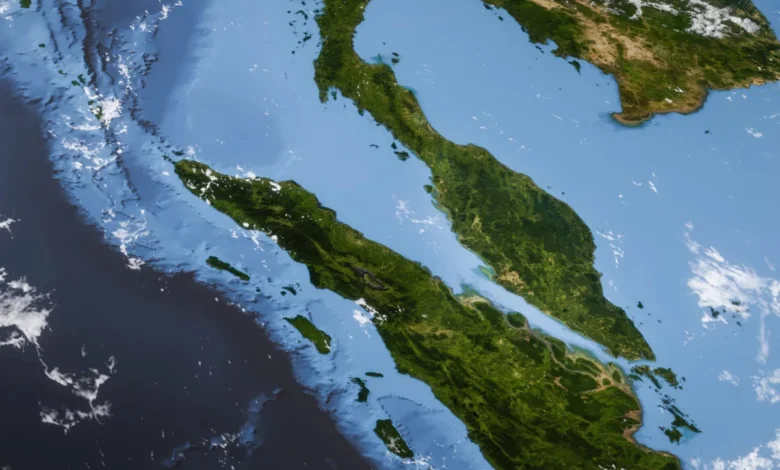
The Strait of Malacca, a narrow, 550-mile waterway running between Indonesia’s island of Sumatra and peninsular Malaysia, is not merely a geographical feature; it is an indispensable artery of global commerce. It links the Indian Ocean with the Pacific Ocean, serving as the primary maritime route between Europe, the Middle East, and Asia. An estimated 22 percent of the world’s maritime trade, encompassing everything from crude oil and liquefied natural gas to manufactured goods, raw materials, and agricultural products, traverses this strait. According to the Washington-based Center for Strategic and International Studies (CSIS), its strategic significance is paramount, facilitating a substantial portion of global container traffic and energy shipments.
Data from Malaysia’s Marine Department illustrates the ever-increasing volume of traffic. In 2024, approximately 94,300 ships transited the Malacca Strait, a number projected to rise to over 102,500 by 2025. This upward trend underscores the strait’s growing importance in a world increasingly reliant on efficient and cost-effective maritime logistics. Major trade lanes, particularly those connecting Asia to Europe and intra-Asia routes, heavily depend on this passage. Vessels carrying cargo from key apparel manufacturing countries such as Bangladesh, India, Pakistan, and Myanmar almost invariably utilize the Strait of Malacca, making any disruption or additional cost a significant concern for global supply chains, especially for industries with tight margins and just-in-time delivery models.
The economic infrastructure surrounding the Strait further amplifies its importance. The ports of Singapore and Malaysia’s Tanjung Pelepas are situated strategically at the southern entrance of the channel, serving as major transshipment hubs. Further north, Malaysia’s Port Klang, another colossal transshipment center, lies near the midpoint of the strait. These ports are not just points of entry and exit; they are integral components of the global logistics network, facilitating the movement, storage, and distribution of goods across continents. Any impediment to free passage through the strait would have cascading effects on the operational efficiency and competitiveness of these vital maritime gateways.
The discussions around imposing tolls on the Strait of Malacca cannot be viewed in isolation; they inevitably draw comparisons to the ongoing situation in the Strait of Hormuz. The Hormuz, a critical chokepoint for global energy supplies, particularly for oil and natural gas, has recently seen the alleged implementation of a "toll booth system" by Iran. Reports indicate that Iran has charged as much as $2 million for some commercial vessels to transit through the strait, a move that has been widely criticized and viewed as a destabilizing factor. This alleged "pay-to-pass" system, coupled with heightened safety concerns stemming from regional geopolitical tensions, has led to a significant fraction of traffic rerouting or avoiding the Hormuz, impacting global energy markets and supply chain predictability.
While both are natural international straits, there are crucial distinctions. The Strait of Hormuz primarily handles a vast proportion of the world’s oil and natural gas, making it a critical energy chokepoint. The Strait of Malacca, while also carrying significant energy shipments, is predominantly a cargo trade chokepoint, vital for manufactured goods and raw materials. The geopolitical context also differs; the Hormuz situation is deeply intertwined with regional conflicts and international sanctions against Iran, leading to heightened security risks. In contrast, the Malacca Strait, while facing challenges like piracy in the past, has largely benefited from robust cooperation among its littoral states (Indonesia, Malaysia, and Singapore) to ensure security and smooth passage. The specter of the Hormuz scenario likely influenced Minister Sadewa’s initial musing and certainly underscored the urgency of the Indonesian Foreign Ministry’s clarification.
Crucially, any levy on Malacca traffic would be illegal under the United Nations Convention on the Law of the Sea (UNCLOS). UNCLOS is the international treaty that defines the rights and responsibilities of nations with respect to their use of the world’s oceans, establishing guidelines for businesses, the environment, and the management of marine natural resources. Indonesia, as an archipelagic state, holds a unique position under UNCLOS. While the convention recognizes the sovereignty of archipelagic states over their waters, it also enshrines the right of "transit passage" through international straits and archipelagic sea lanes for all ships and aircraft.
Foreign Minister Sugiono explicitly referenced this legal obligation: "Indonesia is in a position where, as an archipelagic state, it must of course respect UNCLOS." He elaborated, "Historically, UNCLOS includes an understanding and an agreement that recognizes us as an archipelagic state, as long as we do not impose tolls or fees on the straits within our territory." This provision is fundamental to the freedom of navigation principle, preventing states from monetizing or unduly restricting passage through international straits that happen to fall within their territorial waters. Unlike man-made canals such as the Panama Canal or Suez Canal, which are controlled by single sovereign entities and are permitted to charge transit fees, natural straits like Malacca and Hormuz are governed by different principles under international law, ensuring unimpeded passage for international shipping.
The shared responsibility for managing the Strait of Malacca rests primarily with the three bordering states: Indonesia, Malaysia, and Singapore. Under UNCLOS, these littoral states are legally obliged not to "hamper transit passage" and explicitly, "there shall be no suspension of transit passage" under any circumstances. This legal framework necessitates cooperation rather than unilateral action. Indeed, Malaysia, Singapore, Indonesia, and Thailand have historically conducted joint patrols and coordinated efforts to ensure the security and smooth operation of the waterway, addressing issues such as piracy, maritime accidents, and environmental protection.
The swift and unified stance of Indonesia’s regional partners further solidified the commitment to free passage. Malaysian Foreign Minister Mohamad Hasan, speaking at a forum, emphasized that "no unilateral decisions can be made about the strait." He highlighted the existing framework of cooperation, noting that Malaysia, Singapore, Indonesia, and Thailand collaborate on joint patrols to keep the waterway open and secure. This collective approach reinforces the idea that the Malacca Strait is a shared international asset, not a unilateral revenue stream for any single nation.
Singapore, a city-state whose economic prosperity is inextricably linked to maritime trade and the free flow of goods through the strait, voiced its strong opposition to any tolls. Foreign Minister Vivian Balakrishnan unequivocally stated that passage through the Malacca and Singapore straits must remain "free and open," stressing that Singapore "does not support efforts to restrict navigation or impose new costs on vessels using the route." Speaking to CNBC at the Converge Live event in Singapore, Balakrishnan articulated the shared economic interest: "We do not have tolls. All of us are trade-dependent economies. All of us know it is in our interest to keep it open." He further confirmed that Singapore consistently communicates its adherence to UNCLOS to major global powers, including the United States and China, stating, "We will not participate in any attempt to close or to interdict or to impose tolls of traffic, maritime traffic, and overflight in this age." This strong, unified regional front played a crucial role in swiftly quelling the initial concerns.
The broader implications of imposing tolls on the Strait of Malacca would have been profound and far-reaching. Economically, it would have translated into increased shipping costs, which would inevitably be passed on to consumers globally, potentially fueling inflation and reducing trade volumes. For industries relying on global supply chains, such as the electronics, automotive, and textile sectors, additional costs and uncertainties could force them to reconsider sourcing and manufacturing strategies, leading to inefficiencies and disruptions. While alternative routes exist, such as circumnavigating Australia or using the Suez Canal and then rerouting, these options add significant time, fuel costs, and logistical complexities, making them economically unviable for the vast majority of traffic.
Geopolitically, any move to impose tolls would have severely damaged Indonesia’s reputation as a responsible actor in international maritime governance and could have strained its relations with key trading partners and regional allies. It would have set a dangerous precedent, potentially encouraging other states controlling vital waterways to levy similar charges, leading to a fragmentation of the global maritime commons and undermining the principle of freedom of navigation, which is a cornerstone of international trade and security. The swift and decisive action by the Indonesian Foreign Ministry to reiterate its commitment to UNCLOS and free passage was therefore not just a legal affirmation but a strategic move to preserve regional stability and its standing in the international community.
In conclusion, Indonesia’s clear and prompt reassurance to the international shipping community regarding the Strait of Malacca underscores the critical importance of this waterway and the country’s commitment to international law. The incident, though quickly resolved, served as a potent reminder of the fragility of global supply chains and the constant need for vigilance and adherence to established international norms in managing shared maritime resources. By affirming its dedication to UNCLOS and freedom of navigation, Indonesia has reinforced its role as a responsible steward of one of the world’s most indispensable maritime arteries, ensuring that the wheels of global commerce can continue to turn without unwarranted impediment. The unified stance of the littoral states—Indonesia, Malaysia, and Singapore—demonstrates a collective understanding that the economic prosperity of the region and the stability of global trade are best served by keeping this vital strait open, free, and accessible to all.