Navigating Shift Work, Toxic Exposures, and Restorative Sleep: Why One Firefighter Household Invested in an Organic Latex Mattress

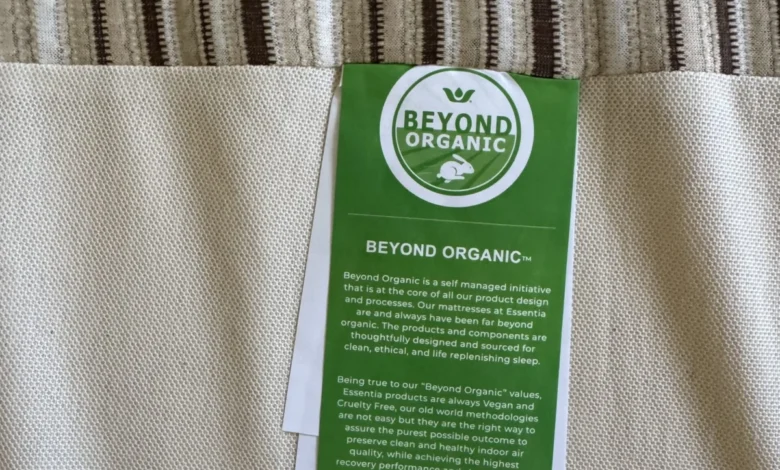
The pursuit of restorative sleep has evolved from a lifestyle preference into a critical component of public health and domestic safety, particularly for families navigating high-stress, high-risk occupations. For households balancing the demands of emergency response work, home renovation, and a growing family, the intersection of indoor air quality, ergonomic support, and occupational health creates unique logistical challenges. This reality recently prompted one family—comprising a pregnant commerce editor, a toddler, and a firefighter husband working erratic, high-stress shifts—to overhaul their guest room sleeping arrangements with the installation of the Grateful Eight Organic Latex Mattress from Essentia, paired with sustainable home infrastructure.
The decision highlights a growing consumer shift toward certified non-toxic home goods, driven by rising awareness of occupational hazards and the physiological toll of chronic sleep deprivation.
The Occupational Sleep Crisis in Emergency Services
The context of the purchase is rooted in the rigorous demands placed on first responders. Firefighters face profound occupational hurdles, including disrupted circadian rhythms, unpredictable sleep quantities, and routine exposure to hazardous chemicals, particulate matter, and combustion byproducts. According to occupational health guidelines issued by the National Institute for Occupational Safety and Health (NIOSH), shift work and continuous chemical exposure represent two of the primary long-term health risks for firefighters.
Furthermore, recent 2026 clinical research examining firefighter sleep schedules underscores a persistent public health concern: sleep duration and quality vary drastically by shift type, with a significant majority of personnel falling short of recommended daily recovery thresholds. For aging first responders—particularly those entering their 40s—the physiological margin for error narrows. Chronic sleep debt correlates directly with impaired cardiovascular health, cognitive fatigue, and diminished physical recovery, making the domestic sleep environment a crucial sanctuary for post-shift recuperation.
Historically, the author’s husband dealt with these challenges by sleeping intermittently at the fire station or attempting to rest in the primary bedroom while domestic routines—such as infant care and remote work—occurred simultaneously. The acquisition of a 1950s fixer-upper home during the summer, complete with extensive structural renovations and preparations for regional weather disruptions, provided the opportunity to establish a dedicated, isolated guest room functioning exclusively as a restorative sleep zone.
Material Transparency and Manufacturing Standards
As awareness of indoor environmental toxins expands, consumer scrutiny regarding household textiles and furniture has intensified. Traditional mattresses frequently incorporate petroleum-based polyurethane foams, synthetic fibers, and chemical flame retardants—such as organophosphates or halogenated compounds—which can off-gas volatile organic compounds (VOCs) into residential spaces.
To mitigate these exposures, the household opted for an organic latex model manufactured by Essentia, a company founded in 2005 by Jack Dell’Accio. Operating out of Laval, Quebec, the brand specializes in manufacturing latex foam mattresses within facilities holding dual certifications from the Global Organic Latex Standard (GOLS) and the Global Organic Textile Standard (GOTS).
Third-party verifications are central to consumer confidence in the sustainable goods market, where terms like "natural" and "eco-friendly" often lack strict regulatory oversight. GOLS certification mandates that a latex foam product contains a minimum of 95% certified organic raw material, while GOTS certification governs the ecological and social criteria of textile supply chains. The Grateful Eight model features three layers of GOLS-certified organic latex, a GOTS-certified organic cotton cover, and an internal Kevlar fabric liner functioning as a natural fire-retardant barrier rather than relying on chemical treatments. Additionally, independent testing by institutions such as the Johns Hopkins School of Medicine has evaluated organic latex materials for dust-mite resistance, adding a clinical dimension to consumer health claims.
Logistics, Ergonomics, and Consumer Experience
The installation process highlights the logistical realities of modern direct-to-consumer home furnishings. Delivered in a compressed, rolled format, the mattress requires careful unpacking. Product reviews note that while the manufacturer employs sustainable packaging utilizing a 50-50 blend of craft paper and recyclable plastic rather than standard single-use plastics, the unrolling process produces notable sound levels due to the tension of the materials.
Ergonomically, the mattress design addresses conflicting consumer demands: structural support versus pressure relief. Traditional memory foam often engenders a deep sinking sensation and retains body heat, posing challenges for hot sleepers. Conversely, latex provides high resilience and rapid contour response. Independent evaluations by consumer testing organizations, such as Consumer Reports, have analyzed the Grateful Eight, noting its ability to dampen bounciness, facilitate ease of movement, and maintain neutral temperature regulation during sleep cycles.
To complement the sleep system, the household integrated structural elements designed for durability and ease of maintenance, including an upholstered bed frame featuring removable and washable fabric covers. This approach aligns with broader consumer trends prioritizing modularity, cleanability, and modular material replacement over full-scale furniture replacement.
Economic and Market Implications
Priced starting at $1,999 and scaling across standard residential sizes from Twin to King, premium organic sleep systems represent a significant household investment. Market analysts note that despite economic pressures, demand for wellness-oriented, non-toxic home goods remains resilient, particularly among millennial and Gen Z homeowners prioritizing preventative health and environmental safety.
However, consumer adoption requires careful navigation of trial policies and return logistics. While the mattress includes a 120-night sleep trial and a 20-year limited warranty, return or exchange policies often entail administrative or restocking fees—in this instance, a 9% retail-price fee—emphasizing the need for thorough consumer research prior to purchase.
Ultimately, the integration of certified organic sleep systems into first-responder households illustrates a broader convergence of occupational health advocacy and domestic architecture. By prioritizing rigorous material certifications, ergonomic temperature control, and dedicated recovery spaces, families are increasingly treating the bedroom not merely as a piece of furniture, but as an essential medical intervention for occupational longevity and daily wellness.