
Navigating the Complexities of Global Apparel Markets: H1 Fashion Gains and Strategic Industry Shifts Set the Tone for 2026

The global apparel and textile industry has entered a critical juncture as mid-year economic indicators reveal a complex landscape of resilient consumer demand, shifting supply chain dynamics, and evolving regulatory pressures. As stakeholders assess market performance through the first half of the year, industry analysts are closely monitoring how macroeconomic headwinds, technological integration, and sustainability mandates continue to reshape competitive advantages across major manufacturing and retail hubs. While inflationary pressures have moderated in key Western markets, lingering cost-of-living concerns continue to influence consumer spending patterns, forcing fashion brands and apparel manufacturers to adopt highly agile operational strategies. The intersection of these economic realities and long-term structural transformations underlines the imperative for accurate forecasting, data-driven decision-making, and proactive supply chain management.
Macroeconomic Landscape and Mid-Year Performance Metrics
The first half of the year has presented a dichotomous picture for the global apparel sector. On one hand, persistent inflation and elevated interest rates in North America and Europe have constrained discretionary spending, prompting consumers to prioritize value, durability, and essential wardrobe updates over fast-fashion novelty purchases. On the other hand, robust digital adoption and targeted promotional strategies have allowed agile brands to maintain stable revenue streams. Market intelligence reports indicate that global apparel sales experienced a modest yet steady upward trajectory, driven largely by performance wear, athleisure, and premium casual categories that continue to resonate with post-pandemic lifestyle shifts.
However, top-line growth does not automatically translate to healthy profit margins. Input costs—spanning raw materials, labor, and logistics—remain volatile. Fluctuations in cotton and synthetic fiber prices, compounded by wage increases in key manufacturing nations across Southeast Asia and South Asia, have squeezed producer margins. Consequently, apparel executives are placing renewed emphasis on operational efficiency, inventory optimization, and near-shoring or friend-shoring initiatives designed to mitigate geopolitical and logistical vulnerabilities.
Chronology of Key Industry Milestones Leading to Current Market Conditions
Understanding the current state of the global apparel market requires examining the sequence of structural events and economic shocks that have defined the post-pandemic era. The timeline of transformation highlights how rapidly supply chain priorities have shifted from cost minimization to risk management and sustainability compliance.
The early recovery phase following pandemic-era disruptions was marked by severe supply chain bottlenecks, soaring container freight rates, and sudden surges in consumer demand. These pressures forced brands to over-order inventory, leading to widespread stock gluts by late 2022 and early 2023. As retailers worked through excess stock through heavy discounting, profit margins plummeted across the board, compelling corporate leadership to reevaluate traditional forecasting models.
By 2024, the industry experienced a pivot toward disciplined inventory management, accelerated by the adoption of artificial intelligence and predictive analytics. Brands began leveraging real-time data to align production volumes more closely with actual consumer demand, reducing waste and markdowns. Simultaneously, regulatory frameworks began to tighten significantly, particularly in Europe, where upcoming mandates regarding extended producer responsibility (EPR), digital product passports (DPPs), and anti-greenwashing directives set a strict new baseline for market entry.
Entering 2025 and moving into the current landscape of 2026, the focus has shifted toward technological integration and workforce adaptation. Manufacturers have increasingly invested in automation, smart factory technologies, and digital sampling to shorten lead times and improve precision. Concurrently, trade agreements and geopolitical realignments—such as the diversification of sourcing away from traditional single-country dominance toward a multi-hub model—have redefined global trade routes for textiles and finished garments.
Data-Driven Insights: Sourcing, Trade Flows, and Consumer Behavior
Comprehensive data analysis reveals shifting paradigms in international trade and consumer purchasing behavior. According to aggregated trade statistics from major customs organizations, sourcing hubs such as Vietnam, Bangladesh, and India have solidified their positions as critical pillars of global apparel exports, while China continues to pivot toward higher-value manufacturing, technical textiles, and advanced product development.
- Sourcing Diversification Metrics: Sourcing executives report that nearly 78% of major global fashion brands have actively diversified their supplier base over the past 36 months. Risk mitigation remains the primary driver, followed closely by the need to comply with evolving traceability requirements.
- Digital Penetration: E-commerce channels account for approximately 28% of total global apparel sales. However, growth has normalized compared to pandemic-era spikes, prompting omnichannel retailers to invest heavily in unified inventory systems that seamlessly blend online and brick-and-mortar shopping experiences.
- Sustainability Expenditure: Investments in sustainable materials—such as recycled polyester, organic cotton, and bio-based alternatives—now represent an estimated 15% to 20% of total product development budgets among top-tier brands, driven by both corporate ESG commitments and regulatory compliance.
Official Industry Responses and Stakeholder Perspectives
As the apparel sector navigates these multifaceted challenges, industry bodies, trade associations, and corporate leaders have articulated strategic priorities aimed at ensuring long-term viability and inclusive growth.
Trade associations representing garment manufacturers in developing economies have consistently emphasized the need for balanced partnerships with international buyers. Representatives from export councils have urged brands to commit to responsible purchasing practices, arguing that short-term order cancellations and late payment terms disproportionately penalize factory workers and destabilize local economies. In recent industry forums, labor advocates and manufacturing executives alike have called for predictable forecasting models that allow factories to plan workforce requirements and maintain fair wage structures without compromising operational safety.
Conversely, retail executives and brand strategists have highlighted the urgency of digital transformation. Speaking at recent global retail summits, chief supply chain officers emphasized that real-time data visibility across Tier 1, Tier 2, and Tier 3 suppliers is no longer a luxury but an operational necessity. By integrating advanced analytics and cloud-based collaboration platforms, brands can identify potential bottlenecks weeks before they impact store shelves or digital fulfillment centers.
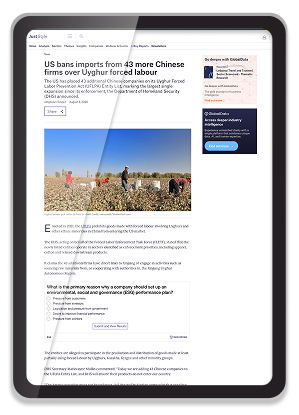
Furthermore, sustainability leaders within major apparel conglomerates have stressed that upcoming regulatory deadlines—particularly regarding the European Union’s strategy for sustainable and circular textiles—will reward early adopters. Companies that successfully implement transparent supply chain traceability and circular business models are expected to capture market share from competitors slow to adapt to regulatory scrutiny.
Broader Economic Impact and Future Implications
The implications of current apparel market dynamics extend far beyond corporate balance sheets, influencing labor markets, environmental outcomes, and international trade policies.
From an economic perspective, the ongoing transition toward automated manufacturing and advanced analytics places a premium on digital literacy and technical skills within the workforce. Traditional sewing machine operators and factory floor workers increasingly require upskilling to operate semi-automated machinery and digital quality-control systems. Governments in manufacturing nations and educational institutions are increasingly collaborating with private sector partners to develop targeted training programs, ensuring that workforces remain competitive in a rapidly modernizing industrial ecosystem.
Environmentally, the sector’s shift toward circularity and waste reduction addresses one of the most pressing ecological challenges of our time. By embracing design-for-recyclability, scaling textile-to-textile recycling technologies, and reducing overproduction through predictive modeling, the industry aims to lower its carbon footprint and mitigate its contribution to global landfill waste. However, realizing these goals at scale will require unprecedented collaboration across the entire value chain, from raw material producers and chemical suppliers to brand conglomerates and end consumers.
Looking ahead, the second half of the year and beyond will test the agility of global apparel players. Those equipped with deep market insights, robust supply chain networks, and an unwavering commitment to transparency and innovation will be best positioned to navigate macroeconomic uncertainties and capitalize on emerging consumer trends. As competition intensifies, access to reliable, forward-looking intelligence will remain an indispensable asset for executives seeking to maintain a strategic edge in an increasingly complex global marketplace.