Norrøna and Uluu partner to revolutionize outdoor performance textiles through seaweed-based innovation

The global outdoor apparel industry is currently at a critical juncture, balancing the high-performance demands of extreme environments with an urgent mandate to decarbonize its supply chain. In a move that signals a significant shift in textile engineering, the Norwegian premium outdoor brand Norrøna has announced a strategic partnership with Australian biotechnology firm Uluu. This collaboration aims to pioneer the development of performance fibres derived from seaweed, potentially replacing fossil-fuel-based synthetics with a regenerative, marine-based alternative. The project, unveiled on November 5, 2026, marks an ambitious attempt to integrate early-stage biotechnology into the rigorous manufacturing standards required for high-altitude and arctic-grade apparel.
The Science of Seaweed-Based Polymers
The core of this partnership lies in Uluu’s proprietary technology, which utilizes fermentation to convert seaweed sugars into polyhydroxyalkanoates (PHAs). Unlike traditional plastic alternatives that rely on land-based crops like corn or sugarcane—which often compete with food production and require significant freshwater and fertilizer inputs—seaweed offers a distinct ecological advantage.
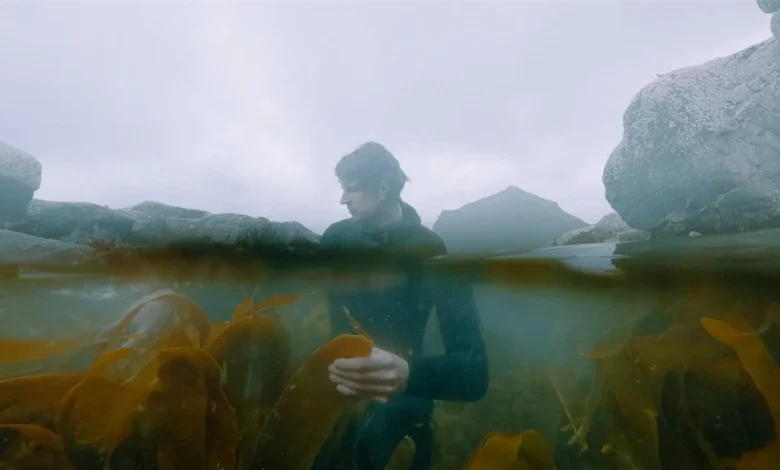
The cultivation process for seaweed is inherently low-impact; it requires no arable land, freshwater irrigation, or synthetic fertilizers, and it can actively improve water quality by sequestering nitrogen and carbon as it grows. The fermentation process, which the companies liken to a brewery, occurs in saltwater. The resulting material is a natural, marine-biodegradable polymer. By transitioning this substance into a textile fibre, Norrøna and Uluu hope to solve one of the industry’s most persistent problems: the shedding of microplastics. Conventional synthetic fabrics, such as polyester and nylon, are primary contributors to microplastic pollution in global waterways. Uluu’s material is designed to break down naturally, having already undergone testing to meet TUV marine and home biodegradability standards.
Chronology of Innovation and Strategic Alignment
The partnership is not an isolated experiment but part of a broader trajectory for Norrøna, which has maintained a reputation for technical innovation since its founding. The company’s history with high-performance materials dates back to 1977, when it introduced the first European prototype for a Gore-Tex jacket.
The current timeline for the Uluu partnership is structured to move from laboratory-scale testing to functional prototype development:

- Late 2025 – Early 2026: Initial feasibility studies and material synthesis using Uluu PHA as a core ingredient.
- November 2026: Formal announcement of the partnership and the commencement of performance testing on fibre strength and durability.
- 2027 – 2028: Projected development of experimental fabric samples for integration into Norrøna’s product testing cycle.
- Long-term: Evaluation of supply chain scalability to determine the feasibility of full-scale commercial garment production.
This initiative also runs in parallel with Norrøna’s environmental stewardship efforts in the Arctic. The brand has been a vocal supporter of the Bellona Foundation’s projects aimed at restoring kelp ecosystems along Norway’s northern coastline. These ecosystems are currently under threat from sea urchin overgrazing, which creates "urchin barrens" and destroys essential marine habitats. By supporting kelp restoration, Norrøna is effectively investing in the health of the very raw material source that could define its future supply chain.
Industry Implications and Market Context
The outdoor apparel sector is facing mounting pressure from both regulators and consumers to address the environmental footprint of technical gear. According to industry reports, synthetic fibres account for approximately 60% of all materials used in clothing, with the vast majority derived from petrochemicals. As the European Union and other jurisdictions tighten regulations regarding textile waste and microplastic emissions, brands that successfully adopt regenerative materials will likely gain a significant competitive advantage.
Analysis of the current textile market suggests that while bioplastics have been available for years, their application in high-performance outdoor gear has been limited by concerns over mechanical strength, heat resistance, and moisture management. If Uluu and Norrøna can prove that a seaweed-derived fibre can withstand the abrasion, temperature fluctuations, and moisture-wicking requirements of mountain sports, it could trigger a wider shift in the industry’s material sourcing strategy.
Official Perspectives on Collaborative Development
The leadership from both organizations emphasized that this partnership is a departure from traditional "off-the-shelf" material sourcing. Instead of waiting for a finished, market-ready fibre, the brand is engaging in the upstream development process.
Jørgen Jørgensen, CEO and fourth-generation owner of Norrøna, articulated this philosophy: "Building the next generation of outdoor materials requires brands to get involved before every question has been answered. For nearly a century, Norrøna has developed products around the demands of the outdoors. We are now bringing that experience upstream, helping shape the fibre itself around what outdoor performance requires."
This sentiment is echoed by Brad Boren, Norrøna’s director of innovation and sustainability, who views the collaboration as an iterative learning loop. "Our role is to put this material through its paces and feed what we learn directly back into its development. By bringing our performance requirements into the process early, we can help shape a new material around the demands of outdoor use and contribute to a broader shift in how our industry makes fabric," Boren noted.

Dr. Julia Reisser, co-CEO and co-founder of Uluu, highlighted the biological efficiency of their approach. "Nature already knows how to build high-performance materials. We’re harnessing that biology to transform seaweed into natural, plastic-like materials. It opens up a new way of thinking about what seaweed can become."
Challenges and Future Hurdles
Despite the optimism surrounding the partnership, significant hurdles remain. Transitioning a material from a laboratory fibre to a mass-manufactured outdoor garment involves overcoming complex hurdles in fiber spinning, weaving, and chemical finishing. Most synthetic fabrics undergo extensive chemical treatments to achieve water repellency (DWR) and flame retardancy. Ensuring that these treatments do not compromise the biodegradable nature of the seaweed-based material will be a primary focus for the R&D teams in the coming years.
Furthermore, the scalability of seaweed cultivation remains a logistical challenge. While seaweed grows rapidly, establishing a robust, sustainable, and reliable supply chain that can meet the volume requirements of a global apparel brand will require massive infrastructure investment.
Conclusion: A New Era for Textile Engineering
The partnership between Norrøna and Uluu represents a notable evolution in how outdoor brands interact with material science. By moving away from a linear, extractive model—where oil is pumped, refined, and eventually discarded as waste—the companies are exploring a circular, regenerative approach.
If successful, this venture will do more than just produce a new jacket; it will demonstrate a proof-of-concept that marine-based biotechnology can meet the extreme performance requirements of the outdoor sector. As the industry looks toward 2030 and its various carbon-neutrality goals, the ability to harvest "high-performance" materials directly from the sea may move from the realm of experimental research to the bedrock of modern textile manufacturing. For now, the global outdoor community will be watching closely as Norrøna’s performance experts and Uluu’s biotechnologists test the limits of seaweed-based engineering in the world’s most demanding environments.