The Beautiful Dome: How 131 Graphic Panels from the 2026 FIFA World Cup Were Saved from the Landfill

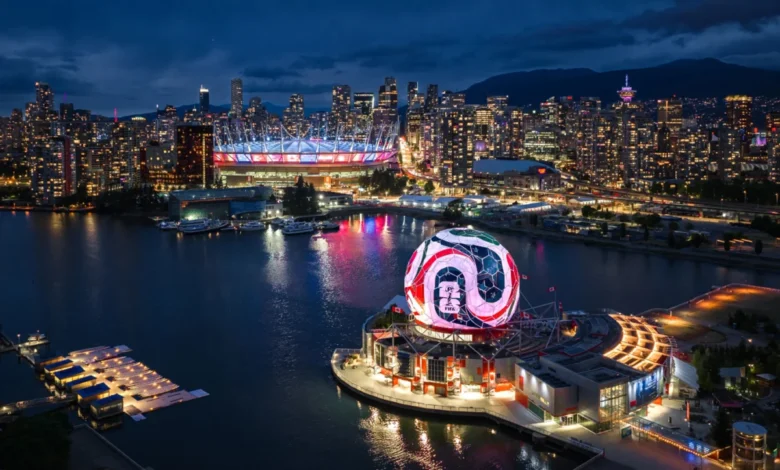
In a landmark achievement for sustainable event management and large-scale architectural branding, the 131 custom-engineered panels that transformed Vancouver’s iconic Science World into a giant soccer ball for the 2026 FIFA World Cup have been entirely repurposed. Managed by the large-format graphics specialist The Look Company, the project—famously dubbed "The Beautiful Dome"—represents a significant shift in how temporary event infrastructure is handled. Rather than contributing to the tonnes of waste typically associated with global sporting events, the 65,000-square-foot installation has been diverted from landfills to serve a dual purpose: educational funding and commemorative preservation.
The Engineering Behind the Transformation
The project was conceived not as a fleeting graphic installation, but as an exercise in circular design. From the initial planning stages in early 2026, The Look Company recognized that the geodesic geometry of Science World presented a unique challenge. To wrap a spherical structure with flat, large-format graphics required extreme precision. Each of the 131 panels was engineered to fit the curvature of the dome, with a fastening system designed specifically to facilitate both installation and, crucially, a clean removal process.
The installation itself was a massive logistical feat, executed in May 2026 by a five-person rope access team. These specialized technicians spent weeks navigating the exterior of the dome, ensuring that the alignment of the World Cup-themed graphic was flawless. The success of the project relied on the assumption that if a structure is designed with its eventual disassembly in mind, the materials can remain in a high-value state rather than being downgraded to scrap.
Chronology of the Project
The timeline of the Beautiful Dome highlights the methodical approach taken by the project stakeholders. The installation phase commenced in May 2026, serving as the visual centerpiece for Vancouver’s hosting of the FIFA World Cup. Throughout the summer, as the city welcomed international visitors and football fans, the dome stood as one of the most photographed landmarks in Canada.

Following the conclusion of the tournament, the decommissioning process began in September 2026. The same specialized rope access team that handled the assembly was brought back to dismantle the installation. Over the course of a two-week period, the team systematically removed the panels. By maintaining the integrity of the panels during the removal, the team ensured that the materials remained suitable for secondary use, such as textile repurposing or museum exhibition.
Circular Economy and Material Recovery
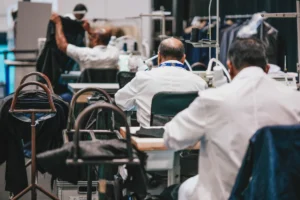
Large-format graphics, which typically consist of high-durability synthetic fabrics and substrates, are historically problematic in waste management because they are difficult to recycle. The Look Company’s decision to bypass the landfill entirely sets a new industry standard. The recovered materials are currently being processed in the company’s Seattle facility, where they are undergoing a rigorous cleaning and inspection process.
The material recovery plan is segmented into three primary streams:
- Upcycling for Consumer Goods: A portion of the fabric is being cut using custom templates to create 260 tote bags, 100 duffle bags, and 25 umbrellas. Each of these items is being serialized with a unique label, turning a piece of architectural history into a collectible.
- Institutional Donation: Twenty-four panels have been preserved in their original, large-format state. These are being donated to seven key institutions, including the Museum of Vancouver and BC Place, ensuring that the legacy of the 2026 FIFA World Cup remains accessible to the public.
- Direct Donation: A select number of panels have been allocated to private individuals and organizations that expressed a desire to hold onto a full-scale section of the original dome, ensuring that the history of the installation is decentralized and preserved by the community.
Economic and Educational Impact
The financial model of this initiative is centered on philanthropy. The resulting "Beautiful Dome 2026 Collection" of bags and umbrellas will be sold exclusively through Science World. The net proceeds from these sales are earmarked to support science, technology, engineering, arts, and mathematics (STEAM) education programmes across British Columbia. By transforming a commercial graphic into a charitable vehicle, the project effectively turns a temporary sporting spectacle into a long-term investment in local education.
Jacob Burke, the global CEO of The Look Company, noted that the success of the initiative was contingent on the design phase. "An installation this size involves thousands of decisions about how something goes together, and every one of those decisions also determines whether it can come apart," Burke stated. He emphasized that the precision required to drape a sphere meant that the panels were manufactured to a higher standard than typical event signage, which in turn allowed for a more robust second life.

Stakeholder Perspectives and Regional Synergy
The project was a collaborative effort involving Destination Vancouver, the Province of British Columbia, the FIFA World Cup 2026 Vancouver Host Committee, and the Vancouver Hotel Destination Association. The alignment of these entities was essential to securing the approvals necessary to alter such a prominent landmark.
Brian Radburn, Chief Operating Officer of Science World, highlighted the symbolic value of the initiative. He noted that the dome served as a canvas for "science, sport, and imagination," and that the repurposing process allows the institution to continue that narrative long after the tournament has ended. For Science World, the dome was not merely a backdrop for a global event; it was an opportunity to demonstrate the practical application of sustainability and material science.
Implications for the Event Industry
The Beautiful Dome project provides a tangible case study for the sports and entertainment industries, which are under increasing pressure to reduce their environmental footprint. Mega-events like the FIFA World Cup typically generate significant amounts of waste, from food packaging to promotional signage. By demonstrating that large-format graphics can be recovered and repurposed into consumer products, The Look Company has provided a blueprint for future events.
The fact that the production of the new collection—which is expected to take approximately five weeks—is being handled in-house highlights a trend toward regionalized circularity. By processing materials in a facility close to the point of origin, the carbon footprint of the recycling process is minimized. Furthermore, the use of individual sequence numbers on the commemorative items adds a layer of provenance, which increases the perceived value of the upcycled products and encourages consumer engagement with the circular economy.
Broader Context of Sustainable Branding
In the broader context of urban branding, this project demonstrates how temporary architectural installations can be managed responsibly. In many cities, the cost of disposing of event materials is high, both financially and environmentally. By planning for the end-of-life stage during the conceptual design phase, organizers can shift the narrative from "waste disposal" to "resource recovery."

The collaboration between a private sector graphics firm and a public educational institution like Science World illustrates the potential for public-private partnerships to achieve sustainability goals. While the project is modest in the context of the total waste generated by the global FIFA tournament, its impact on local awareness regarding material reuse is significant. It serves as a practical, visible reminder to the public that "temporary" does not have to mean "disposable."
Future Outlook
As cities worldwide continue to host international mega-events, the methods used to manage the physical infrastructure of these events will face increased scrutiny. The success of the Beautiful Dome serves as a benchmark for future organizers. The combination of technical precision, intentional design, and charitable repurposing offers a path forward that aligns commercial interests with environmental and social responsibilities.
The panels that once wrapped the dome of Science World are now in the process of being cut, stitched, and labeled. By the end of 2026, these materials will have completed their transition from a high-profile global advertisement to a collection of functional, educational, and historical artifacts. This transition marks a quiet but profound victory for sustainable event management, proving that even the most fleeting architectural spectacles can leave a lasting, positive impact on the communities that host them.