Dornbirn Global Fiber Congress 2026 reveals a critical divergence in textile circularity strategies between Europe and China

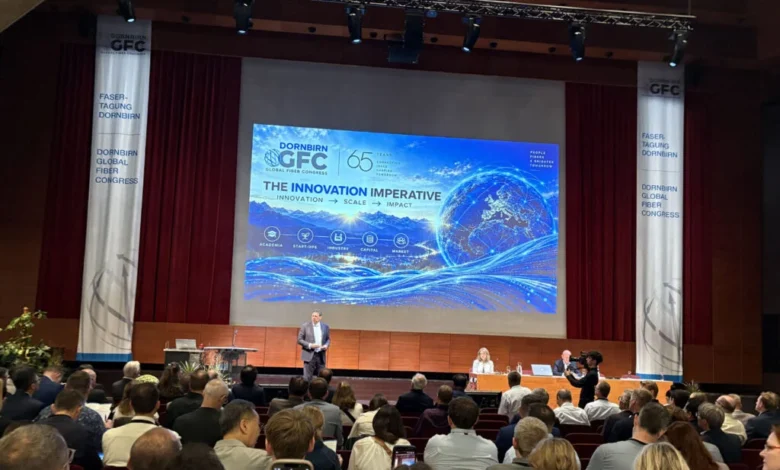
The 65th edition of the Dornbirn Global Fiber Congress (GFC), held in Austria from September 16–18, 2026, served as a sobering barometer for the global textile industry. While the event showcased a wealth of technological breakthroughs in mechanical, chemical, and enzymatic recycling, a palpable sense of deja vu permeated the halls. For over a decade, sustainability and circularity have dominated the congress agenda, yet the industry remains caught in a cycle of pilot projects rather than reaching the necessary industrial scale required to curb the mounting environmental impact of global fashion and apparel production.
A Legacy of Innovation vs. The Reality of Stagnation
The Dornbirn GFC has long been the premier platform for fiber innovation, historically bridging the gap between polymer science and industrial application. However, the 2026 proceedings highlighted a growing frustration among European stakeholders. While the technical expertise exists to dismantle complex blended fabrics and reclaim high-quality fibers, the commercial infrastructure to process these materials at scale is largely missing.
Robert van de Kerkhof, president of the Austrian Fibers Institute, set a somber tone during the opening CEO panel. He argued that while Europe was an early mover in recognizing the urgency of the climate crisis, its competitive advantage is currently eroding. "We are losing the opportunity to pass on know-how to the next generation of leaders," van de Kerkhof noted. "China is no longer just leading in cheap production, but also in innovation. Europe is meanwhile leading in bureaucracy." This assessment points to a structural challenge: while European firms are bogged down in the complex regulatory requirements of the EU Green Deal, Chinese manufacturers are aggressively pivoting toward massive, government-backed infrastructure projects.
The Rise of the Urban Mine: China’s Strategic Pivot
The most significant development discussed at the congress was China’s shift in rhetoric regarding waste management. Under its Circular Economy Development Plan for the 15th Five-Year Plan (2026–2030), Beijing has institutionalized the concept of the "urban mine." This strategy treats the vast volumes of waste generated by Chinese cities not as a burden to be managed, but as a strategic domestic reserve of raw materials.
By 2030, China’s policy framework aims to foster a resource recycling industry valued at approximately RMB 8 trillion (roughly €1 trillion). This involves a massive mobilization of capital and logistics to recover metals, plastics, and, crucially, textiles. The target is ambitious: 30% of all textile waste in China is to be recycled or utilized by 2030, with an annual recycled fiber production capacity of three million tons.
This policy is not merely a collection scheme. It mandates systemic changes in textile manufacturing, including requirements for design-for-recycling—ensuring that garments can be easily dismantled and classified—and the implementation of standardized material labeling to assist automated sorting facilities.
Chronology of Regulatory Divergence
The global transition toward a circular textile economy has been marked by a series of critical regulatory milestones over the last five years, highlighting the differing paces of the European and Chinese markets:
- March 2022: The European Commission releases the EU Strategy for Sustainable and Circular Textiles, proposing that all textiles sold in the EU be durable, repairable, and recyclable by 2030.
- December 2022: China introduces its national recycling program for textiles, setting the foundation for its 2030 circular economy targets.
- January 2025: EU member states officially mandate the separate collection of textile waste to prevent it from entering mixed household waste streams.
- July 2026: Implementation of the EU ban on the destruction of unsold clothing and footwear for large companies, aimed at curbing overproduction.
- September 2026: Dornbirn GFC highlights the struggle to scale existing technologies to meet the 2030 targets set by both major economies.
The Data Gap: Why "Circular" Remains Elusive
The European Environment Agency (EEA) continues to track a stark reality: despite years of policy focus, approximately 1% of materials used in clothing are recycled into new clothing globally. While this figure is an estimate of global performance, it serves as a persistent indictment of the current state of industrial recycling.
In 2022, the most recent year for which complete data is available, Europe generated 6.94 million tons of textile waste, or roughly 16kg per capita. Alarmingly, 85% of this waste was discarded in mixed household streams, rendering it largely unrecoverable. Even when textile waste is collected separately, efficiency remains poor; the EEA notes that 26% of separately collected textiles are still incinerated or sent to landfills, and the EU continues to export over 1.4 million tons of used textiles annually, effectively outsourcing its waste problem to the Global South.
Technological Barriers and the Economics of Scale
The central debate at Dornbirn centered on the inherent complexity of modern fashion. Today’s garments are frequently constructed from blends—such as polyester-cotton—that are notoriously difficult to separate into their constituent fibers. While chemical recycling technologies, such as those showcased by industry players like ReHubs and various startups at the congress, have proven the concept in laboratory settings, the economics of scale are prohibitive.
The "urban mine" model proposed by China attempts to solve this through volume and integration. By controlling the entire chain—from the collection of discarded garments to the chemical or mechanical processing plants—China aims to reduce the unit cost of recycled fiber. In contrast, the European approach relies heavily on legislative levers like Extended Producer Responsibility (EPR) schemes, which force brands to finance the collection and sorting infrastructure. However, the market for the resulting recycled fiber remains underdeveloped, as brands are often hesitant to commit to recycled content due to higher price points compared to virgin synthetic materials.
Implications for the Future of Fiber
The implications of this divide are profound. If Europe continues to focus primarily on regulatory frameworks while China focuses on industrial manufacturing capacity, the global supply chain for recycled fibers may coalesce around Chinese infrastructure.
For European companies, the challenge is no longer about demonstrating that recycling is possible—the Dornbirn congress made it clear that the technology is ready. The challenge is one of commercial viability. To remain relevant, European industry must transition from being a hub of research and development to a hub of industrial deployment. This requires significant investment in the infrastructure to bridge the "valley of death" between pilot projects and full-scale production.
As the industry looks toward 2030, the measure of success will shift from the quantity of circular strategies announced to the total tonnage of waste successfully converted into high-value raw material. The concept of the "urban mine" serves as a pragmatic, if aggressive, counterpoint to the more deliberative European approach. Whether through policy mandates or industrial resource exploitation, the end goal is the same: the transformation of fashion from a linear "take-make-waste" model into a circular ecosystem.
For the attendees of the Dornbirn Global Fiber Congress, the message was clear: the next four years will be the most decisive in the history of the textile industry. The era of talk and pilot projects is ending, and the era of industrial-scale competition for the world’s textile waste has begun. Success will ultimately be determined not by the sophistication of a recycling process, but by the ability to make that process profitable, scalable, and permanent.