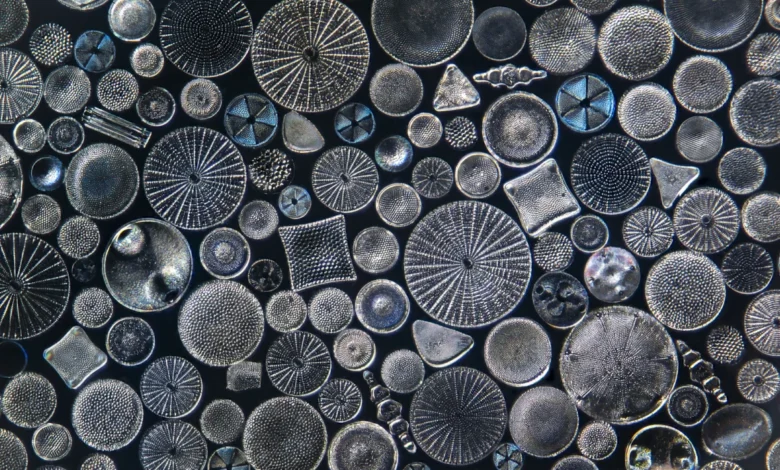
Australian photographer and conservationist Jon McCormack has released his striking new photobook, Patterns: Art of the Natural World, published by Damiani. Released globally to coincide with Earth Day on April 22, 2026, the volume compiles a decade-spanning exploration of geometric and organic structures found across the earth. The project showcases an extensive range of subjects, moving seamlessly from grand aerial views of shorelines and glaciers to microscopic examinations of rocks, minerals like jasper and quartzite, and delicate diatoms.
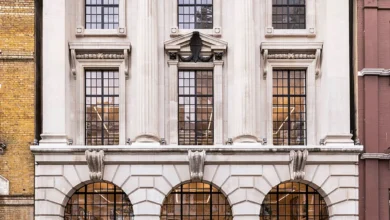
The launch of the book coincides with prominent public and gallery exhibitions. McCormack’s photographs are being featured in an outdoor exhibition in New York City from April 22 to June 14, 2026. Displayed on six-by-six-foot photocubes throughout the South Street Seaport in collaboration with the South Street Seaport Museum as part of Photoville, the installation brings macro and landscape photography into an accessible urban public space. Simultaneously, a solo exhibition titled Elements of Wonder: Where Nature Becomes Art opened on April 17, 2026, at CENTER Santa Fe, running through May 17, 2026. Furthermore, all proceeds from the sale of Patterns: Art of the Natural World are dedicated to supporting Vital Impacts, a non-profit organization founded by acclaimed photojournalist Ami Vitale that finances grassroots conservation initiatives and global environmental storytelling projects.
The Pandemic Pivot: A Shift from Global Mobility to Micro-Geography
The conceptual genesis of Patterns traces back to the COVID-19 pandemic and the subsequent implementation of global travel restrictions. Prior to 2020, McCormack’s professional practice relied heavily on international fieldwork, exploration, and the pursuit of novelty across disparate global landscapes. The sudden cessation of international mobility forced a radical contraction of his working radius. Confined primarily to a single stretch of coast in Northern California, McCormack was compelled to reevaluate his relationship with his immediate environment.

Initially, this constraint presented creative hurdles. Early photographic attempts yielded conventional, wide-angle landscape images and standard atmospheric sunsets. However, as repetition stripped away the temptation of exotic destinations, McCormack adopted a slower, more deliberate methodology. By returning daily to the same geographic coordinates, he shifted his focus away from macro-scale scenery toward transient environmental phenomena—the specific movement of light over water, the accumulation of sea foam around coastal rocks, and the subtle shifts in tidal patterns. This enforced confinement catalyzed an artistic awakening, proving that profound visual discovery does not require geographical distance, but rather sustained, high-resolution attention.
A Unified Visual Language Across Scale
What ultimately elevated McCormack’s pandemic-era experiment into a cohesive book-length project was the realization that the organizing principle of the work was not location, but geometric structure. Initially struggling with a collection of impressionistic landscapes that lacked a unifying narrative thread, McCormack recalibrated his editing framework. He recognized that natural forms share universal organizing principles regardless of their scale.

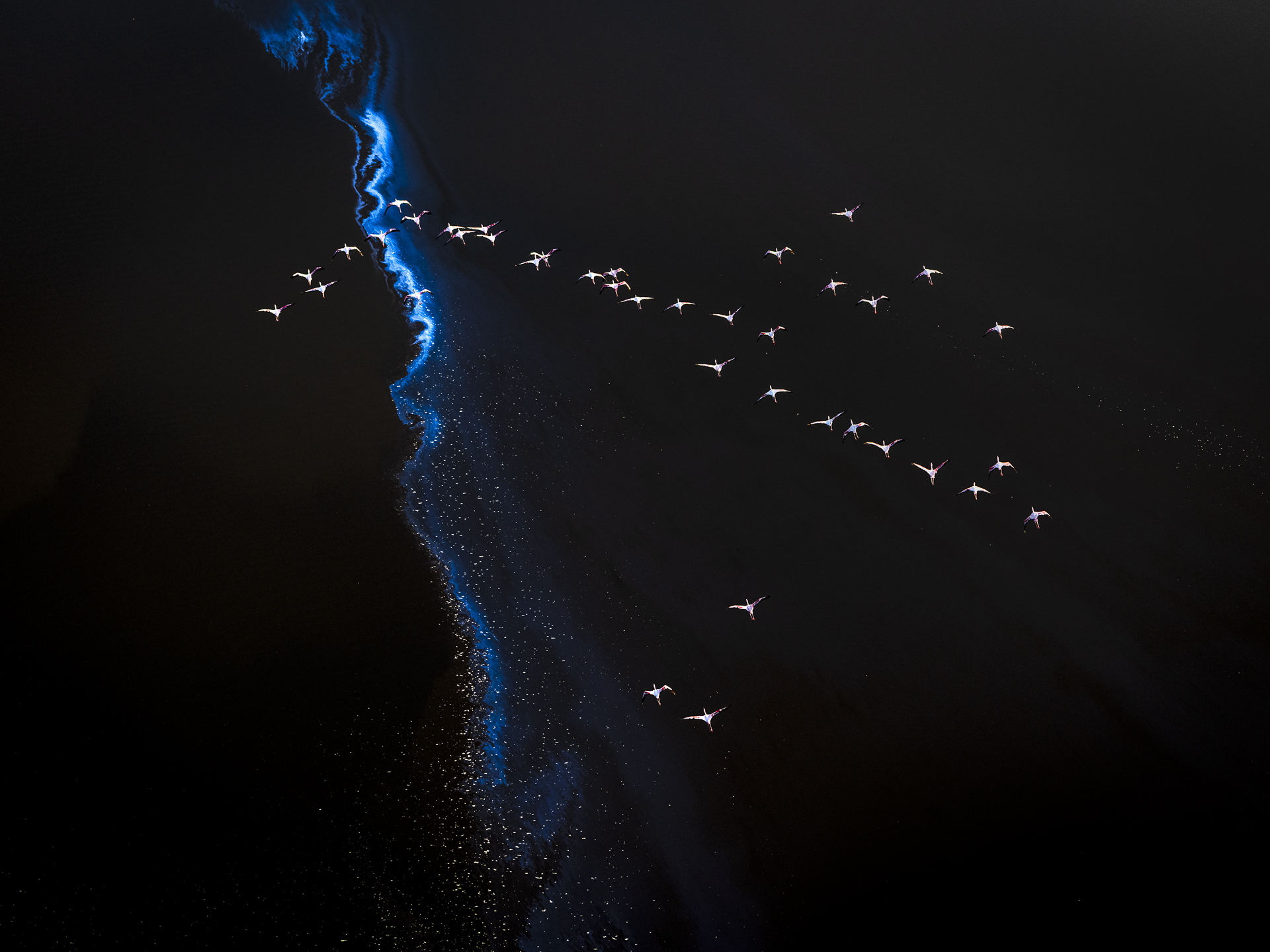
Consequently, Patterns establishes unexpected visual dialogues between seemingly unrelated phenomena. Aerial photographs of salt lakes, the fractures inside Icelandic ice caves, the patterns on animal coats, fossilized shells, and high-magnification microscope stacks of diatoms are juxtaposed to reveal shared underlying rhythms. Rather than categorizing images by subject matter or ecosystem, McCormack organized the monograph around recurring structural archetypes, such as spirals, ripples, branching forms, tessellations, and fractures.
Technical Methodology: From the Field to the Microscope
Achieving this synthesis required navigating vastly different photographic environments, ranging from sweeping wilderness expeditions to meticulous laboratory procedures. While landscape and aerial photography depend on rapid adaptation to natural elements, McCormack’s microscopic studies demand extreme technical precision.

To capture specimens such as diatoms—single-celled algae possessing intricate silica shells—McCormack utilizes specialized microscopy. Because high-magnification lenses yield an exceptionally shallow depth of field, single exposures cannot render these microscopic subjects in sharp focus throughout. To overcome this limitation, McCormack employs focus stacking, combining up to 25 individual frames captured at incremental focus steps into a single, comprehensive image. This rigorous process mirrors the conceptual goals of the book: demonstrating that microscopic structures possess the same architectural elegance and complexity as macro-scale formations like river deltas or glacial fields.
Ecological Implications and the Philosophy of Process
Beyond its aesthetic ambitions, Patterns: Art of the Natural World functions as an inquiry into the physical forces that shape matter. McCormack posits that natural patterns are not merely decorative anomalies, but the visible records of environmental pressures, including growth, chemistry, gravity, fluid dynamics, wind, water, and evolutionary time. By documenting these traces, the publication frames the natural world as an interconnected, communicative system.

The timing of the book’s release on Earth Day underscores its underlying conservation ethos. By channeling 100 percent of its proceeds to Vital Impacts, the project actively contributes to global habitat preservation and environmental education. The collaboration with conservation-focused grantmakers amplifies the message that deep observation fosters environmental stewardship; understanding the intricate, universal architecture of nature reinforces the urgency of protecting it against anthropogenic degradation.
Through its dual exhibition schedule in Santa Fe and New York, alongside its comprehensive publishing debut with Damiani, Patterns: Art of the Natural World establishes McCormack as a leading voice in contemporary nature photography, bridging the gap between artistic abstraction and empirical observation.