Quality Street Transforms Soho into a High-Stakes Gaming Hub with Monopoly Partnership

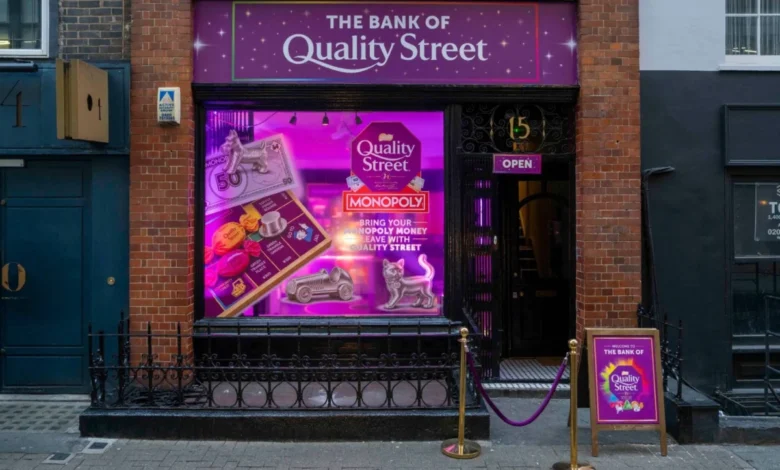
The confectionery giant Nestlé has inaugurated a temporary experiential retail space in the heart of London’s Soho, blending the nostalgic appeal of Quality Street chocolates with the iconic imagery of the Monopoly board game. Located at 15 Bateman Street, the "Bank of Quality Street" serves as the physical manifestation of a nationwide promotional campaign designed to incentivize screen-free family engagement during the upcoming festive season. This two-day activation, operating on November 24 and 25, invites members of the public to engage in a gamified retail experience where Monopoly currency is accepted as legal tender for bespoke pick-and-mix assortments of the classic chocolates.
The Mechanics of the Soho Pop-Up
The pop-up store, open daily from 11:00 am to 6:00 pm, functions as a high-visibility marketing touchpoint. Visitors are encouraged to bring Monopoly money to the site to exchange for bags of sweets; however, in a move designed to ensure inclusivity, the organizers have confirmed that entry is free and patrons who lack physical game cash will not be barred from receiving samples. To manage the logistics of the event, the internal bank staff return the Monopoly currency to the customer after each transaction, allowing for a circular flow of the game-themed money.
A key incentive for early attendance is the distribution of a limited-edition octagonal Quality Street x Monopoly board game. The first 20 individuals in the queue each day are awarded a copy of this collaboration, a move intended to drive foot traffic and generate social media buzz during the opening hours. By placing the activation in a high-footfall area like Soho, Nestlé is leveraging the neighborhood’s reputation as a cultural hub to maximize brand exposure among both tourists and London residents.
Strategic Context and Consumer Research
The decision to pivot toward a gaming-themed marketing strategy is grounded in recent consumer behavioral research. A survey conducted by Nestlé, which polled 2,000 UK adults, revealed a pervasive sense of digital fatigue among the population. Approximately 67 per cent of respondents indicated that personal devices and smartphones frequently interfere with quality time spent with family during the Christmas period. Furthermore, 66 per cent of those surveyed explicitly stated a desire for a "tech-free" festive break, suggesting a growing market appetite for analog entertainment and traditional bonding activities.
This insight forms the backbone of the "Quality Street x Monopoly" campaign. By aligning its brand with a physical, social activity like board gaming, Nestlé is positioning its confectionery not merely as a snack, but as an essential facilitator of social connection. This pivot follows a broader trend in the food and beverage industry where brands are increasingly seeking to associate themselves with "experience-based" consumption rather than just product utility.
National Promotional Campaign and Monetary Incentives
While the London pop-up serves as the flagship event, the campaign has a significantly wider reach. The collaboration extends to retail shelves nationwide, where specially marked promotional tubs of Quality Street chocolates have been released. These tubs contain "Chance Cards," which serve as a secondary layer of engagement for consumers who cannot visit the Soho location.
The prize pool is significant, mirroring the high-stakes nature of the Monopoly game itself. Participants who find a winning Chance Card have the opportunity to claim prizes, with the headline incentive being £20,580. This figure is calculated specifically to match the total monetary value contained within a standard Monopoly bank. In addition to the top-tier cash prize, the campaign includes the distribution of 5,000 limited-edition collaborative board games and thousands of smaller cash rewards. This multi-tiered incentive structure is designed to maintain consumer engagement throughout the festive shopping window, effectively extending the marketing campaign from the point of purchase in supermarkets to the domestic setting of the consumer’s home.
Marketing Rationale and Official Commentary
The campaign represents a calculated effort by Nestlé to revitalize the brand’s relevance during the most competitive season in the confectionery calendar. By integrating a heritage brand like Monopoly, Nestlé taps into intergenerational appeal—connecting with older consumers through nostalgia and newer, younger consumers through the interactive nature of the board game.
Beth Lucas, Marketing Director at Nestlé Confectionery UK&I, emphasized the emotional branding strategy behind the initiative. "Our research shows that after a busy year, two thirds of us are craving time to connect with the people around us," Lucas stated. "Opening the Bank of Quality Street today is all about celebrating that playful, offline spirit."
From an analytical perspective, this campaign demonstrates an understanding of the "experience economy." By turning the act of buying chocolates into a game, Nestlé is increasing the "dwell time" of the consumer with the brand. While traditional advertising informs, experiential marketing creates memories, which studies have shown can lead to higher brand loyalty and repeat purchase intent.
Market Implications and Future Outlook
The partnership between Nestlé and Hasbro (the parent company of Monopoly) is a strategic move that benefits both parties. For Nestlé, it provides a thematic narrative that differentiates its products on crowded supermarket shelves. For Hasbro, it provides a high-profile platform to showcase the board game’s continued relevance in a digital-first era.
However, the success of this campaign will be measured not just by social media impressions or event attendance, but by its ability to translate into sustained sales during the critical Q4 period. Historically, the festive season accounts for a substantial percentage of total annual confectionery sales in the UK. With rising inflation and cost-of-living pressures affecting consumer spending habits, brands are finding that adding "value-add" experiences or prize incentives is an effective way to justify premium pricing for gift-sized confectionery.
The broader implications of this campaign reflect a shift in how food manufacturers are engaging with their audience. As digital advertising becomes increasingly fragmented and expensive, physical activations that generate "earned media"—such as news coverage, user-generated content, and viral social posts—are becoming a cornerstone of the modern marketing mix.
Chronology of the Activation
- Early Q4: Initial consumer research conducted, revealing a strong preference for tech-free family time.
- Mid-November: Official announcement of the Quality Street x Monopoly partnership and the launch of promotional tubs in retail outlets nationwide.
- November 24: Opening of the Bank of Quality Street in Soho, London, marking the start of the two-day experiential event.
- November 25: Conclusion of the Soho pop-up store, with ongoing retail promotions continuing throughout the festive period.
Fact-Based Analysis of the Campaign
The "Bank of Quality Street" is a textbook example of experiential retail. By utilizing a physical space to bring a digital or board-game concept to life, the brand is able to humanize its corporate presence. The inclusion of free entry and the "return" of Monopoly money suggests that the brand is prioritizing public relations and brand sentiment over direct sales at the venue. This is a common strategy for large-scale FMCG (Fast-Moving Consumer Goods) brands, where the primary objective of a pop-up is to generate high-quality brand associations rather than immediate revenue.
Furthermore, the alignment with the "tech-free" narrative is a sophisticated use of "lifestyle positioning." By identifying a genuine pain point—the disruption of family time by digital devices—the brand is positioning itself as a "solution" to a modern social problem. Whether or not consumers view a tub of chocolates as a genuine antidote to digital dependency, the association is positive and aligns with the emotional values consumers seek during the Christmas holidays.
As the retail landscape continues to evolve, we can expect to see more of these hybrid marketing campaigns, where heritage brands leverage pop-culture icons to remain top-of-mind. The success of this particular campaign will likely be used as a case study by Nestlé to determine the viability of future experiential activations in other major UK cities. For now, the Bank of Quality Street stands as a testament to the enduring power of combining traditional, tactile games with the universal appeal of holiday confectionery.