Scotland Is Leading the Way in Building a More Sustainable and Ethical Fashion Industry with 11 Pioneering Brands

Despite its modest population of approximately 5.4 million people, Scotland has emerged as a vanguard in the global transition toward a circular and responsible fashion economy. While the wider textile sector continues to grapple with the environmental degradation and human rights challenges associated with fast fashion, a growing collective of Scottish designers, mills, and independent boutiques are actively redefining apparel production. By emphasizing zero-waste manufacturing, regional supply chains, and durable natural fibers, these enterprises are demonstrating that commercial viability and ecological stewardship can coexist.

The Crisis of Fast Fashion and the Regional Shift
The environmental toll of the modern garment industry is well-documented. According to international environmental assessments, the fashion sector accounts for a significant share of global carbon emissions, produces vast quantities of non-biodegradable textile waste, and heavily pollutes waterways through synthetic dyeing and finishing processes. In response to these systemic failures, consumer demand for transparent, traceable supply chains has intensified over the past decade.
Scotland’s textile heritage positions it uniquely to address these challenges. Historically renowned for high-grade wool, cashmere, and traditional weaving techniques, the country’s modern designers are leveraging this industrial legacy to build localized circular economies. Rather than outsourcing production to low-wage nations with lax environmental oversight, these 11 brands prioritize proximity, fair labor practices, and materials that minimize ecological footprints.

Heritage and Modern Accountability: Brora
Operating for over three decades, the slow-fashion brand Brora has long championed the ethos that style and environmental responsibility must be intrinsically linked. The company constructs its collections primarily from natural fibers—including Scottish cashmere, wool, linen, and organic cotton—while keeping synthetic materials to a strict minimum.
Brora’s operational strategy relies heavily on local craftsmanship, collaborating with regional artisans who utilize traditional techniques passed down through generations. When international sourcing is required, the brand engages specialized overseas suppliers bound by a rigorous code of conduct governing worker welfare, health and safety, and environmental impact. Reflecting its long-term commitment to these principles, Brora achieved official B-Corp certification, an independent designation that evaluates a company’s social and environmental performance, accountability, and transparency.

Technical Innovation in Outdoor Apparel: Findra
Based in the Scottish Borders, Findra approaches sustainable apparel through the lens of technical activewear for women. Offering a range of cycling garments, base layers, trousers, and jackets, the brand utilizes natural and recycled sustainable fabrics to replace petroleum-based synthetics traditionally used in sportswear.
Findra manufactures more than half of its collection within the United Kingdom, dividing production between Scotland and England. For products manufactured outside the UK, the company enforces strict auditing, partnering exclusively with factories certified to rigorous environmental and labor standards. To further extend product lifecycles, Findra operates an in-house repair service, mitigating the consumer habit of premature disposal.

Preserving Craftsmanship and Minimizing Waste: ERIBÈ Knitwear
Founded in 1986, ERIBÈ Knitwear specializes in traditional Scottish knitwear produced exclusively from 100% natural fibers, including certified non-mulesed RWS merino lambswool and British wool. Operating out of production facilities in Scotland and the European Union, the brand is subject to stringent regional labor regulations.
To address the pervasive issue of pre-consumer textile waste, ERIBÈ implements small-batch production models and made-to-order manufacturing. Faulty panels are systematically unraveled and rewound into yarn, and single-use plastic garment bags have been entirely replaced with biodegradable alternatives. This holistic approach ensures minimal material loss from loom to final delivery.

Regional Sourcing and Animal Welfare: Hilary Grant and The Croft House
In the remote Orkney Islands, the textile studio and knitwear producer Hilary Grant crafts accessories such as scarves, beanies, and mittens using high-grade lambswool. The brand relies on a dual-manufacturing model, machine-knitting and hand-finishing pieces in its Orkney facility while utilizing a specialist factory in Ayrshire for additional production lines.
Hilary Grant’s operational model is underpinned by strict sourcing standards. All wool is procured from farms adhering to high animal welfare and progressive land management practices. The yarns are certified by the Responsible Wool Standard (RWS), are entirely mulesing-free, and undergo processing using environmentally friendly dyes to minimize aquatic toxicity.

Similarly, Peterhead-based brand The Croft House designs and manufactures its natural-fiber knitwear entirely within Scotland, utilizing raw materials sourced exclusively from the UK. With the exception of certain high-end socks that require a minimal percentage of synthetic nylon for structural integrity and durability, the brand’s collections are entirely plastic-free. Many items are knitted seamlessly to eliminate cutting waste, alongside a specialized line produced from pure, undyed yarns.
Circular Economies and Reclaimed Luxury: Second Cashmere and Beira
The economic transition from a linear "take-make-dispose" model to a circular framework is exemplified by Glasgow-based Second Cashmere. The company collects waste cashmere garments destined for landfill or standard industrial recycling via UK textile collectors. These items are cleaned, restored, and reconditioned into new knitwear. Garments that cannot be fully restored are unraveled to create reclaimed cashmere yarns, ensuring absolute material retention. The brand also offers a manual repair service utilizing reclaimed yarn.

Operating on a similar zero-waste philosophy, Beira utilizes discarded materials, fabrics, trims, and zippers sourced exclusively from luxury manufacturers. Transforming these deadstock materials into limited-edition raincoats and knitwear, Beira implements an unprecedented level of supply-chain transparency. Each product listing details the specific maker, their hourly wage, a visual record of the manufacturing process, and the exact origin of the raw materials.
Independent Retail and Reworked Design: Godiva and Totty Rocks
In Edinburgh, independent boutiques and studios play a vital role in local sustainable fashion. Godiva, operating near the city’s Grassmarket for over two decades, combines curated vintage apparel with an in-house "Reworked" collection. The studio repurposes vintage textiles into contemporary garments, alongside hosting collections from independent regional designers.

Totty Rocks, another Edinburgh-based institution, handmakes women’s occasion wear, tailored coats, and bridal gowns to order. By avoiding mass production and relying on locally sourced fabrics, the studio operates strictly on a demand-led slow-fashion model, serving an international clientele while maintaining a hyper-local manufacturing footprint.
Heritage Weaving and Technological Adaptation: Prickly Thistle
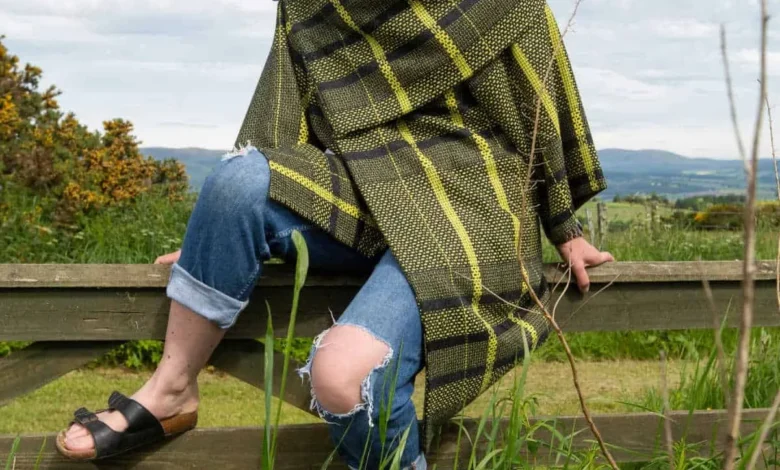
Located in Dingwall, Prickly Thistle operates a certified B-Corp mill dedicated to reviving traditional Highland textile production. Using 100% natural, plastic-free textiles on century-old looms, the mill is powered entirely by renewable energy.

Prickly Thistle’s design philosophy explicitly avoids fasteners such as zips and buttons, which complicate garment recycling and impose rigid sizing constraints. Instead, the mill utilizes adjustable straps and buckles, providing a built-in three-inch sizing range that enhances garment longevity and reduces the need for frequent replacement.
Tailored Menswear: Kestin
Rounding out Scotland’s sustainable apparel landscape, Edinburgh-based menswear brand Kestin focuses on durable, locally produced garments. The brand champions domestic manufacturing facilities and maintains transparent relationships with suppliers that adhere to fair wage policies, safe working conditions, and strong community engagement. By focusing on timeless silhouettes ranging from tailored suits to technical outerwear, Kestin discourages seasonal trend-driven consumption.

Broader Implications and Industry Outlook
The collective success of these Scottish enterprises underscores a broader shift in consumer behavior and industrial policy. As regulatory scrutiny regarding greenwashing and textile waste intensifies across the United Kingdom and the European Union, the operational models demonstrated by these brands offer a blueprint for regional economic resilience. By integrating traditional craft with modern transparency metrics, Scotland’s sustainable fashion sector illustrates that meaningful environmental reform is achievable at any scale.