Scotland Is Leading the Way in Building a More Sustainable and Ethical Fashion Industry

The global fashion landscape is undergoing a profound transformation, moving away from the resource-intensive pressures of fast fashion toward circularity, zero-waste manufacturing, and ethical labor standards. While major apparel hubs across Europe and Asia grapple with systemic sustainability challenges, the United Kingdom’s northernmost nation is emerging as a beacon of progressive textile innovation. Despite a population of approximately 5.4 million people, Scotland has established itself as a pioneer in responsible garment manufacturing, proving that small-scale economies can drive outsized environmental change.

An analysis of the modern Scottish apparel sector reveals a diverse ecosystem of 11 distinct brands that are redefining how clothing is sourced, manufactured, and recycled. From heritage knitwear mills utilizing renewable energy to zero-waste urban studios repurposing luxury textile remnants, these enterprises are systematically displacing linear fast fashion models with circular alternatives.
The Roots of Scottish Textile Heritage and Modern Sustainability
Scotland’s deep-rooted connection to the textile industry dates back centuries, defined by the mastery of natural fibers such as wool, linen, and cashmere. Historically, the nation’s remote landscapes and harsh weather conditions fostered an absolute reliance on durable, high-performance materials designed to withstand extreme elements. In the contemporary era, this legacy has evolved into a forward-thinking movement that marries traditional craftsmanship with cutting-edge environmental protocols.

The modern push toward ethical fashion in Scotland aligns with broader international climate targets, yet it operates on a localized scale that prioritizes regional supply chains. By keeping manufacturing processes close to home—or partnering exclusively with certified international facilities—Scottish designers are minimizing carbon footprints while preserving endangered artisanal skill sets. This strategic integration of heritage and innovation has positioned the country at the forefront of the global slow fashion movement.
Pioneering Brands: Crafting a Circular Economy
The transition toward a circular fashion economy requires a fundamental rethinking of material lifecycles, waste reduction, and consumer accountability. Several prominent Scottish brands are leading this charge through distinct operational frameworks.

Brora and ERIBÉ Knitwear: Natural Fibers and Longevity
Founded more than 30 years ago, Brora has long maintained that style and sustainability must be inextricably linked. The slow fashion brand focuses on garments engineered for longevity, utilizing natural fibers including Scottish cashmere, wool, linen, and organic cotton, while strictly minimizing synthetic alternatives. Brora prioritizes local manufacturing alongside skilled artisans utilizing generational techniques. In 2025, Brora achieved B-Corp certification, an independent verification of high standards regarding social and environmental performance, transparency, and accountability.
Similarly, ERIBÉ Knitwear, established in 1986, relies exclusively on 100% natural fibers, featuring guaranteed non-mulesed Responsible Wool Standard (RWS) merino lambswool and traditional British wool. Operating out of Scotland and the European Union under strict labor regulations, ERIBÉ minimizes material waste by producing garments in small batches and on-demand schedules. Defective panels are routinely unraveled and rewound into yarn, and traditional plastic garment packaging has been replaced with biodegradable alternatives.

Hilary Grant and The Croft House: Regional Sourcing and Traceability
In the Orkney Islands, textile design studio Hilary Grant produces weather-resistant knitwear accessories utilizing lambswool sourced from farms operating under rigorous animal welfare and progressive land management standards. The yarns are mulesing-free, RWS-certified, dyed, and spun in Scotland using low-impact dyes. Production is split between an in-house Orkney facility and a specialized factory in Ayrshire.
In Peterhead, The Croft House designs and manufactures natural-fiber knitwear for men and women, ensuring that all raw materials are sourced within the United Kingdom. With the exception of certain socks that incorporate a minor percentage of synthetic nylon for structural integrity, the collection is entirely plastic-free. Many items are knitted seamlessly to eliminate waste, alongside a specialized line crafted from pure, undyed yarn to further reduce environmental impact.

Prickly Thistle: Renewable Energy and Zero-Waste Tartan
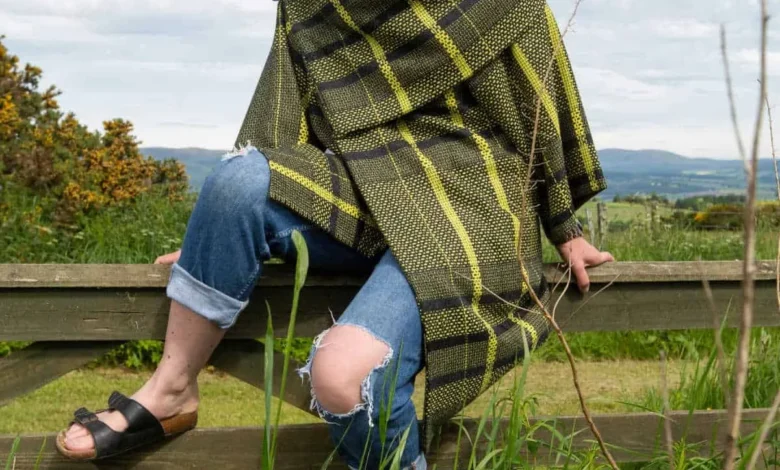
Operating in Dingwall, Prickly Thistle utilizes century-old traditional looms and 100% natural, plastic-free textiles to produce sustainable tartan clothing. As a certified B-Corp, the mill is powered entirely by renewable energy and sources its wool exclusively through Scottish spinners and dyers.
Prickly Thistle’s manufacturing model generates zero fabric waste. Crucially, the brand eliminates the use of traditional zips and buttons—fasteners that frequently complicate clothing recycling and restrict size adaptability. Instead, the incorporation of adjustable straps and buckles provides a built-in three-inch size range, enhancing garment durability and extending product lifecycles.

Urban Innovation: Reworking Waste in Edinburgh and Glasgow
Beyond rural mills, Scotland’s urban centers host vibrant creative hubs dedicated to urban circularity, vintage curation, and post-consumer textile upcycling.
Godiva and Second Cashmere: Upcycling and Closed-Loop Systems
Based in Edinburgh near the Grassmarket, Godiva has championed independent designers and sustainable retail for over two decades. Alongside a curated selection of vintage apparel, the boutique operates an in-studio "Reworked" collection, transforming discarded garments into contemporary styles.

In Glasgow, Second Cashmere champions the circular economy by intercepting waste cashmere garments destined for landfills or standard recycling facilities. Sourced via UK textile recyclers, the items are cleaned, restored, or unraveled into reclaimed cashmere yarns used for original designs and manual garment repairs. This closed-loop approach ensures that virtually no cashmere fiber is wasted.
Beira, Totty Rocks, and Kestin: Transparency and Tailored Slow Fashion
Edinburgh-based Beira takes a unique approach to zero-waste fashion by exclusively utilizing deadstock materials—discarded fabrics, trims, zips, and buttons—sourced from luxury manufacturers. Beira provides unprecedented supply chain transparency, detailing on its website the specific maker of each garment, hourly compensation rates, and video documentation of the manufacturing process.

Totty Rocks, also situated in Edinburgh, handcrafts made-to-order women’s occasion wear, wedding dresses, and tailored outerwear using locally sourced fabrics. This made-to-order model directly counters the overproduction characteristic of mass-market fashion.
For menswear, Edinburgh-based Kestin prioritizes local UK production and durable fabrics. The brand maintains a transparent supply chain, partnering exclusively with suppliers that enforce fair wages, safe working conditions, and strong community ties across its range of contemporary menswear.

Broader Impact and Industry Implications
The scalable success of Scotland’s sustainable fashion sector offers critical insights for the broader global apparel industry. By integrating strict traceability, circular material sourcing, and localized manufacturing, these 11 enterprises demonstrate that commercial viability and environmental stewardship are mutually compatible.
As regulatory scrutiny increases regarding greenwashing and textile waste across international markets, the operational models established by Scottish slow fashion pioneers provide a viable blueprint for systemic reform. Analysts note that while these independent brands represent a fraction of total global apparel output, their rigorous standards in transparency and zero-waste design establish an essential benchmark for the future of ethical manufacturing.