Sophisticated Minimalism and European Influence Define the New Charles & Julia Lounge at Hotel Perle in New Orleans

The hospitality landscape of New Orleans has long been defined by a commitment to the "Big Easy" aesthetic—a vibrant, often maximalist tapestry of wrought iron, neon lights, and the iconic purple, green, and gold of the Mardi Gras season. However, a new project on St. Charles Avenue is challenging these visual tropes by opting for a design language rooted in residential intimacy and European classicism. Charles & Julia, a new cocktail lounge and rooftop destination located within the Hotel Perle, represents a significant shift in the city’s approach to luxury hospitality. Designed by the boutique firm Anna Nicole Interiors, the space occupies a meticulously restored 1916 building that once served as a Stutz motorcar dealership. By prioritizing texture, history, and a "collected" rather than "decorated" feel, the project seeks to provide a sophisticated alternative for both locals and travelers seeking a quieter side of New Orleans culture.
The Architecture of Adaptive Reuse: From Motorcars to Mixology
The foundation of Charles & Julia is the historic structure at 757 St. Charles Avenue. Built in 1916, the building originally housed a dealership for the Stutz Motor Company, an American producer of high-end luxury cars known for the iconic Stutz Bearcat. During the early 20th century, this corridor of New Orleans served as the city’s "Automobile Row," where grand showrooms featured soaring ceilings and expansive windows to showcase the latest in industrial engineering.
The transition from a cavernous industrial showroom to an intimate hospitality venue required a delicate balancing act. The design team at Anna Nicole Interiors inherited a 3,000-square-foot ground floor characterized by original exposed brickwork and exceptionally high ceilings. In many contemporary renovations, such a space might be partitioned into smaller rooms to manage acoustics and scale. Instead, the designers employed "residential strategies" to maintain the building’s architectural integrity while fostering a sense of warmth.
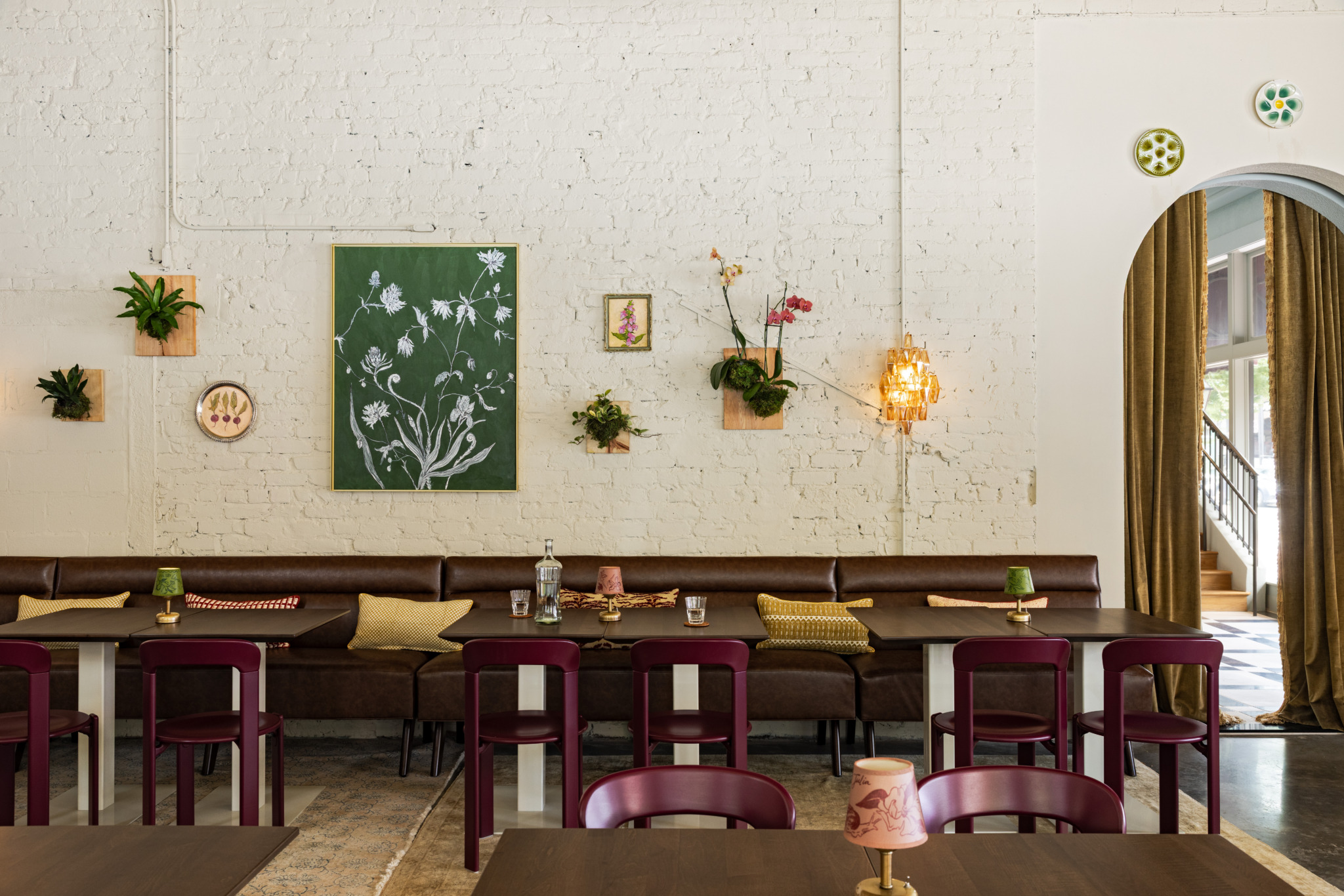
By utilizing heavy oxblood velvet drapery to frame the street-facing windows and strategically placing large-scale vintage rugs, the team effectively "zoned" the open floor plan. These elements serve a dual purpose: they provide acoustic dampening in a room dominated by hard surfaces (brick and stone) and create a sequence of "conversational pockets." This approach mimics the layout of a grand European estate, where large halls are made habitable through the layering of furniture and textiles rather than the construction of new walls.
A Narrative-Driven Design: The Story of Charles and Julia
At the heart of the project’s aesthetic is a fictional narrative that informs every material choice. The lounge is named after Charles and Julia, a fictional couple whose imagined romantic travels through Europe serve as the conceptual North Star for the interiors. This storytelling method, often used in high-end branding, allows the design to feel cohesive without being strictly "thematic."
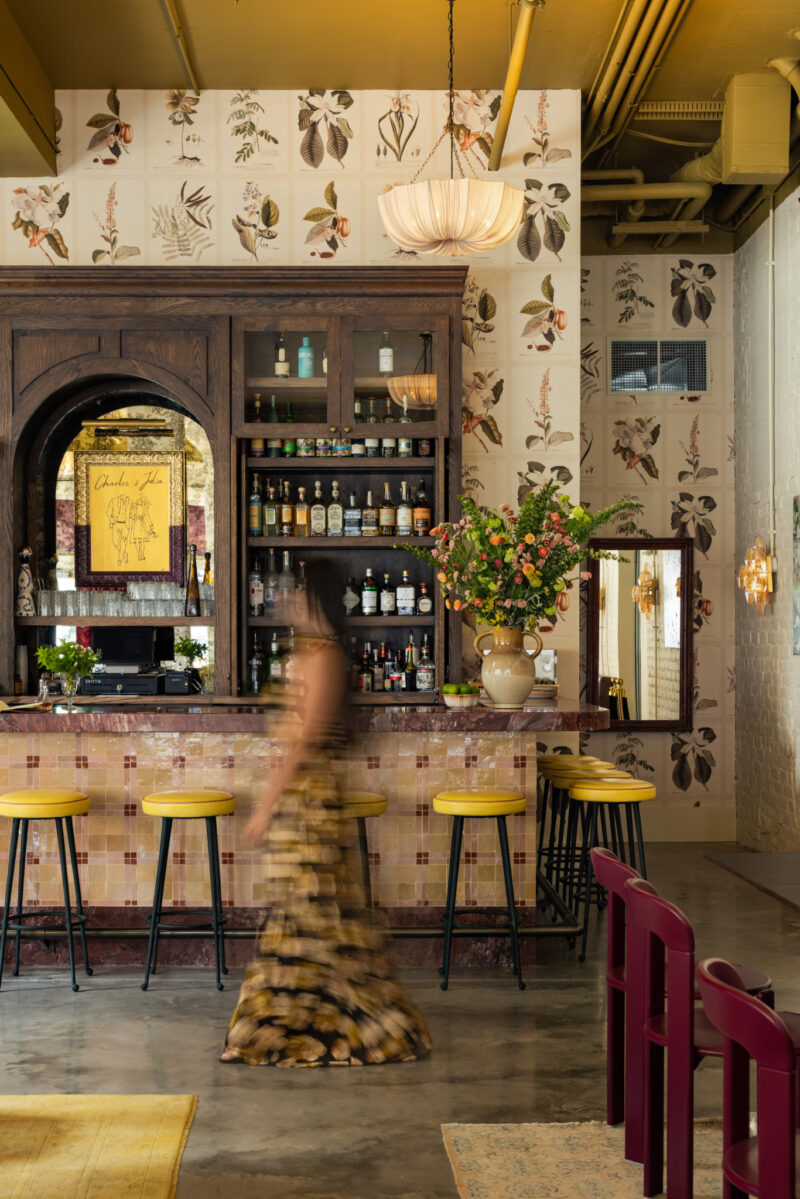
Rather than presenting a literal timeline of their travels, the space reflects the objects they might have collected along the way. This is evidenced by the eclectic mix of furnishings, which includes grape-toned Bruno Rey chairs—a staple of 1970s Swiss design—alongside vintage European finds and layered kilim rugs. The result is a space that feels as though it has evolved over decades rather than being installed over a few months.
This narrative also extends to the color palette. While the designers explicitly avoided the cliché of Mardi Gras decorations, they subtly honored the city’s traditional colors through a deconstructed lens. The use of muted chartreuse, deep aubergine, oxblood, and warm gold provides a sophisticated nod to the New Orleans heritage. It is a "quiet" connection to the city that rewards the observant guest without overwhelming the casual visitor.
Materiality and Craftsmanship: The Interior Details
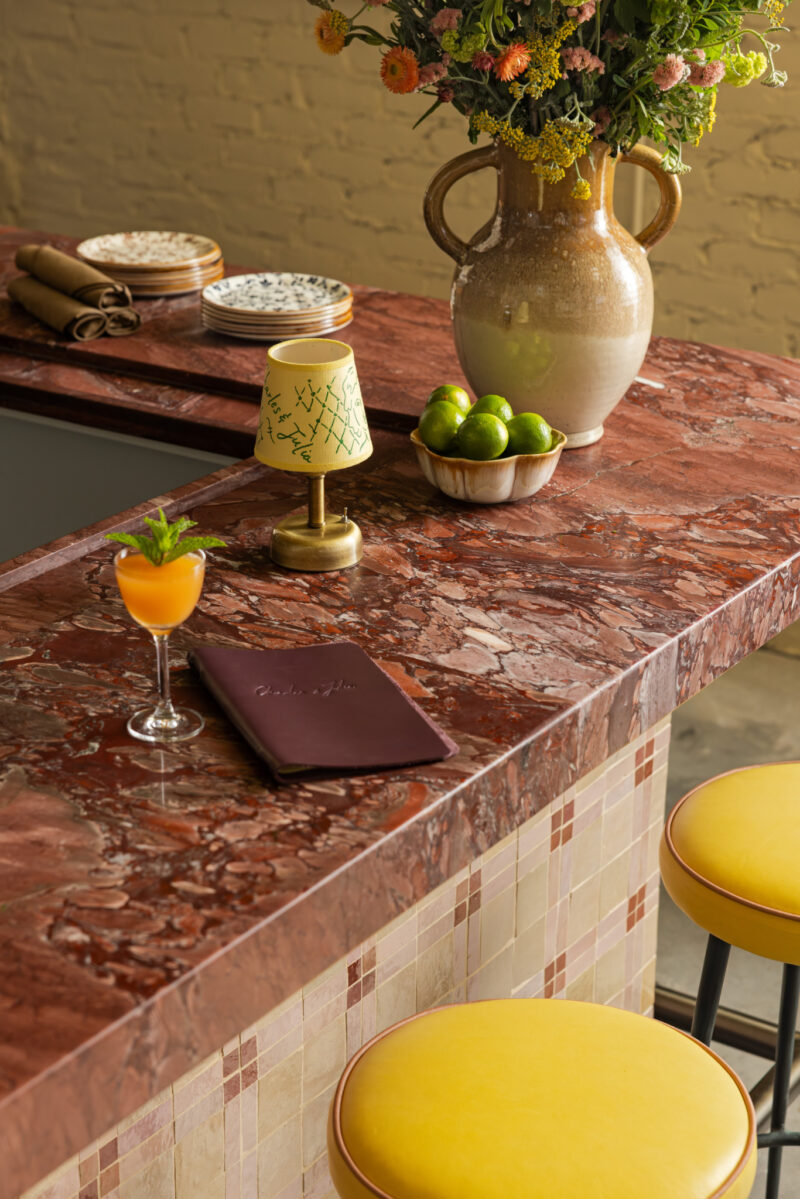
The centerpiece of the ground-floor lounge is a custom-fabricated bar that anchors the room. The back bar is constructed from stained oak, providing a dark, sturdy backdrop for a dramatic Calacatta Viola marble countertop. Calacatta Viola, a luxury marble known for its bold, oversized purple veining against an off-white background, was sourced and fabricated locally. The choice of this specific stone is a deliberate design bridge; its natural coloration echoes the "grape" tones of the surrounding furniture while providing the cold, hard elegance necessary for a high-traffic bar environment.
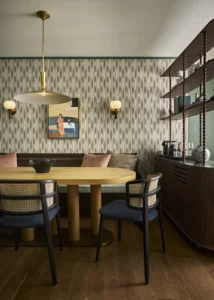
The walls are further enriched by botanical wallpaper inspired by George Ehret’s Plantae Selectae. Published between 1750 and 1773, Ehret’s work is considered some of the finest botanical illustration in history. By incorporating these 18th-century scientific illustrations, the designers add a layer of intellectual and visual texture that contrasts with the industrial weight of the exposed brick and the modern lines of the custom millwork.
The Rooftop Terrace: A Sicilian Counterpoint
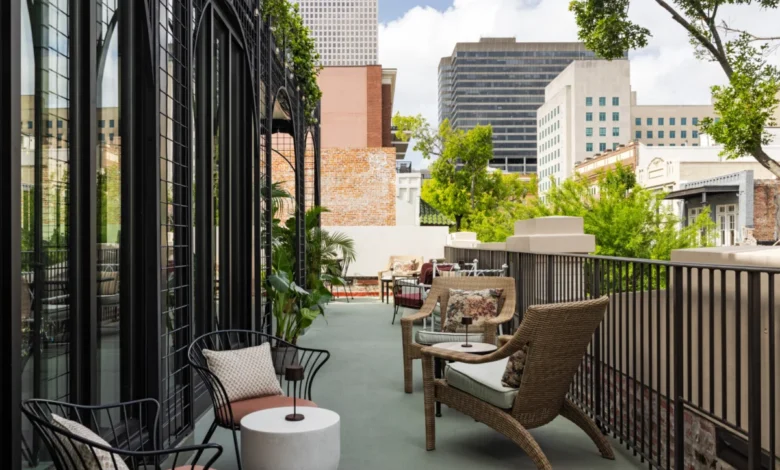
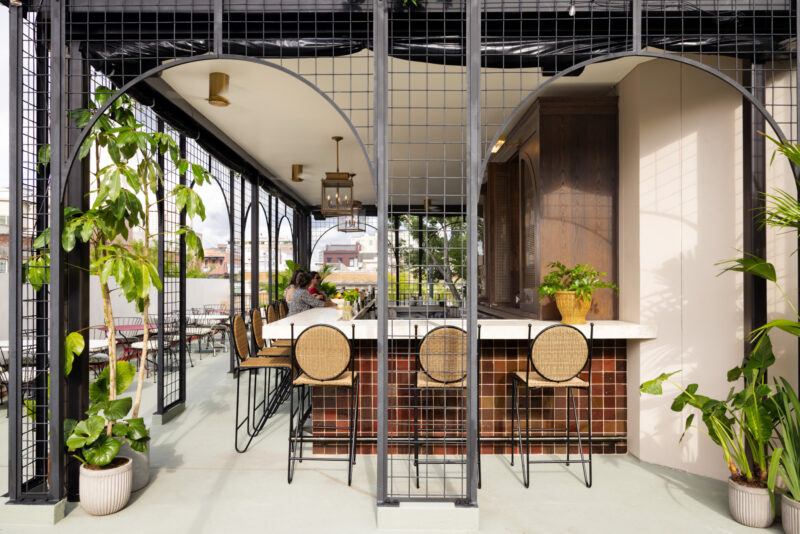
While the ground-floor lounge is designed as an "enveloping" and intimate nocturnal space, the rooftop terrace at Charles & Julia offers a complete shift in atmosphere. Inspired by the coastal aesthetics of Sicily and Southern Europe, the upper level is characterized by lightness and air.
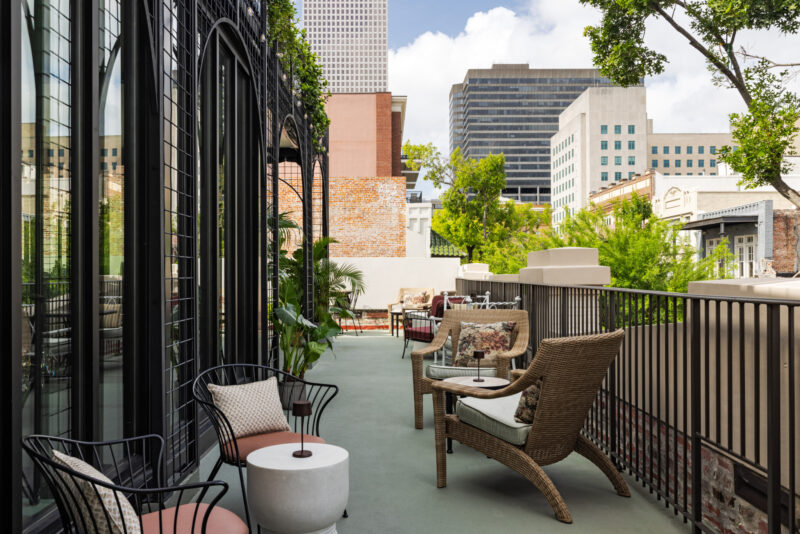
The rooftop design utilizes sculptural iron furnishings and woven textures to evoke the feeling of an elevated garden. Lush greenery, curated by local specialists, frames the skyline views of downtown New Orleans. This duality is a key feature of the Hotel Perle experience; guests can transition from the moody, textured interiors of the "European home" downstairs to the sun-drenched, relaxed environment of a Mediterranean terrace upstairs.
This "outdoor room" concept is increasingly popular in urban hospitality, as travelers seek spaces that provide a sense of escape from the city’s density while remaining connected to its geography. The rooftop serves as a serene vantage point, allowing the architectural history of St. Charles Avenue to be viewed from a new perspective.
The Local Ecosystem: Collaborative Artistry
A critical component of the project’s success is its integration with the New Orleans creative community. In an era where many hotel interiors are outfitted with mass-produced decor, Charles & Julia stands out for its commitment to local makers. This collaborative approach reinforces the "collected" aesthetic and ensures that the revenue generated by the project supports the local economy.
Key artistic contributions include:
- Rachel Loyacono: Hand-painted lampshades that add a bespoke, artisanal touch to the lighting scheme.
- Original Artwork: The walls feature pieces by Tracy Mose, Jenn Leverett, and Casey Langteau, providing a diverse range of visual styles that contribute to the residential feel.
- Luna Botanicals: This local firm was responsible for the botanical installations, ensuring that the plant life throughout the lounge and rooftop is both healthy and stylistically appropriate.
- Local Fabricators: From the custom upholstery to the precision-cut marble, the physical bones of the bar were crafted by New Orleans tradespeople.
This reliance on local talent serves a dual purpose. Practically, it reduces the carbon footprint associated with shipping materials and furniture. Philosophically, it grounds the "European" design in the reality of New Orleans craftsmanship, ensuring the space feels authentic to its location.
Hospitality Trends and Economic Implications
The opening of Charles & Julia comes at a time of significant transition for the New Orleans tourism industry. Data from the New Orleans Tourism and Cultural Fund (NOTCF) indicates a growing demand for "boutique" and "lifestyle" hotel experiences that offer more than just a room. Travelers are increasingly prioritizing "third spaces"—lounges, lobbies, and rooftops—that facilitate social interaction and offer a unique sense of place.
The adaptive reuse of the Stutz building also highlights a broader trend in urban development. Repurposing historical industrial buildings into hospitality venues is a proven strategy for revitalizing commercial corridors. By preserving the 1916 facade and interior brickwork, Hotel Perle and Charles & Julia contribute to the architectural preservation of St. Charles Avenue, a street that serves as a vital artery for the city’s famous streetcar line and parade routes.
Market analysts suggest that projects like Charles & Julia cater to a "new luxury" demographic: individuals who value understated elegance, historical context, and artisanal quality over overt displays of wealth or brand recognition. This shift is particularly relevant in New Orleans, where the city must balance its reputation as a party destination with its status as a world-class center for art, history, and culinary excellence.
Conclusion: A New Chapter for St. Charles Avenue
Charles & Julia is more than just a bar; it is a case study in how hospitality design can honor a city’s past while looking toward a more global, sophisticated future. By eschewing the common pitfalls of thematic New Orleans design—the beads, the neon, and the jazz-age cliches—Anna Nicole Interiors has created a space that feels both timeless and timely.
The project demonstrates that restraint can be just as powerful as excess. Through the careful selection of materials like Calacatta Viola marble and oxblood velvet, and the thoughtful integration of local artwork and historical narratives, Charles & Julia offers a multi-layered experience. It is a space that invites guests to linger, to observe the details, and to feel at home in a city that is constantly reinventing itself.
As Charles & Julia begins its operations at 757 St. Charles Avenue, it stands as a testament to the power of adaptive reuse and the enduring appeal of well-crafted, narrative-driven design. For the city of New Orleans, it represents a sophisticated addition to the St. Charles corridor, providing a new destination where history, hospitality, and art converge.