Courtney Kinnare Debuts Berry Polka and Sorbetto Lighting Collections at Tuleste Factory in New York

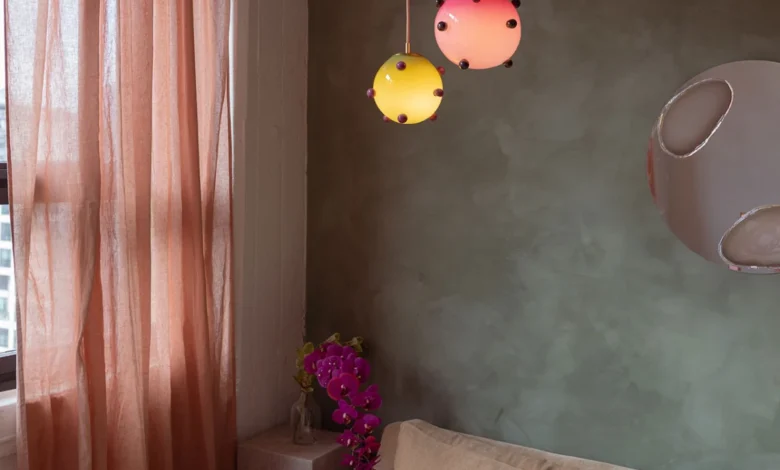
The contemporary design landscape in New York City has been further enriched by the latest release from Brooklyn-based artist Courtney Kinnare, whose debut lighting collections, the Berry Polka Pendants and the Sorbetto series, have officially launched at the prestigious Tuleste Factory. This introduction marks a significant milestone for Kinnare, whose multidisciplinary background in glass, resin, and jewelry design has culminated in a series of fixtures that explore the intricate intersections of transparency, reflection, and material layering. The collections represent a sophisticated fusion of traditional craftsmanship and modern aesthetic sensibilities, positioning Kinnare as a notable voice within the vibrant Brooklyn maker community.

The Berry Polka Pendants and the Sorbetto series are now available through Tuleste Factory, a gallery known for its curated selection of avant-garde and collectible design. Kinnare’s work is characterized by a deep engagement with the physical properties of her chosen media, particularly how light interacts with varying densities of color and texture. By utilizing brass hardware to suspend her glass and resin orbs, she creates a sense of stately permanence that contrasts with the ethereal, almost weightless quality of the illuminated globes.
The Berry Polka Pendants: A Study in Symmetry and Contrast
The Berry Polka Pendants are defined by their playful yet disciplined approach to color and form. The collection features two primary iterations: the Olive Polka Pendant and the Berry Polka Pendant. The Olive Polka Pendant utilizes an olive-toned body accented by purple dots that are fused and inset slightly into the main structure of the lamp. This technique ensures that the accents appear to rest gently on the surface, achieving a visual effect of weightlessness that belies the physical density of the glass.

Conversely, the Berry Polka Pendant serves as a "sister" piece rather than a direct opposite. Featuring a purple body with olive dots, it maintains the same design language while offering a different chromatic energy. When hung in tandem, these pieces provide a balanced visual dialogue, though they are equally effective as standalone installations. The use of brass hardware serves a dual purpose: it provides a robust structural foundation while adding a touch of classic materiality that grounds the experimental nature of the glasswork.
The "polka" motif is more than a decorative choice; it is a technical achievement in glass fusing. Each dot must be carefully integrated into the sphere to maintain the integrity of the shape while ensuring the colors do not bleed or distort during the firing process. This precision reflects Kinnare’s background in jewelry, where minute details and structural stability are paramount.

The Sorbetto Series: Chromatic Depth and Kinetic Illumination
The Sorbetto series represents a more fluid exploration of color, named for the swirling, dessert-like blooms of pigment that define each piece. These pendants are designed to undergo a dramatic transformation depending on whether they are illuminated or dormant. In the Sherbert Sorbetto Pendant, deep reds transition into brilliant oranges when the light is activated, revealing layers of depth that remain hidden in natural light.
The Gumdrop Sorbetto Pendant continues this exploration, described by the artist as reminiscent of a visual soundscape. In this iteration, bursts of color melt into one another, creating a harmonious gradient that houses the light source within. The series also includes brilliant blues and aquas, which provide a cool-toned counterpoint to the warmer oranges and pinks found elsewhere in the collection.

Because each piece in the Sorbetto series is handmade, no two globes are identical. This inherent variation is a hallmark of Kinnare’s process, emphasizing the "practitioner’s knowing"—the intuitive understanding of when a piece has reached its ideal form. The depth of color achieved in these pendants is the result of meticulous layering, a process that requires a high degree of control over the molten material.
The Evolution of Courtney Kinnare’s Artistic Practice
Courtney Kinnare’s journey to the forefront of the New York lighting scene is rooted in a diverse range of artistic disciplines. Based in Brooklyn, she has spent years honing her skills in glassblowing, resin casting, and metalwork. Her transition into lighting design was a natural progression, allowing her to scale the intimacy of jewelry into functional objects that define interior spaces.

Kinnare’s process is characterized by what she calls "invisible work"—the countless hours spent experimenting, failing, and refining techniques behind the scenes. This iterative approach is essential in glass and resin work, where the margin for error is slim and the behavior of the materials can be unpredictable. Her ability to discard the "used and unusable" and focus her energy on the most promising avenues of exploration is a testament to her maturity as a designer.
The collaboration with Tuleste Factory is a strategic move that places Kinnare’s work in the company of other leading contemporary designers. Tuleste Factory, founded by sisters Celeste and Satu Greenberg, has a reputation for identifying emerging talent that bridges the gap between art and design. By hosting Kinnare’s debut lighting collection, the gallery reaffirms its commitment to promoting work that is both technically proficient and conceptually compelling.

Market Trends and the Rise of Collectible Lighting
The launch of the Berry Polka and Sorbetto series arrives at a time when the global market for collectible design is seeing significant growth. According to recent industry reports, the high-end decorative lighting market is projected to expand at a compound annual growth rate (CAGR) of approximately 6.5% through 2030. This growth is driven by an increasing consumer preference for unique, artisanal pieces over mass-produced fixtures.
In the luxury segment, lighting is no longer viewed merely as a functional necessity but as "jewelry for the home." Collectors and interior designers are increasingly seeking out fixtures that serve as focal points in a room, much like a sculpture or a painting. Kinnare’s work fits perfectly into this niche, offering a level of hand-applied detail and material complexity that cannot be replicated by industrial processes.

Furthermore, the "Brooklyn-made" label continues to carry significant weight in the design world. The borough has become a global hub for the maker movement, characterized by a return to craft and a focus on sustainable, small-scale production. Kinnare’s commitment to handmade processes aligns with these values, appealing to a demographic that prizes authenticity and the story behind the object.
Technical Analysis: The Intersection of Glass and Resin
One of the most intriguing aspects of Kinnare’s work is her mastery of transparency and reflection. In glasswork, transparency is achieved through the careful control of chemical compositions and cooling temperatures. Reflection, meanwhile, is manipulated through the geometry of the piece and the inclusion of metallic or opaque elements.

In the Berry Polka series, the inset dots create a multi-layered surface that catches the light from different angles, creating a sense of movement as the viewer moves around the room. In the Sorbetto series, the swirling pigments act as a filter for the internal light source, diffusing it in a way that highlights the "blooms" of color within the glass.
The use of resin in conjunction with glass—or as a primary material in experimental phases—allows Kinnare to achieve textures and levels of saturation that might be difficult with glass alone. Resin’s versatility as a medium for suspension makes it an ideal tool for an artist obsessed with layering and the "vertices of transparency."

Broader Implications for Contemporary Design
The debut of these collections has broader implications for the future of independent design in New York. As the cost of living and studio space in the city continues to rise, the success of artists like Kinnare serves as a vital indicator of the resilience of the local creative economy. Partnerships between independent makers and established galleries like Tuleste Factory are essential for maintaining the city’s status as a design capital.
Moreover, Kinnare’s work reflects a broader shift toward "emotional design"—objects that are intended to evoke a specific feeling or connection. The "indescribable magnetism" mentioned in early reviews of the collection speaks to the human desire for objects that resonate on a sensory level. By tapping into this vein of creativity, Kinnare is contributing to a movement that prioritizes the psychological impact of the built environment.

As the Berry Polka and Sorbetto series begin to appear in high-end residential and commercial projects, they will likely influence trends in color usage and material experimentation. The move away from minimalist, industrial lighting toward more expressive, colorful, and tactile forms is a trend that Kinnare is uniquely positioned to lead.
Conclusion and Future Outlook
The launch of the Berry Polka Pendants and Sorbetto lighting series marks the beginning of a new chapter for Courtney Kinnare. With a solid foundation in traditional craft and a keen eye for contemporary aesthetics, she has successfully navigated the transition from artist to designer. The support of Tuleste Factory provides a high-profile platform that will likely lead to further collaborations and expansions of her lighting portfolio.

For the design community, Kinnare’s new work serves as a reminder of the power of the handmade. In an age of rapid technological advancement and automated production, the "welcome change within the globes"—the subtle imperfections and unique characteristics of each piece—is what ultimately gives the work its value. As she continues to explore the possibilities of glass, resin, and metal, the design world will undoubtedly be watching to see where her magnetism leads next.
To learn more about the Berry Polka Pendants and Sorbetto lighting by Courtney Kinnare, interested parties are encouraged to visit tulestefactory.com or visit the gallery’s New York location to experience the interplay of light and color in person.