Stitching Sustainability: Kelli Donovan on Manta Rays, Fashion Waste, and the Legacy of Heritage Craftsmanship

The global fashion industry currently stands as one of the most significant contributors to environmental degradation, responsible for approximately 10% of annual global carbon emissions and 20% of global wastewater. Amidst this climate of hyper-consumption and disposable trends, designer Kelli Donovan has emerged as a vocal advocate for systemic change, bridging the gap between ancestral tailoring techniques and modern environmental ethics. Born in the bush capital of Canberra, Australia, Donovan’s career spans three decades, during which she has transitioned from a traditional designer to a pioneer in the slow-fashion movement. Her work, characterized by high-quality materials and a zero-waste ethos, serves as a blueprint for an industry struggling to reconcile profitability with planetary health.
The Early Foundations of Ethical Design
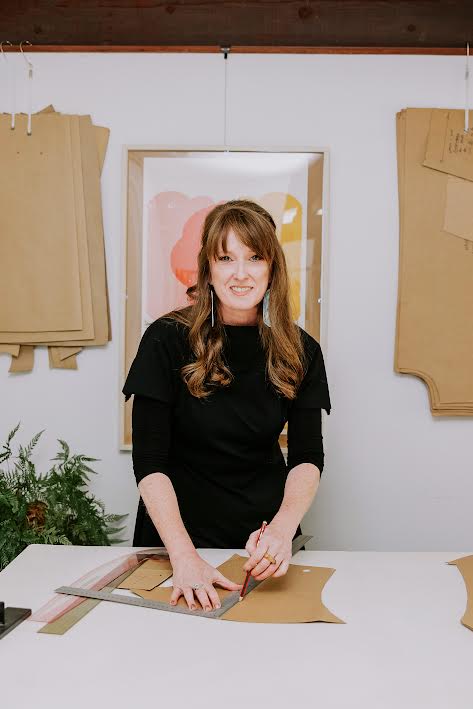
Donovan’s design philosophy is deeply rooted in her upbringing. Surrounded by the rugged mountains and expansive landscapes of the Australian interior, she developed an early appreciation for the intrinsic value of nature. This connection was further cemented by the influence of her grandmother, Annie Muir, a Scottish tailor from Glasgow. Muir’s influence was not merely aesthetic; it was structural. She instilled in the young Donovan a reverence for the integrity of the stitch and the material.
Muir’s mantra—that time and skill should never be squandered on inferior textiles—has become the cornerstone of Donovan’s professional life. This heritage-based approach stands in stark contrast to the contemporary "ultra-fast fashion" model, where garments are often designed with a life cycle measured in weeks rather than years. By prioritizing the quality of fiber and the precision of the construction, Donovan effectively rejects the industry trend of planned obsolescence, opting instead to create pieces that hold both physical and emotional durability.
The Anatomy of a Crisis: Fast Fashion and Environmental Impact
To understand the necessity of Donovan’s work, one must analyze the broader context of the fashion industry’s impact. According to reports from the United Nations Environment Programme (UNEP), the equivalent of one garbage truck of textiles is landfilled or burned every second. The rise of synthetic fibers, particularly polyester, has exacerbated this issue; polyester is essentially a plastic derived from fossil fuels, and it is estimated that the fashion industry produces half a million tonnes of synthetic microfibers annually that end up in the ocean.
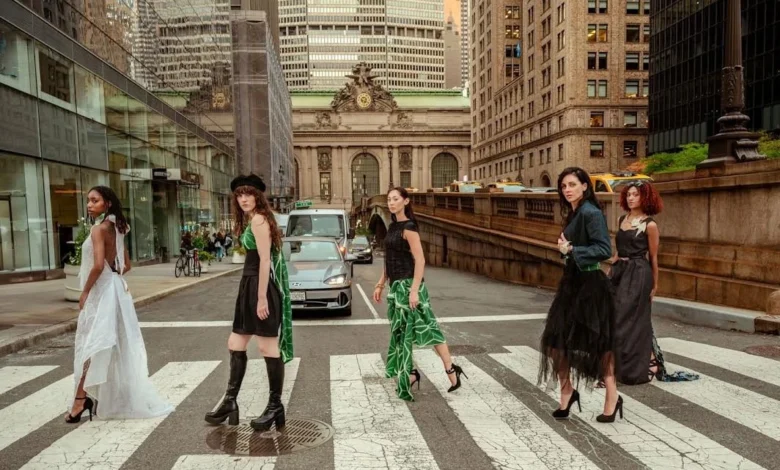
Donovan’s collections are designed as a direct rebuttal to these statistics. Her recent projects, such as the "Sleeping Beauties" collection, serve as a commentary on the phenomenon of oversupply. While the title shares an intriguing thematic overlap with the 2024 Metropolitan Museum of Art’s Costume Institute exhibition, Donovan emphasizes that her inspiration was driven by an urgent environmental stance. Her work seeks to "speak quietly but strongly" about the dangerous surplus of inventory that defines the modern retail landscape. By producing limited, intentional runs of clothing, she mitigates the risk of deadstock, a massive industry problem where millions of tons of unsold clothing are destroyed annually.
The Manta Ray Collection: A Case Study in Conscious Design
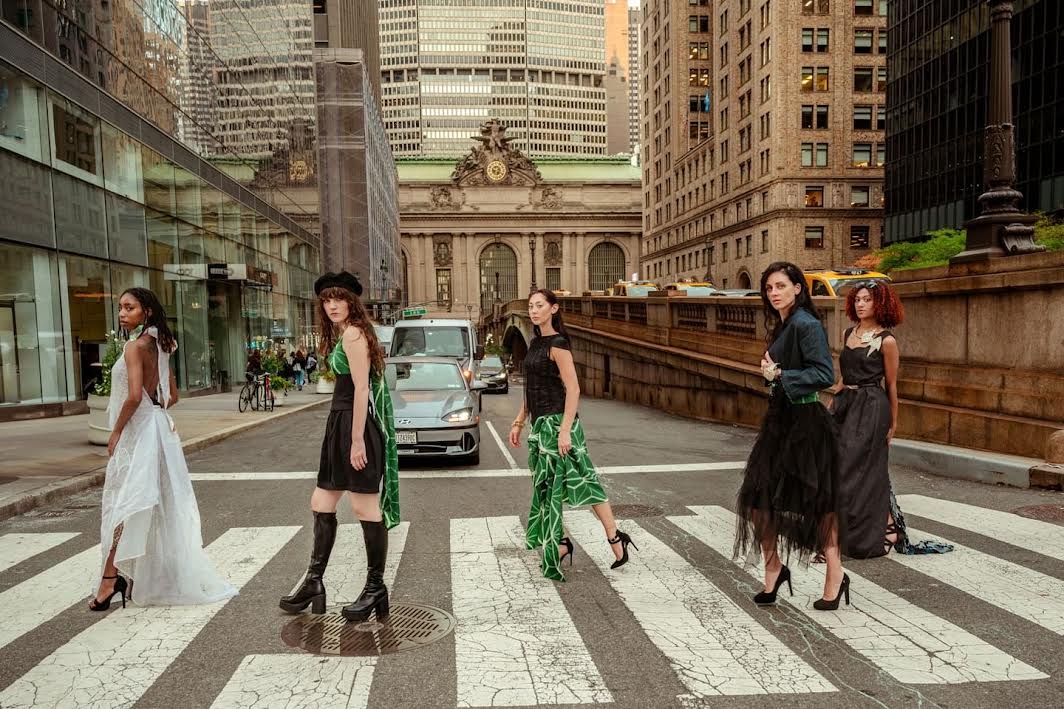
Perhaps the most explicit example of Donovan’s environmental activism through design is her "Manta Ray" collection. This project draws direct inspiration from the biology and habitat of the giant manta ray, a species currently threatened by ocean pollution and entanglement in discarded fishing gear. The collection serves as an educational bridge, linking the aesthetics of the creature—known for its grace and non-aggressive, plankton-based diet—to the necessity of a sustainable supply chain.
The collection was specifically developed to highlight the interconnectedness of terrestrial manufacturing and marine health. The chemical dyes and microplastics leached from conventional garment production frequently infiltrate global waterways, ultimately settling in the habitats of marine life. By selecting biodegradable, non-toxic materials, Donovan illustrates that fashion can exist without contributing to the pollution of the ecosystems that inspire it. This approach reflects a growing trend in "circular fashion," where the end-of-life of a product is considered at the design stage, ensuring that materials are either compostable or easily recyclable.
Expert Perspectives on Sustainable Transitions
The transition toward circularity is not merely a creative choice but a logistical necessity. Industry analysts suggest that the fashion sector faces increasing regulatory pressure, particularly in the European Union, where the Strategy for Sustainable and Circular Textiles mandates that by 2030, all textile products placed on the market must be durable, repairable, and recyclable.
Donovan’s career trajectory serves as an early model for these impending regulations. Her advice to the next generation of designers is focused on experimentation and the avoidance of trend-chasing. "The more they learn to experiment with design, textiles, and waste, their design aesthetic will be stronger," Donovan notes. She emphasizes that a designer’s "superpower" lies in their ability to innovate within constraints. When a designer is forced to work with limited, high-quality fabric or reclaimed materials, their creativity is often pushed toward more inventive, sophisticated solutions than those produced by designers relying on mass-produced, cheap synthetics.
Chronology of a Sustainable Pioneer
Donovan’s 30-year tenure in the industry has provided her with a unique vantage point to observe the evolution—and the failures—of the sector:
- Early Years: Childhood in Canberra, learning traditional tailoring from Annie Muir.
- Mid-Career: Observation of the rapid acceleration of the fashion industry and the accompanying decline in garment quality.
- The Pivot: Adoption of sustainable sourcing and the implementation of zero-waste design patterns.
- Recent Recognition: Launch of thematic collections like "Manta Ray" and "Sleeping Beauties," which successfully integrate environmental advocacy with high-end retail.
The Broader Implications for Consumers
The responsibility for change does not lie solely with designers; the consumer’s role is equally critical. Donovan’s work encourages a shift in the psychological relationship between the individual and their wardrobe. By choosing garments that are designed for longevity, consumers act as a barrier to the "take-make-waste" model.
Analysis of consumer behavior indicates that while interest in sustainability is at an all-time high, there is a significant "intention-action gap," where shoppers express a desire for ethical fashion but continue to purchase fast-fashion items due to price and convenience. Donovan’s work attempts to bridge this gap by proving that "chic" and "sustainable" are not mutually exclusive. By elevating the standard of the garment, she provides a compelling alternative for the consumer who is tired of the repetitive, low-quality cycle of fast-fashion retailers.
Future Directions and Industry Leadership
As the fashion industry continues to navigate the complexities of supply chain transparency, the influence of independent designers like Kelli Donovan becomes increasingly significant. Large-scale retail conglomerates are often slow to adapt due to the sheer size of their operations; however, independent, ethically-driven labels are able to implement experimental, zero-waste, and regenerative practices much more rapidly.
Looking forward, the integration of technology—such as blockchain for supply chain transparency and AI for waste-optimized pattern cutting—will likely be the next frontier for designers following in Donovan’s footsteps. Nevertheless, the core principles she advocates remain timeless: respect for the environment, the mastery of traditional skills, and the refusal to sacrifice the planet for the sake of profit.
In conclusion, the career of Kelli Donovan stands as a testament to the fact that fashion can be a force for good. By reclaiming the narrative of the tailor as an artisan rather than a manufacturer, and by using the runway as a platform for environmental education, she is redefining what it means to be a modern designer. Her work, from the depths of the ocean as reflected in her Manta Ray collection to the heritage of her grandmother’s sewing room, provides a clear path forward for an industry in dire need of a new direction. For the next generation of designers, the blueprint is clear: prioritize the material, value the process, and recognize that every stitch is an opportunity to make a positive impact on the world.