Saheli Women: Pioneering Ethical Fashion and Holistic Empowerment in Rural Rajasthan

In an industry often scrutinized for its opaque supply chains and exploitative labor practices, the fashion system is in dire need of two fundamental elements: profound fairness and unwavering respect for its workers, coupled with comprehensive empowerment that extends far beyond mere compensation. Against this backdrop, Saheli Women, a remarkable social enterprise nestled in the heart of rural Rajasthan, India, is not only addressing these critical deficiencies but is actively redefining the parameters of ethical fashion through a model centered on economic upliftment and community well-being. This initiative stands as a beacon of hope, showcasing how traditional craftsmanship can converge with modern ethical principles to create meaningful livelihoods and foster a more equitable world.
The Genesis of Saheli Women: A Model for Empowerment
Saheli Women operates with a clear and impactful mission: to economically empower women in Rajasthan through the creation of ethical fashion. The region, known for its vibrant culture and rich textile heritage, also presents socio-economic challenges, particularly for women who often face limited access to education, healthcare, and independent financial opportunities. Saheli Women directly addresses these disparities by engaging local women as artisans, offering them a pathway to financial independence and social recognition.
Their innovative approach involves co-creating slow fashion garments in collaboration with international fashion partners. This model is built upon the utilization of traditional craft practices, which not only preserves invaluable cultural heritage but also transforms it into a source of sustainable income. The enterprise’s comprehensive array of offerings underscores its commitment to craftsmanship and quality, spanning sample making, intricate handloom weaving, full production capabilities, rigorous quality assurance, packaging, and export logistics. Furthermore, they specialize in time-honored techniques such as block printing, various textile solutions and techniques, eco-printing, artisanal textiles, elaborate embroidery, and the use of natural dyes. Each process is meticulously executed, reflecting a dedication to both artistry and ethical production standards.
A New Standard for Garment Workers: Fairness and Respect in Action
At the core of Saheli Women’s philosophy is the unwavering commitment to the dignity and welfare of its artisans. This commitment is most vividly demonstrated in their compensation structure: Saheli Women’s artisans receive a fair wage that is at least 50% higher than the national average income for similar work in the garment sector. This stands in stark contrast to the prevailing norms in many garment-producing nations, where minimum wages often fall short of a living wage, leaving workers in precarious economic situations. For instance, according to reports from organizations like the Clean Clothes Campaign, garment workers in countries like India and Bangladesh frequently earn wages that are barely sufficient to cover basic necessities, perpetuating cycles of poverty.
Beyond fair remuneration, Saheli Women prioritizes humane working conditions. Their working days are typically around 6 or 7 hours, a stark departure from the often grueling 12-hour-plus shifts common in garment factories across India and Bangladesh. Such extended hours, often exacerbated by pressure to meet fast fashion demands, contribute to significant physical and mental health issues among workers. By offering shorter, more manageable hours, Saheli Women ensures its artisans can maintain a healthy work-life balance, reducing stress and improving overall well-being. This focus on reasonable hours is a critical component of genuine respect for labor.
Beyond the Paycheck: Holistic Empowerment and Community Building
Saheli Women’s dedication to its artisans extends far beyond fair pay and reasonable hours. The enterprise provides a holistic suite of benefits designed to foster comprehensive empowerment. These include vital skills development training, which enhances their craft and opens doors to further opportunities; transportation assistance, easing the burden of commuting; comprehensive health insurance, a crucial safety net often absent in informal labor sectors; on-site childcare support, enabling mothers to work without compromising their children’s care; and flexible working options, acknowledging and accommodating personal and family responsibilities.
Crucially, Saheli Women consciously cultivates a safe and welcoming work environment that is explicitly free from gender, religious, and caste discrimination. In a society where such discriminations can be deeply entrenched, creating a sanctuary where every woman feels valued and respected is paramount. This commitment is further solidified by their adherence to an extensive list of fair trade principles derived from the Ethical Fashion Initiative’s Code of Conduct. The Ethical Fashion Initiative (EFI) is a flagship program of the International Trade Centre, a joint agency of the United Nations and the World Trade Organization, promoting sustainable fashion and ethical sourcing. By adopting EFI’s stringent guidelines, Saheli Women demonstrates a global standard of ethical practice. Moreover, the organization has adopted nine of the United Nations Sustainable Development Goals (SDGs), integrating global development objectives into its operational framework. These likely include SDG 1 (No Poverty), SDG 5 (Gender Equality), SDG 8 (Decent Work and Economic Growth), SDG 10 (Reduced Inequalities), and SDG 12 (Responsible Consumption and Production), among others, showcasing a profound commitment to sustainable development.
The physical spaces where these women work are intentionally designed to feel like home – "Centres designed to feel like home." These are joyous, vibrant environments where women not only work but also socialize, brew traditional chai, cook meals, bring their children, and celebrate life and Indian festivals. This communal aspect is deeply ingrained, with the centers regularly opening their doors to the wider community for cultural festivals and holidays. To further strengthen this community and empower its members, Saheli Women hosts workshops on a broad range of vital topics, including human rights, feminism, menstrual hygiene, health awareness, and financial literacy. These educational initiatives are instrumental in equipping women with the knowledge and tools to advocate for themselves, make informed decisions, and secure a better future for their families and communities.
Alexandra Simpson’s Journey: A Volunteer’s Perspective on Transformative Change
The profound impact of Saheli Women is perhaps best understood through the firsthand accounts of those who have experienced its transformative power. Alexandra Simpson, affectionately known as Ali, a fashion student from Whitecliffe and a sewing teacher currently working for the renowned Aotearoa brand Ruby, spent three months volunteering at Saheli Women. Her journey was deeply influenced by pivotal moments in fashion ethics, notably the tragic 2013 Rana Plaza collapse in Bangladesh, which exposed the devastating human cost of fast fashion, and the subsequent documentary "The True Cost" (2015), which further illuminated the industry’s darker side. These events solidified Ali’s commitment to environmentally conscious living and ethical fashion practices.
Ali had been a long-time admirer of Saheli Women, following their "Mahi" (work) and their unwavering principles on social media for years. Her decision to volunteer was also driven by the understanding that India, with its unparalleled textile heritage and deep-rooted craft traditions, offers an unparalleled opportunity to delve into the intricate world of fashion and textiles. She articulated her motivation clearly: “I wanted to be able to give my support, learn and get a hands-on experience of what it would be like alongside the women who make ethical and sustainably made garments from start to finish and how they are doing processes within fashion differently and changing the industry.”
Her three months at Saheli Women proved to be a life-altering experience. Ali emphasizes, “I learned a lot about sustainable fashion practices and it was a very expansive experience. I don’t think you can go to India and come back the same!” The vibrant, colorful, loud, and sense-stimulating aura of India, juxtaposed with New Zealand’s comparatively quieter, small-town atmosphere, created a powerful environment for personal growth and learning. A particular highlight for Ali was the ability to connect deeply with the women at the center, transcending language barriers with minimal English and Hindi. These interactions formed lasting bonds, as she fondly recalls, “I will cherish the moments of just drinking chai outside with the natural dye ladies and yapping away about life.”
Redefining Collective Action in a Globalized Fashion Landscape
Ali’s volunteering experience profoundly reshaped her understanding of collective action. Post-Saheli Women, she now defines it as "people coming together to support a vision, even if that vision is beyond your imagination." This redefinition stems from witnessing the seamless collaboration at Saheli Women, where diverse individuals, often from different cultural and linguistic backgrounds, unite for a common purpose.
The enterprise’s work with international brands exemplifies this global collective action. “At Saheli Women, we were working with international brands, which is pretty amazing to see how two cultures can come together and work together,” Ali notes. This cross-cultural synergy not only enriches the creative process but also allows Saheli’s compelling story of empowerment and ethical production to be shared worldwide, transcending geographical boundaries. Ali felt this collective action instantly and consistently throughout the entire production process. She observed how "whether that’s the pattern master showing the ladies a certain sewing technique or someone is off sick or away, so they all have to chip in to get the garments done! They all function together, which is beautiful. Collective action is constant.” This illustrates a dynamic, supportive ecosystem where mutual aid and shared responsibility are not just ideals but daily realities.
The Spiritual Fabric of Saheli Women: An Unforgettable Sense of Devotion
The holistic nature of Saheli Women’s community extends to the spiritual and cultural fabric of the artisans’ lives. Ali recounts a deeply moving daily ritual at the Bhikamkor Centre: "After a long day at the Bhikamkor Centre, the sun would set, a local village lady would play on a large drum, as Madhu and others would be doing puja at the temple and singing mother goddess songs. Everyone would be packing up whilst kids laughed and played."
This integration of daily life, work, and spiritual practice left an indelible mark on Ali. She describes her initial experience: “The first time I experienced this, it moved me, it was so powerful. It is one thing to create something that is empowering this community, but I find it so special to be interwoven with religion and spirituality. It’s such a sense of devotion.” This aspect highlights how Saheli Women does not merely provide employment but fosters an environment where cultural identity and spiritual well-being are respected and celebrated, creating a truly enriching and supportive community.
Implications for the Fashion Industry: Shifting Perceptions and Solidifying Values
For Ali, experiencing ethical fashion from the ground up fostered a newfound level of respect and a genuine understanding of the immense hard work involved in manufacturing – a reality largely unfathomable to most consumers. This immersive experience profoundly solidified her values concerning garment repair, eco-dyeing techniques, and the overarching importance of sustainability and circularity within the fashion industry.
She reflects critically on the often-glamorized image of sustainable fashion presented on social media: “What you see on Instagram with any brand is the beautiful process and reaping of their hard work. I respect the hustle a lot. It’s nowhere near as easy as it seems to put the sustainable practices to work.” This observation underscores a crucial insight: while sustainable practices are vital, their implementation requires significant dedication, innovation, and often, a re-engineering of traditional manufacturing processes, making the achievements of organizations like Saheli Women even more commendable.
Intangible Learnings and Broader Societal Impact

Volunteering experiences like Ali’s offer invaluable, intangible learnings that transcend specific skills and translate directly into personal and professional growth. For Ali, her time at Saheli Women has instilled a deeper emphasis on community and empowerment in her own work and life. She was particularly inspired by the strength, unwavering willingness to learn, and remarkable perseverance demonstrated by the women amidst various hardships.
Ali observes that in many modern societies, the profound values of community, depth, and vulnerability, so evident at Saheli Women, have sadly diminished. The safe space fostered by the enterprise allows for these values to flourish, promoting genuine connection and mutual support. “I find I’m already taking these in and applying them in my work and personal life. Yes, there can be differences within any culture, but this allows you to be more open, connect more deeply and appreciate what they have to offer,” she states, highlighting the transformative power of cross-cultural engagement and open-mindedness.
Engaging with Saheli Women: Supporting Ethical Fashion’s Future
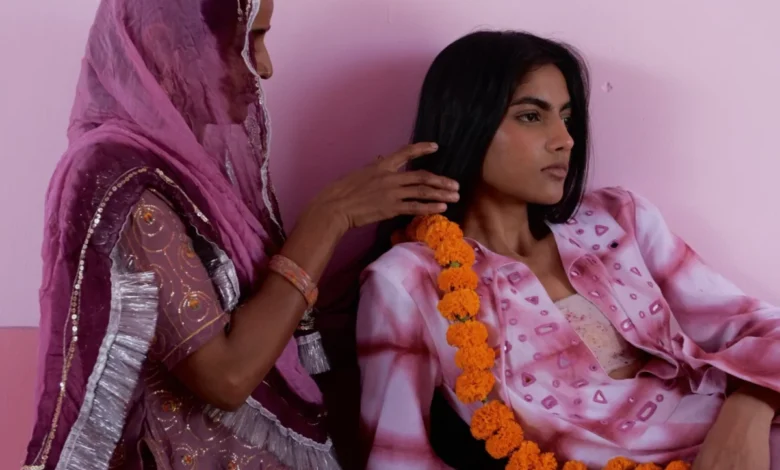
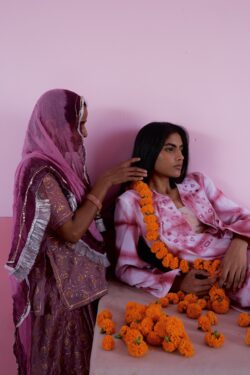
Saheli Women continues to innovate and expand its impact, most recently with the release of its first menswear collection, titled Jazam. This collection is an ode to the traditional Jazam Mattress, symbolizing community and togetherness. It intricately incorporates elements of Pattu weave, natural dyeing processes, and exquisite Shisha embroidery, showcasing the rich textile heritage of Rajasthan.
Ali played a supportive role in the photoshoot for the Jazam collection, describing it as a magical and meaningful experience. “It was really amazing to support this photoshoot and there is so much meaning behind it. It was shot at both centres and at the sand dunes near the village. Everyone was involved and it was a magical day.” The collection, beautifully photographed by Mayuri Kataria, is now live and available for purchase, offering consumers a tangible way to support ethical production and empower women artisans. Interested individuals can explore the collection and learn more about Saheli Women’s mission on their website at https://saheliwomenshop.com/ or via their Instagram at https://www.instagram.com/saheliwomen/.
Empowering Collective Action: Practical Steps for Everyday Change
Alexandra Simpson’s journey with Saheli Women concludes with a powerful call to action for collective change, emphasizing that it begins with individual effort. Ali believes that supporting collective action can be achieved by "starting where you are." Whether in the workplace or among peers, individuals can identify their passions that align with the greater good and take small, incremental steps towards supporting those causes. Researching and understanding existing initiatives can reveal surprising avenues for contribution.
In the workplace, collective action doesn’t require a specific "sustainability" job title. Everyone plays a part in shaping a better future. Practical steps include digitizing marketing materials and implementing digital business cards to reduce printing, suggesting carpooling or bike-to-work schemes, ensuring correct recycling procedures are followed, or organizing team participation in volunteering initiatives. These actions, while seemingly minor, contribute to a larger cultural shift.
Among friends and family, redefining "fun" and "cool" activities can be a highly effective way to encourage collective change. Instead of conventional consumption-driven leisure, Ali suggests promoting activities that are kinder to people and the planet. This could involve volunteering, supporting local upcycling and circular economy events, choosing op-shopping over mall visits, frequenting indie cinemas instead of large chains, organizing clothes swaps before social events, visiting local produce markets, and opting for independent vegetarian restaurants over chain eateries.
At home, individuals can curate their social media feeds to serve as a constant reminder of what truly matters. Following activists, circular economy accounts, sustainability news outlets, eco-conscious creatives, and second-hand fashion influencers can provide continuous inspiration and education. Furthermore, actively seeking out and amplifying BIPOC (Black, Indigenous, and People of Color) and indigenous voices is crucial for understanding systemic injustices and learning how to truly respect both people and the planet.
The overarching message is one of accessibility and shared responsibility: "You don’t need to think big. You don’t need to be perfect. Change doesn’t come from just one person. It comes from collectivity." Saheli Women stands as a powerful testament to this truth, demonstrating how collective action, fueled by fairness, respect, and empowerment, can transform lives and reshape an entire industry.