Orient Rongheng partners with Coats Digital to implement advanced AI-driven production planning across global manufacturing network

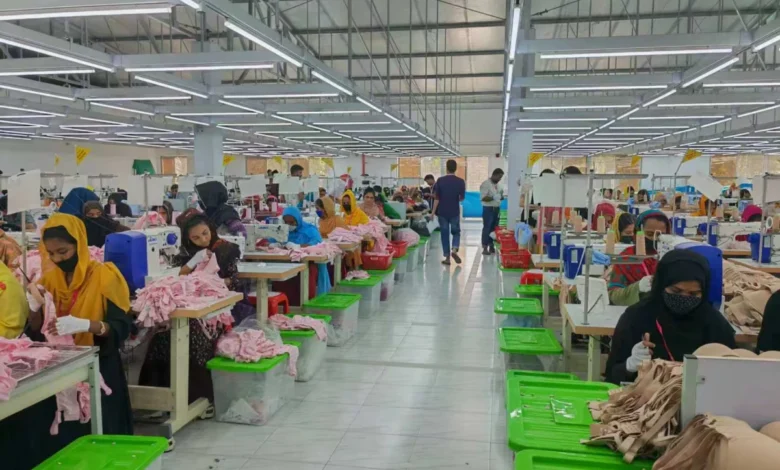
The landscape of global apparel manufacturing is undergoing a profound transformation as industry leaders shift from legacy manual processes to sophisticated, data-driven ecosystems. In a significant move toward this digital maturity, Shanghai-based Orient Rongheng—a major producer of women’s lingerie, swimwear, and loungewear—has officially partnered with Coats Digital. This strategic alliance aims to deploy the FastReactPlan solution across the company’s extensive manufacturing facilities in China and Bangladesh, marking a pivotal transition in the firm’s operational history.
The partnership, announced on September 16, 2026, represents a concerted effort by Orient Rongheng to modernize its multi-factory production scheduling. By integrating the new software with its existing Enterprise Resource Planning (ERP) and Manufacturing Execution System (MES), the company intends to create a unified, real-time digital architecture that connects disparate production hubs into a single, cohesive planning environment.
A Strategic Response to Global Complexity
Orient Rongheng, a subsidiary of Orient International Holding, operates a substantial manufacturing footprint with an annual output exceeding 20 million garments. The company serves a prestigious portfolio of international brands and large-scale retailers across Europe, North America, South America, and the Middle East. With over 3,000 employees distributed across its primary manufacturing bases in China and Bangladesh, the firm has long maintained a reputation for rigorous compliance and high-quality output.
However, the rapid evolution of the fashion retail sector—characterized by smaller, high-mix production batches and increasingly compressed lead times—has necessitated a more agile approach to supply chain management. Traditional manual planning methods, while sufficient in the past, are no longer capable of managing the intricate variables of cross-border manufacturing. The decision to adopt FastReactPlan is fundamentally a strategic response to these mounting pressures, aiming to replace experience-based decision-making with a robust, AI-supported data infrastructure.
The Implementation Roadmap
The rollout of this digital transformation project is structured in a phased, multi-regional approach. The initial phase will see the deployment of the software at the company’s facility in Jining, China. Once the system is optimized and the staff is fully trained on the platform’s interface and capabilities, the project will expand to the company’s Bangladesh operations.
This phased implementation is designed to minimize disruption while ensuring that the software is tailored to the specific regulatory and operational nuances of each region. By linking the Jining and Bangladesh sites through a centralized planning hub, Orient Rongheng expects to gain unprecedented visibility into its total production capacity, allowing for dynamic re-allocation of resources based on real-time order flows and material availability.
Quantitative Performance Projections
The shift to FastReactPlan is driven by clearly defined performance objectives. According to internal projections provided by the company, the integration is expected to deliver substantial improvements in operational efficiency:
- Reduction in Planning Preparation Time: A target of 75% reduction in the time required for pre-production planning tasks.
- Operational Reliability: A commitment to maintaining an On-Time Delivery Performance (OTDP) rate of over 99%.
- Capacity Optimization: An anticipated 15% increase in production line utilization.
- Administrative Agility: A 50% reduction in the time spent by managers confirming order delivery dates with individual factory floors.
These metrics highlight the transition from reactive to proactive management. By consolidating planning, capacity management, and material requirements onto a single digital platform, Orient Rongheng is effectively eliminating the "data silos" that typically plague large-scale, multi-site manufacturing organizations.
Perspectives from Leadership
Fendy Shen, General Manager of Orient Rongheng, emphasized that the decision to partner with Coats Digital was rooted in the software provider’s deep-seated understanding of the apparel sector. "As the complexity of orders increases and the demand for multi-factory collaboration grows, traditional systems have become unable to keep up with our pace," Shen stated. "We were looking for a system that truly understands the garment-making industry, rather than a generic scheduling tool."
Shen noted that the software’s ability to integrate with existing IT investments—rather than requiring a total, disruptive replacement—was a decisive factor. "This is a crucial step for us to shift from experience-driven to data-driven processes. It allows us to build an intelligent planning hub that covers the entire value chain without abandoning our existing IT infrastructure, creating a ‘single source of truth’ that powers precise decision-making."
From the perspective of the service provider, Aruna Telikepalli, Global Commercial Director at Coats Digital, expressed confidence in the long-term success of the project. During her initial site visits, she identified Orient Rongheng as a leader in the movement toward digital manufacturing maturity. "Orient Rongheng is an excellent example of a forward-thinking apparel manufacturer that recognizes the need to evolve its operating model to meet the demands of today’s fast-moving global fashion industry," Telikepalli remarked.
Implications for the Fashion Supply Chain
The implications of this partnership extend beyond the immediate gains in efficiency for Orient Rongheng. It serves as a case study for the wider fashion industry, which is currently grappling with the tension between the need for faster market responsiveness and the complexities of globalized, multi-site production.
- Digital "Closed-Loop" Manufacturing: By connecting product development (PLM) to planning and execution (MES/ERP), the company is establishing a digital "closed-loop." This reduces the likelihood of human error, which is often the result of manual data entry or communication lags between departments.
- Sustainability through Efficiency: While the focus is on production, improved scheduling and capacity management inherently lead to more sustainable outcomes. Better planning reduces material wastage, minimizes energy-intensive production spikes, and optimizes shipping logistics—factors that are increasingly vital for meeting the environmental, social, and governance (ESG) standards required by major international retailers.
- Future-Proofing against Volatility: In an era of unpredictable supply chain disruptions, the ability to rapidly shift production schedules between China and Bangladesh based on real-time data provides Orient Rongheng with a competitive advantage. The platform’s ability to simulate different production scenarios allows the company to test the impact of potential delays before they occur, effectively "de-risking" their operations.
Conclusion
As Orient Rongheng moves forward with this digital upgrade, the company is positioning itself as a leader in the "Industry 4.0" transition within the garment sector. By moving away from local optimization practices toward a global, synchronized model, the firm is setting a new standard for operational excellence.
The partnership with Coats Digital represents more than just a software purchase; it is a fundamental reconfiguration of the company’s business strategy. With the implementation of FastReactPlan, Orient Rongheng is not merely increasing its speed or efficiency—it is building the necessary foundation to navigate the increasing volatility and complexity of the global apparel market for years to come. The industry will be watching closely as the project progresses from its initial rollout in Jining to its full-scale implementation across the international network.