When Digital Sculpture Meets the Driveway: MSCHF and Lexus Upend Automotive Design at New York Armory Week

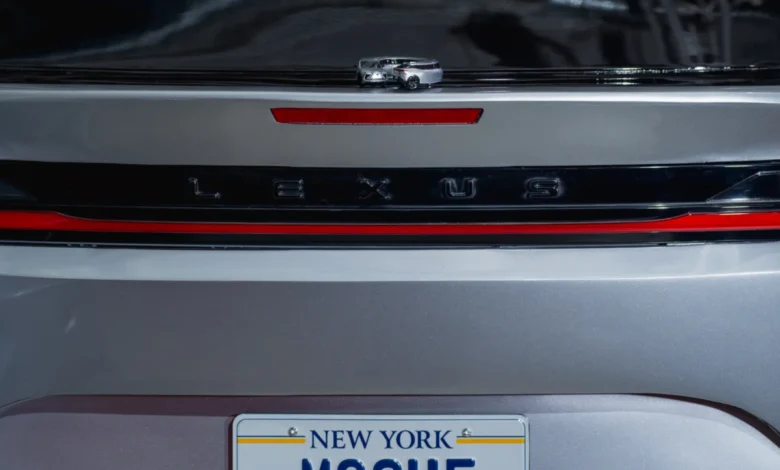
Brooklyn-based art and collective studio MSCHF has long operated on the outer fringes of conceptual design, subverting the boundaries of consumer culture through jarring interventions. Known widely for turning familiar everyday objects into surreal anomalies—ranging from cartoonish, oversized red rubber boots to microscopic handbags scaled down to the width of a human hair—the collective has turned its attention to a drastically larger canvas. For its latest endeavor, MSCHF has partnered with luxury automotive manufacturer Lexus to dissect, warp, and reimagine the physical form of two production vehicles: the Lexus RZ 450e and the RX 450h+.
Commissioned specifically for an exhibition titled MOTOMORPHOSIS, which officially debuted during New York’s high-profile Armory Week at Chelsea Industrial, the resulting automotive sculptures blur the line between digital rendering and physical reality. Rather than presenting conventional concept cars built to showcase forthcoming powertrain technology or interior gadgetry, MSCHF has treated the automobile as a malleable clay sculpture. By transposing everyday digital manipulation tools into heavy steel and glass, the installation challenges observers to rethink the very nature of industrial design, spatial awareness, and the static permanence of modern transportation.
The Anatomy of MOTOMORPHOSIS: Form Cars and Digital Distortion
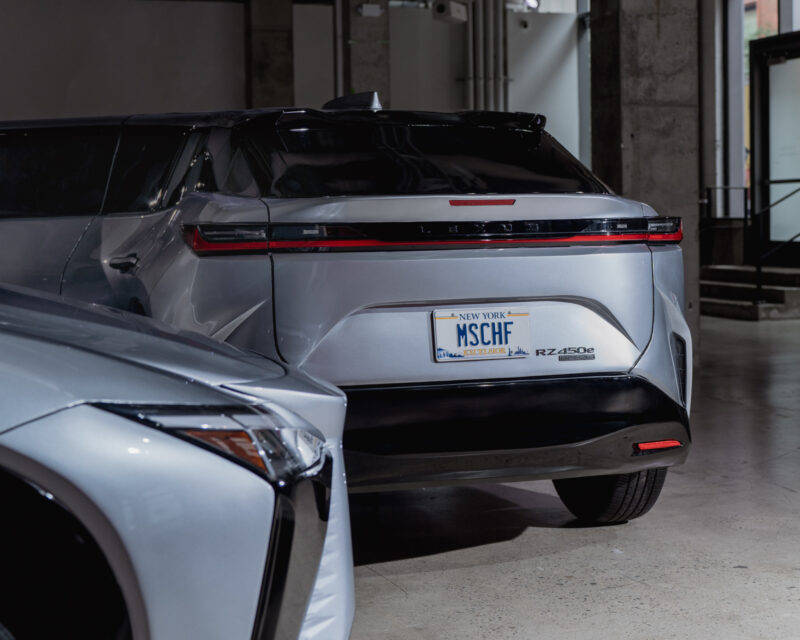
The exhibition, which runs through September 26, 2026, showcases two heavily modified Lexus models displayed directly alongside their unaltered, factory-produced counterparts. This juxtaposition provides an immediate visual baseline, emphasizing the radical nature of the transformations.
The first vehicle, based on the battery-electric Lexus RZ 450e, has been rechristened as Circle Car. In this iteration, the traditional linear chassis has been systematically stretched, curved, and looped until the front bumper and rear fascia meet in a continuous, closed-circuit geometry. The result is a seamless optical illusion of an automobile swallowing its own tail, completely neutralizing the vehicle’s original utility while preserving its recognizable exterior panels, badging, and metallic sheen.
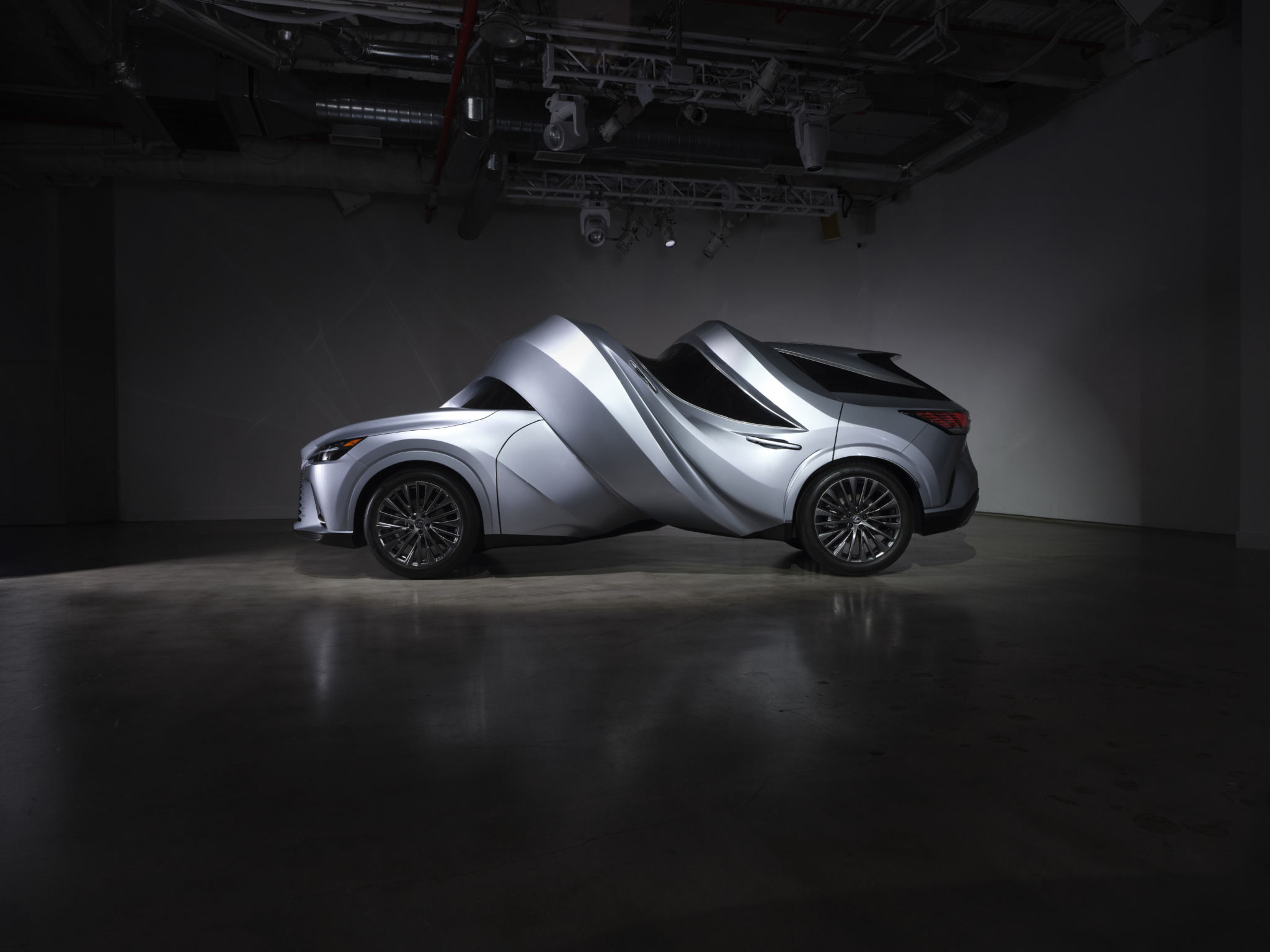
The second installation piece takes the hybrid Lexus RX 450h+ and subjects it to an entirely different kind of physical violence. Entitled Twisted Car, the SUV rotates dramatically along its longitudinal axis. The chassis, doors, windows, and structural pillars are pulled into a violent architectural spiral. Despite the severe structural torsion, the vehicle retains its factory paint and panel gaps, making the physical manipulation look less like a fabricated sculpture and more like a rendering glitch pulled straight out of 3D modeling software.
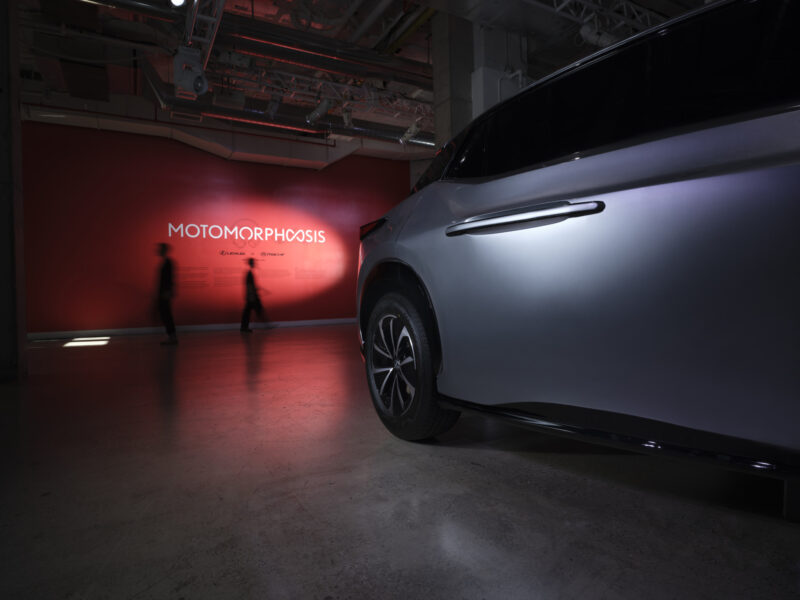
MSCHF defines these creations not as concept cars, but as "Form Cars." In traditional automotive design cycles, concept vehicles serve as forward-looking testbeds for aerodynamic efficiencies, autonomous driving arrays, and alternative energy sources. MSCHF flips this paradigm entirely. The powertrain and underlying engineering of the Lexus donor cars are rendered entirely irrelevant; instead, the physical vehicle is treated purely as a sculptural medium subjected to virtual editing commands executed in the physical world.
Translating Software into Steel: The Animation Metaphor
To understand the conceptual foundation of MOTOMORPHOSIS, one must examine the tools routinely utilized by modern industrial designers. In contemporary computer-aided design (CAD) environments and 3D modeling suites, operations such as stretching, bending, skewing, and twisting are mundane, everyday occurrences. Designers execute these commands with a keystroke, regardless of whether the resulting geometries violate the laws of physics or common-sense manufacturing.
MSCHF draws heavily from the principles of classical animation, specifically the foundational concepts of "squash and stretch." In 2D and 3D motion graphics, animators deliberately distort objects and characters through exaggerated smear frames to visually communicate kinetic energy, momentum, and impact. A cartoon character sprinting across a screen will elongate; a bouncing ball will flatten upon striking the ground.
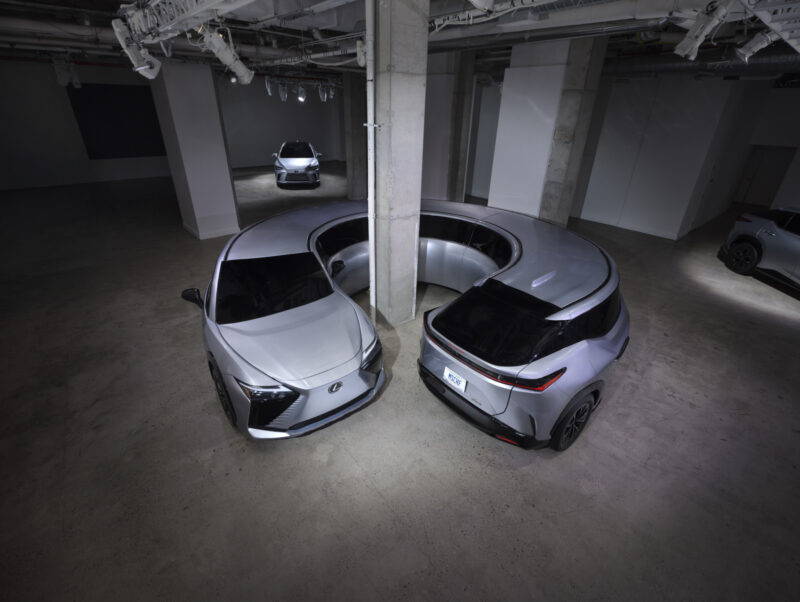
With MOTOMORPHOSIS, MSCHF effectively freezes this visual shorthand and endows it with immense physical mass. The static sculptures communicate a visceral sense of extreme movement precisely because they are completely stationary. By placing the warped vehicles side-by-side with their factory-spec counterparts at Chelsea Industrial, the exhibition highlights a profound contradiction: the factory car is meticulously engineered to traverse physical space at high velocities, yet it looks inert. Conversely, its distorted double is utterly incapable of movement, yet it visually radiates kinetic violence and speed.
Corporate Collaboration and the Future of Electric Imagination
The partnership between a notoriously subversive art collective and a mainstream luxury automotive brand represents a calculated pivot in corporate marketing and cultural sponsorships. For Lexus, participating in New York Armory Week through an avant-garde lens allows the brand to tap into contemporary art discourse, moving past traditional auto show circuits to engage directly with collectors, critics, and design enthusiasts.
Lisa McQueen, senior manager of Lexus marketing, emphasized the philosophical shift underpinning the collaboration. "Most conversations about electrification focus on how a vehicle is powered," McQueen noted in a statement surrounding the exhibition launch. "MOTOMORPHOSIS asks a different question: What can electricity power in our imagination? Working with MSCHF allowed us to take the automobile beyond its familiar form and explore movement, transformation, and possibility in an entirely new way."
This strategic alignment highlights a broader trend within the luxury automotive sector: partnering with provocative creators to inject cultural capital into products that are increasingly defined by software and electrification. As vehicles become quieter, more homogeneous, and heavily reliant on digital interfaces, manufacturers are actively seeking external perspectives to re-establish an emotional connection with physical design.
Chronology of the Project and Exhibition Details
The journey from initial concept to public exhibition involved months of secretive fabrication, leveraging advanced industrial metalworking techniques to ensure that the structural integrity of the twisted and looped steel could support its own weight without collapsing.
- Early Development: MSCHF engineers and fabricators sourced the donor vehicles—a Lexus RZ 450e battery-electric SUV and a Lexus RX 450h+ plug-in hybrid—establishing the structural parameters for the physical manipulation process.
- Fabrication Phase: Utilizing heavy-duty hydraulic bending, precision cutting, and custom steel reinforcement, the team executed the continuous loop geometry of Circle Car and the longitudinal spiral of Twisted Car.
- Exhibition Debut: MOTOMORPHOSIS officially opened to the public in early September 2026, coinciding with the peak of New York’s Armory Week at the expansive Chelsea Industrial event space in Manhattan.
- Public Run: The installation is scheduled to remain on view through September 26, 2026, giving art patrons, automotive historians, and the general public a limited window to experience the sculptures firsthand.
Broader Impact and Industry Implications
The implications of MOTOMORPHOSIS extend far beyond the temporary confines of a Chelsea art gallery. By rendering consumer-grade luxury vehicles completely non-functional through artistic intervention, MSCHF challenges the sanctity of industrial design objects. Automobiles are typically treated as sacred, highly optimized commodities whose shapes are dictated strictly by wind tunnels, safety regulations, and market research.
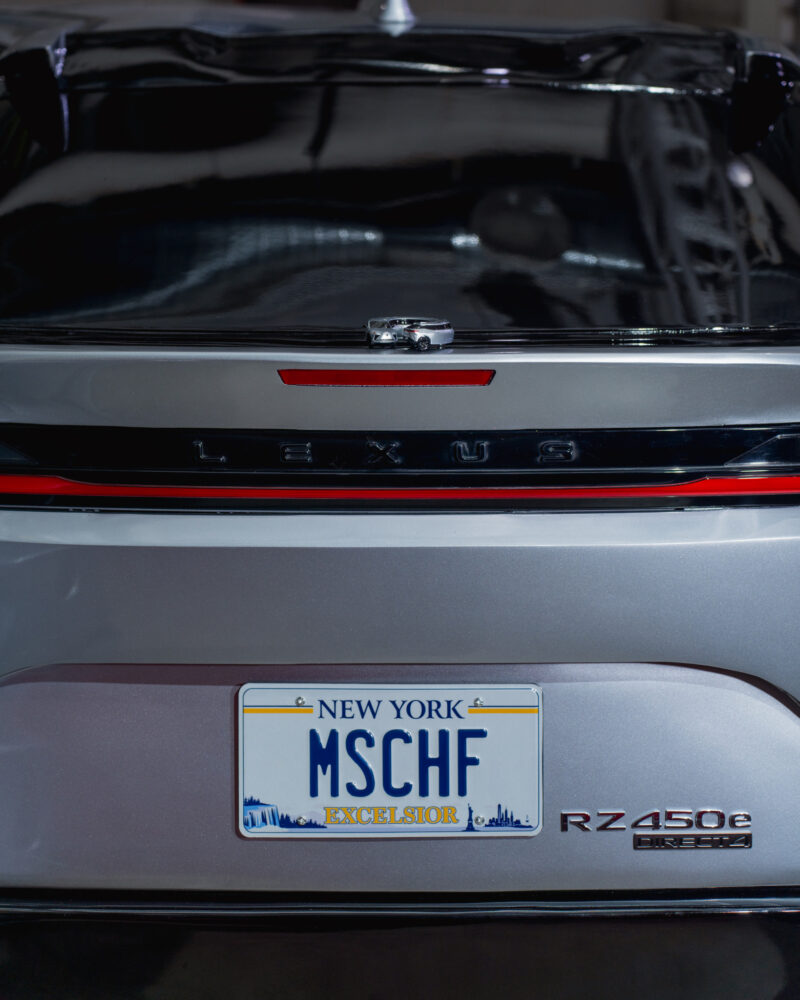
By subjecting these mass-market luxury vehicles to arbitrary digital distortions translated into heavy metal, the collective poses uncomfortable questions about the rigidity of consumer goods. It suggests that our built environment—dominated by standardized cars, appliances, and architecture—is artificially constrained by convention rather than imagination.
Furthermore, the project underscores the growing influence of digital aesthetics on physical reality. As younger generations spend an increasing portion of their lives interacting with 3D environments, virtual spaces, and rendering software, the boundary between what is digitally possible and physically plausible continues to erode. MSCHF’s Form Cars serve as physical monuments to this digital transition, bridging the gap between pixelated screen manipulations and tangible, three-dimensional existence.
As MOTOMORPHOSIS concludes its run in New York, the exhibition leaves behind a lasting dialogue on the future of automotive form. Whether viewed as an indictment of consumer standardization, an exercise in sculptural surrealism, or a brilliant marketing coup for Lexus, MSCHF has successfully forced the public to look at the driveway staple not as a machine for driving, but as an endlessly mutable canvas.